Mental Illness Awareness Week: What It Means for Eating Disorder Recovery
Mental Illness Awareness Week runs October 4-10. Here is why co-occurring anxiety, depression, OCD, and trauma matter in eating disorder recovery.
Compassionate, evidence-based treatment for borderline personality disorder at our Weatherford, Texas mental health treatment center near Dallas. At Eating Disorder Solutions, we help individuals develop emotional stability, strengthen relationships, and build effective coping skills through personalized, structured care.
Borderline personality disorder (BPD) can affect emotions, relationships, and sense of self, often making daily life feel overwhelming. At Eating Disorder Solutions, we provide specialized borderline personality disorder treatment at our Weatherford, Texas location for individuals who need consistent, compassionate support.
Our multidisciplinary team works collaboratively to address the emotional, behavioral, and relational challenges associated with BPD, including co-occurring concerns such as eating disorders, anxiety, depression, or trauma. Treatment plans are individualized and may include evidence-based therapies, skills development, and ongoing support. Individuals from across the Dallas–Fort Worth area choose our program for our personalized approach, small treatment setting, and commitment to long-term growth and stability.
Borderline Personality Disorder is a mental health disorder marked by a persistent pattern of unstable interpersonal relationships, distorted self-image, and powerful emotional responses. People with Borderline Personality Disorder often experience rapid cycling emotions similar to Bipolar Disorder, which is why the two conditions are often confused or misdiagnosed. The primary difference between the two is that BPD presents with ‘splitting’, an all-or-nothing, absolute view of people, situations, and self with little room for nuance.
It’s typical for those with borderline personality disorder to deal with extreme emotions and reactions that are unproportionate to the situation. They may fly into a rage over what others perceive to be a minor inconvenience, or find themselves unable to stop crying over what seems to be nothing at all. These intense emotions can leave them vulnerable to developing negative coping mechanisms such as self-harm, substance misuse, and eating disorders.
Every person's journey is unique. We offer personalized treatment programs designed to meet you where you are and support you every step of the way near Dallas, Texas in Weatherford.
24/7 inpatient eating disorder treatment providing structured, medically supported care in a safe, healing environment.
Daytime eating disorder treatment offering intensive support while allowing clients to live at home and maintain daily responsibilities.
High-level eating disorder treatment combining daily clinical care with increased flexibility outside of inpatient treatment.
Fully online eating disorder treatment delivering structured therapy and nutrition support from the comfort of home.
Ongoing eating disorder recovery support designed to maintain progress and reduce the risk of relapse after treatment.
Our Approach
We combine the latest research with compassionate, individualized care. Our multidisciplinary team works together to address the physical, emotional, and psychological aspects of eating disorders.
Cognitive Behavioral Therapy
Identify and change harmful thought patterns and behaviors.
Dialectical Behavior Therapy
Build skills for emotional regulation and distress tolerance.
Trauma-Informed Care
Address underlying trauma in a safe, supportive environment.
Borderline Personality Disorder symptoms vary from person to person. Some of the main signs and symptoms of BPD include:
It’s important to note that not all people with this disorder will exhibit the same symptoms. So called ‘quiet BPD’ can be difficult to identify because the symptoms are less overt than in classic cases of the disorder. Additionally, because of the stigma around Borderline Personality Disorder, some may go undiagnosed for many years or be misdiagnosed with Bipolar Disorder or Schizophrenia.
People who are at risk of this condition may have a family with a history of borderline personality disorder, brain factors like structural or functional changes in the brain, or be subjected to cultural, social, or environmental factors like trauma, abuse, abandonment, or hostile conflicts.

Borderline personality disorder treatment centers around developing better emotional regulation skills and challenging negative thoughts and emotions. Treatments may include:

We understand that different ages and situations require different approaches. Our specialized programs are tailored to meet specific needs.

Specialized eating disorder treatment designed to support adults balancing recovery with work, family, and daily responsibilities.

Eating disorder treatment tailored for athletes, addressing performance pressures, fueling needs, and sport-related stressors.

Inclusive eating disorder treatment providing affirming, holistic care for individuals in the LGBTQ+ community.

Specialized eating disorder treatment for professionals balancing recovery with work responsibilities, high stress, and the demands of daily life.

Specialized eating disorder treatment for professionals balancing recovery with work responsibilities, high stress, and the demands of daily life.

Specialized eating disorder treatment for individuals with a long-standing or treatment-resistant history, focused on sustainable progress and renewed hope.
When you or someone you love goes to Borderline Personality Disorder treatment centers, the focus is on helping you reach a more balanced state of psychological health.
To start with, the condition has to be diagnosed. A licensed medical professional, usually psychologist or psychiatrist, will be able to diagnose this condition by:
It is normal for Borderline Personality Disorder to occur alongside other conditions. This may make it harder to diagnose but not impossible. Typical co-occurring illnesses include:
You or your loved one should be clear about your symptoms and experiences with the medical provider, so they get a full understanding of what you’re going through.
Borderline Personality Disorder can have life-altering consequences if left untreated. There is a high risk of suicide for peopel with BPD because of the extremes in emotions and impulsivity associated with the condition. Likewise, mismanaged Borderline Personality Disorder can lead to:
Fortunately, with the right treatment and support most of these issues are preventable.
Fill out the form below, and we’ll contact you shortly.
We provide specialized care for all types of eating disorders across the Dallas–Fort Worth area.
A restrictive eating disorder marked by fear of weight gain and distorted body image, requiring comprehensive medical, nutritional, and therapeutic care.
An eating disorder involving cycles of binge eating and compensatory behaviors, often driven by emotional distress and body image concerns.
Characterized by repeated episodes of eating large amounts of food with a sense of loss of control, without compensatory behaviors.
Recurrent episodes of overeating driven by emotional distress rather than physical hunger. Treatment helps address emotional triggers, reduce shame, and develop healthier coping strategies.

Persistent distress about perceived flaws in appearance that impact daily life. Treatment focuses on improving body image and reducing obsessive thoughts through structured therapeutic support.

An unhealthy fixation on eating “clean” or “healthy” foods that leads to rigid rules and anxiety around meals. Treatment promotes flexibility, balanced nutrition, and a more sustainable relationship with food.

An eating disorder occurring alongside conditions such as anxiety, depression, or trauma. Treatment addresses both concerns together to support lasting recovery and emotional stability.

Includes avoidant or restrictive eating patterns and other specified feeding or eating disorders that require individualized treatment approaches.
At Eating Disorder Solutions, our borderline personality disorder treatment centers are focused on helping our clients feel more like themselves again, so they can live healthy, productive lives.
We offer treatments such as residential care, outpatient, and partial hospitalization, so you or your loved one can choose a program that best suits your needs. Even if you don’t have 24 hours a day to commit to a residential program, a partial hospitalization or outpatient program could help you get back in control of your life while still giving you the time to take care of your personal responsibilities.
When you come to seek treatment from our team, we will make sure you have the support and guidance you need to overcome co-occurring BPD and eating disorders. We believe that having the support of a knowledgeable care team as well as a peer community can help you get onto the right path to move forward and be successful during recovery.
Getting the right Borderline Personality Disorder treatment makes a difference. BPD symptoms don’t have to continue having a negative impact on your life. At Eating Disorder Solutions, we’re here to help you overcome the challenges in your life. Contact us today at 855-245-0961 or connect with us online here.
We work with most major insurance providers and offer flexible payment plans


Our admissions team will verify your insurance benefits at no cost and help you understand your coverage.
BPD is characterized by intense emotions, unstable relationships, fear of abandonment, and difficulty regulating mood and behavior. These patterns tend to be persistent and disruptive, rather than occasional reactions to stress. Treatment helps people better understand and manage these emotional patterns.
Yes. Many people live with symptoms for years before receiving a diagnosis or understanding what’s happening. Treatment can begin even without a formal diagnosis.
DBT is a commonly used, evidence-based approach for BPD. It helps individuals learn skills to manage emotions, relationships, and impulsive behaviors.
You can ask questions, explore options, and gather information without pressure or obligation.
Yes. Research shows that many people with BPD experience significant symptom reduction and improved quality of life with treatment.
The first step is a supportive conversation to understand symptoms, history, and care options. A diagnosis is not required to begin.
Eating Disorder Solutions near Dallas offers compassionate, evidence-based care in a peaceful, home-like setting designed to help clients feel safe, supported, and understood. Our multidisciplinary team provides individualized treatment across multiple levels of care, blending clinical excellence with real-world recovery skills that translate beyond treatment. With a strong focus on nutrition, therapy, and long-term healing, we help clients build a sustainable path to recovery, not just short-term progress.
Borderline Personality Disorder (BPD) is a complex mental health condition that frequently co-occurs with eating disorders. Understanding the clinical terminology related to BPD can help clarify its symptoms and how it is treated. Below are key terms discussed on this page:
A mental health disorder characterized by a persistent pattern of unstable relationships, distorted self-image, and intense emotional responses. The extreme emotional pain associated with BPD often leaves individuals vulnerable to developing negative coping mechanisms, such as eating disorders or substance misuse.
An evidence-based psychotherapy specifically designed to treat BPD. DBT focuses on teaching four critical skills: mindfulness, distress tolerance, emotion regulation, and interpersonal effectiveness. It helps individuals manage intense emotions without resorting to self-destructive behaviors.
Periods where an individual feels disconnected from their own thoughts, feelings, memories, or sense of identity. In BPD, this can manifest as a feeling of “unreality” or numbness, often occurring in response to severe stress or emotional overwhelm.
The inability to effectively manage and respond to emotional experiences. Individuals with BPD often experience emotions that are disproportionately intense for the situation, leading to rapid mood swings and difficulty returning to a calm baseline.
An intense, overwhelming fear of being rejected or left alone, whether real or imagined. This fear is a core symptom of BPD and often drives frantic efforts to avoid separation, leading to the pattern of unstable and intense relationships characteristic of the disorder.
A less overt presentation of Borderline Personality Disorder where the intense emotional turmoil is directed inward rather than outward. Individuals with “quiet BPD” may not display the classic explosive anger, making the condition harder to identify and diagnose.
A psychological defense mechanism common in BPD where a person views people, situations, or themselves in absolute, all-or-nothing terms (e.g., completely perfect or entirely terrible). This lack of nuance is a primary differentiator between BPD and Bipolar Disorder.

Mental Illness Awareness Week runs October 4-10. Here is why co-occurring anxiety, depression, OCD, and trauma matter in eating disorder recovery.

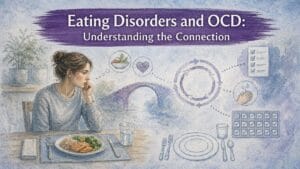
Key Takeaways Eating disorders and obsessive-compulsive disorder (OCD) frequently co-occur and share overlapping features such as rigidity, intrusive thoughts, and repetitive behaviors. When both are

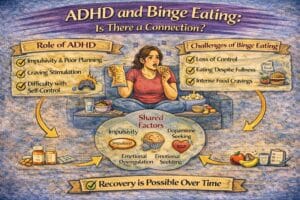
Key Takeaways Binge eating carries real physical consequences too — see the metabolic health effects of binge eating disorder. ADHD and binge eating disorder frequently

Key Takeaways ARFID and anxiety are closely connected. For many people, intense fear, sensory sensitivity, or worry about aversive consequences such as choking or vomiting

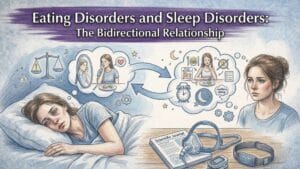
Key Takeaways Disrupted sleep and eating can intertwine in night eating syndrome. Eating disorders and sleep problems are closely linked and tend to fuel each

Key Takeaways Social anxiety and eating disorders frequently occur together, each reinforcing the other. Intense fear of being judged, especially about appearance, can drive disordered