
















Co-Occurring Eating Disorder Treatment Near Dallas, Texas
Integrated, evidence-based treatment for co-occurring eating disorders and mental health conditions at our Weatherford treatment center near Dallas-Fort Worth. At Eating Disorder Solutions, we address both conditions together to support lasting recovery, stability, and improved quality of life. For clients whose symptoms are severe or medically complex, residential care at The Ranch provides the integrated 24/7 support often needed.
- Same-Day Admissions
- Free Insurance Verification
- Most Insurance Accepted
Integrated Treatment for Co-Occurring Disorders Near Dallas
When an eating disorder occurs alongside another mental health condition, effective treatment must address both at the same time. At Eating Disorder Solutions, we provide specialized co-occurring disorder treatment at our Texas location near Dallas for individuals who need comprehensive, coordinated care.
Our multidisciplinary team works collaboratively to treat eating disorders alongside conditions such as anxiety, depression, bipolar disorder, trauma-related disorders, or personality disorders. Treatment plans are individualized and may include therapy, psychiatric support, nutritional counseling, and skills development. Individuals from across the Dallas–Fort Worth area choose our program for our integrated approach, small treatment setting, and commitment to long-term recovery.
What is a Co-Occurring Disorder?
The term co-occurring eating disorder means that an eating disorder is happening at the same time as another mental health condition, such as depression, anxiety, ADHD, or a substance use disorder. Another term commonly used is comorbid, and the term dual diagnosis may also be used when a person has two diagnosable conditions occurring at the same time.
Many of those who struggle with eating disorders have a co-occurring disorder. For example, a person seeking anorexia or bulimia treatment may also be living with a substance abuse disorder or anxiety. For the best chance of a full recovery, it’s important to address both the eating disorder and co-occurring disorder at the same time.
At Eating Disorder Solutions, we have extensive experience treating eating disorders such as anorexia, bulimia, and binge eating disorders, as well as co-occurring disorders such as depression, anxiety, and PTSD. What sets us apart from other treatment facilities that focus on specific disorders is that they sometimes fail to address both the eating disorder and co-occurring disorder. Our multidisciplinary team offers holistic treatment for co-occurring disorders and experience creating individualized plans that address the patient’s underlying needs. Learn more about our holistic co-occurring disorders treatment approach and get in touch with our team for more information.
Which Eating Disorders Frequently Co-Occur?
The eating disorders that most frequently co-occur with other mental health conditions are anorexia nervosa, bulimia nervosa, binge-eating disorder, and ARFID. These disorders can co-occur with depression, anxiety disorders, obsessive-compulsive disorder, ADHD, substance use disorders, and autism spectrum disorder. In the brain, eating disorders can involve changes in systems responsible for reward, motivation, emotion regulation, stress, and decision making. Anorexia nervosa often co-occurs with anxiety, depression, and obsessive-compulsive disorder. Increased activity in brain systems involved in threat and anxiety, along with altered reward processing, may contribute to intense fear around food, rigid eating rules, and difficulty experiencing food as rewarding. Bulimia nervosa often co-occurs with depression, anxiety, obsessive-compulsive disorder, and substance use disorders. Differences in reward and impulse-control systems may contribute to strong urges to binge, followed by distress and compensatory behaviors such as vomiting or excessive exercise. Binge-eating disorder commonly co-occurs with depression, anxiety, ADHD, and substance use disorders. Brain reward and emotion-regulation systems can contribute to powerful cravings and difficulty stopping eating when experiencing stress or negative emotions. ARFID can co-occur with anxiety, ADHD, and autism spectrum disorder, particularly when sensory processing, fear responses, or reduced interest in food are involved. Across these disorders, brain systems involving dopamine, serotonin, stress responses, and communication between areas involved in emotion and self-control may play a role. These brain differences do not mean that a person has a “broken brain,” and they do not necessarily cause the eating disorder by themselves. Genetics, environment, learning, stress, and psychological factors all interact with brain biology.
Signs Co-Occurring Eating Disorder Treatment is Right for You
- You are experiencing eating disorder symptoms and another mental health condition at the same time, such as anxiety, depression, OCD, ADHD, PTSD, or substance use.
- Your eating disorder symptoms are interfering with daily life, including school, work, relationships, sleep, or social activities.
- You use restriction, binge eating, purging, or other eating disorder behaviors to cope with stress or difficult emotions.
- You have tried treatment for one condition, but symptoms of the other condition continue to interfere with your recovery.
- You experience intense anxiety, depression, obsessive thoughts, impulsivity, or difficulty regulating emotions alongside eating disorder symptoms.
- Your eating disorder behaviors are becoming more frequent, severe, or difficult to control despite attempts to stop.
- You are experiencing medical or physical effects related to eating disorder behaviors, such as significant weight changes, fainting, dizziness, dehydration, or other concerning symptoms.
- You feel that you need more structured support than traditional weekly outpatient therapy can provide.
- Your relationships, work, school, or ability to care for yourself are being affected by both your eating disorder and co-occurring symptoms.
- You want treatment that addresses the whole picture rather than treating each condition separately, with coordinated support from therapists, dietitians, medical providers, and psychiatric professionals.
Our Levels of Care
Every person's journey is unique. We offer personalized treatment programs designed to meet you where you are and support you every step of the way near Dallas, Texas in Weatherford.
Residential Treatment
24/7 inpatient eating disorder treatment providing structured, medically supported care in a safe, healing environment.
Outpatient Treatment
Daytime eating disorder treatment offering intensive support while allowing clients to live at home and maintain daily responsibilities.
Partial Hospitalization
High-level eating disorder treatment combining daily clinical care with increased flexibility outside of inpatient treatment.
Intensive Outpatient
High-level eating disorder treatment combining daily clinical care with increased flexibility outside of inpatient treatment.
Virtual Outpatient
Fully online eating disorder treatment delivering structured therapy and nutrition support from the comfort of home.
Aftercare
Ongoing eating disorder recovery support designed to maintain progress and reduce the risk of relapse after treatment.
Our Approach
Evidence-Based Care with Heart
We combine the latest research with compassionate, individualized care. Our multidisciplinary team works together to address the physical, emotional, and psychological aspects of eating disorders.
Cognitive Behavioral Therapy
Identify and change harmful thought patterns and behaviors.
Dialectical Behavior Therapy
Build skills for emotional regulation and distress tolerance.
Trauma-Informed Care
Address underlying trauma in a safe, supportive environment.
What Are The Types of Co-Occurring Disorders We Treat?
Eating Disorder Solutions provides comprehensive co-occurring disorders treatment plans for those experiencing an eating disorder and another underlying condition. We can help those who are struggling with depression, PTSD and trauma, self-harm, mood and anxiety disorders, borderline personality disorder, and obsessive-compulsive disorder. Oftentimes, these co-occurring disorders can spur an eating disorder and vice versa. In fact, many of our patients who seek treatment at our facility struggle with a co-occurring disorder.
Members of our multidisciplinary team collaborate closely to address the eating disorder and co-occurring disorders for the most well-rounded treatment possible. We are fully focused on helping each patient achieve full and lasting recovery with our co-occurring disorders treatment.
Why treat both conditions at the same time?
Eating disorders and conditions like anxiety or depression feed each other: restricting or bingeing can be a way of coping with emotional distress, and untreated distress makes eating disorder behaviors harder to change. Integrated treatment addresses the eating disorder and the co-occurring condition together, with one coordinated care team, a psychiatrist for medication management when appropriate, and therapies such as CBT, DBT, and trauma-informed care that work on both at once. This is what supports stable, lasting recovery rather than treating one problem while the other drives relapse.
Conditions we treat alongside eating disorders
- Anxiety — one of the most common conditions to occur with an eating disorder; treating it directly reduces a major driver of disordered eating.
- Depression — frequently accompanies eating disorders and can deepen withdrawal; integrated care treats both together.
- Trauma — many eating disorders are rooted in trauma, and trauma-informed care addresses those experiences safely as part of recovery.
- Obsessive-Compulsive Disorder (OCD) — OCD and eating disorders often overlap in rigid, ritualized thinking; treating them together helps loosen both patterns.
- Panic Disorder — panic symptoms can intensify food- and body-related fear; integrated treatment builds coping skills that support recovery.
- Bipolar Disorder — mood instability can disrupt eating patterns and recovery; coordinated psychiatric care helps stabilize both.
- Borderline Personality Disorder (BPD) — BPD and eating disorders share difficulties with emotional regulation; DBT-based, integrated care addresses both.
Care is delivered across the full continuum, from residential treatment to virtual outpatient. To learn how the levels of care work, see our eating disorder treatment programs, or call (855) 245-0961 for a confidential evaluation.
Clinically reviewed by the Eating Disorder Solutions clinical team. Last reviewed: June 2026.
Co-Occurring Disorders with Mental Health
An eating disorder diagnosis can be challenging enough on its own, but many individuals have other mental health issues that accompany the eating disorder. A few of those co-occurring disorders include anxiety, depression, and obsessive-compulsive disorder (OCD). Sometimes, these other disorders may be a result of eating disorder behaviors, as binging, purging, and restricting can all cause psychological distress.
Specialized Programs
We understand that different ages and situations require different approaches. Our specialized programs are tailored to meet specific needs.
Adult Program
Specialized eating disorder treatment designed to support adults balancing recovery with work, family, and daily responsibilities.

Athlete Program
Eating disorder treatment tailored for athletes, addressing performance pressures, fueling needs, and sport-related stressors.

LGBTQ+ Program
Inclusive eating disorder treatment providing affirming, holistic care for individuals in the LGBTQ+ community.

Professionals Program
Specialized eating disorder treatment for professionals balancing recovery with work responsibilities, high stress, and the demands of daily life.

College Students Program
Specialized eating disorder treatment for professionals balancing recovery with work responsibilities, high stress, and the demands of daily life.
What Are Anxiety Disorders?
Anxiety disorders are the most common of mental disorders in the United States, affecting anyone at any age. Our body produces a natural response to everyday stressors, which can trigger anxiety and stress. If it starts to interfere with one’s daily life, it may be a sign of an anxiety disorder.
What is Depression?
Depressive disorder can be spurred by a major life changing moment like a death in the family, losing a job or home, separation or divorce, or other difficult situation that can lead to feelings of sadness and loneliness. If these intense feels interfere with daily activities, it may be a sign of long lasting depression. Some co-occurring disorders symptoms and signs of depression are:
- Feelings of emptiness
- Irritability, anxiousness, and guilt
- Loss of interest and energy
- Suicidal thoughts
- Changes in appetite, whether it’s eating too much or too little
- Mood swings
- Panic attacks
- Sleep disturbances
What is Obsessive-Compulsive Disorder?
Obsessive-compulsive disorder (OCD) is characterized by an overwhelming and uncontrollable need to repeat behaviors and thoughts over and over. These behaviors are life-consuming and demanding. Some of the OCD disorders signs and symptoms include:
- Mental rituals
- Repeating rituals
- Compulsive cleaning
- Perfectionism
- Impulsiveness
OCD disorder is the most common anxiety disorder to co-occur with an eating disorder. Those who have co-occurring disorders such as an eating disorder and obsessive-compulsive disorder develop compulsive rituals connected to food. Unfortunately, when left untreated, this mental disorder can result in self-harm or suicide in very serious cases, which is why it is so important for co-occurring dual diagnosis and treatment.
Request A Call
Fill out the form below, and we’ll contact you shortly.
Conditions We Treat
We provide specialized care for all types of eating disorders across the Dallas–Fort Worth area.
Anorexia Nervosa
A restrictive eating disorder marked by fear of weight gain and distorted body image, requiring comprehensive medical, nutritional, and therapeutic care.

Bulimia Nervosa
An eating disorder involving cycles of binge eating and compensatory behaviors, often driven by emotional distress and body image concerns.
Binge Eating Disorder
Characterized by repeated episodes of eating large amounts of food with a sense of loss of control, without compensatory behaviors.
Compulsive Overeating
Recurrent episodes of overeating driven by emotional distress rather than physical hunger. Treatment helps address emotional triggers, reduce shame, and develop healthier coping strategies.

Body Dysmorphia
Persistent distress about perceived flaws in appearance that impact daily life. Treatment focuses on improving body image and reducing obsessive thoughts through structured therapeutic support.

Orthorexia
An unhealthy fixation on eating “clean” or “healthy” foods that leads to rigid rules and anxiety around meals. Treatment promotes flexibility, balanced nutrition, and a more sustainable relationship with food.

Co-Occurring Disorders
An eating disorder occurring alongside conditions such as anxiety, depression, or trauma. Treatment addresses both concerns together to support lasting recovery and emotional stability.
ARFID & Other Disorders
Includes avoidant or restrictive eating patterns and other specified feeding or eating disorders that require individualized treatment approaches.

How Are Co-Occurring Disorders Diagnosed?
Eating disorders and co-occurring disorders often reinforce each other. What may start as a coping mechanism can turn into a set of intertwined issues that are difficult to separate.
Treatment for an eating disorder can only succeed if all co-occurring disorders are identified and treated. If the co-occurring disorder is left undiagnosed and untreated, the patient may start to recover from the eating disorder, however, the co-occurring disorder can grow more prominently. This often leads to a relapse in the eating disorder and a set back in the recovery process. For this reason, it’s important to identify the co-occurring disorders symptoms from the start and make a co-occurring disorders dual diagnosis for the best chance of recovery.
What is The Treatment for Co-Occurring Disorders?
Eating Disorder Solutions is a comprehensive co-occurring disorders treatment center. Our facility believes in integrated treatment for co-occurring disorders that address the eating disorders, co-occurring disorders, and overlapping factors of both.
For the best chance of recovery, it is important to address the underlying factors of the co-occurring disorders. We take a client-centered and evidence-based approach to treating eating disorders and co-occurring disorders at the same time.
Our patients enter co-occurring disorder treatment at the appropriate level of care that is required for their specific situation. After a full evaluation, doctors and medical staff can recommend a level of care that is unique to you or your loved one. As clients move along the continuum toward recovery, they can step-down to different levels of care based on their needs. Through every level of care, clients are guided by our compassionate team of medical professionals, psychiatrists, and nutritionists. Learn more about our eating disorder and co-occurring disorder treatment programs.
Levels of Care for Co-Occurring Eating Disorder Treatment
- Inpatient Treatment: 24 hour hospital based care for people who are medically unstable, severely malnourished, experiencing serious psychiatric symptoms, or at immediate risk of harm. Treatment commonly lasts several days to 2 weeks, although some people may need longer. Treatment focuses on medical stabilization, nutritional rehabilitation, psychiatric care, and close monitoring.
- Residential Treatment: 24 hour structured treatment for people who need intensive support but do not require hospitalization. Treatment commonly lasts several weeks to several months, depending on the severity of the eating disorder and the person’s medical and psychiatric needs. Care may include supervised meals, nutritional counseling, individual and group therapy, psychiatric treatment, and support for co-occurring conditions.
- Partial Hospitalization Program (PHP): Intensive daytime treatment while the person returns home or to supportive housing at night. Treatment commonly lasts several weeks to a few months, with programs often meeting most weekdays. PHP may include supervised meals, individual and group therapy, nutrition counseling, medical monitoring, and psychiatric care.
- Intensive Outpatient Program (IOP): Several treatment sessions each week while the person continues living at home and may continue school or work. Treatment commonly lasts about 1 to 3 months, although it can be shorter or longer depending on the person’s progress. Treatment may include individual therapy, group therapy, nutritional counseling, medical care, and psychiatric support.
- Outpatient Treatment: Regular appointments with an eating disorder therapist, dietitian, physician, or psychiatrist while the person lives independently. Treatment commonly continues for several months to a year or longer, depending on the severity and duration of the eating disorder. Outpatient care can also provide ongoing relapse prevention and long term recovery support.
Co-Occurring Eating Disorder Treatment Therapies & Medications
Common therapies for co-occurring eating disorders include Enhanced Cognitive Behavioral Therapy (CBT-E), which is one of the most commonly used evidence based approaches for eating disorders. CBT-E focuses on identifying and changing thoughts, behaviors, and patterns that maintain the eating disorder, such as restrictive eating, binge eating, purging, body image concerns, and rigid food rules. Dialectical Behavior Therapy (DBT) may also be used, particularly when emotional regulation, impulsivity, self harm, or intense distress co-occur with the eating disorder. Family Based Treatment (FBT) is commonly used for adolescents with anorexia nervosa and bulimia nervosa and involves family members in supporting recovery and normal eating. Interpersonal Psychotherapy (IPT) can be helpful when interpersonal difficulties, depression, or relationship problems contribute to eating disorder symptoms. Treatment may also include trauma focused therapies when trauma is a significant co-occurring concern. Medications can be used alongside therapy, particularly when depression, anxiety, OCD, or other co-occurring conditions are present. Fluoxetine (Prozac) is an FDA approved medication for bulimia nervosa and may reduce binge eating and purging. Lisdexamfetamine (Vyvanse) is FDA approved for moderate to severe binge eating disorder in adults and may help reduce binge eating episodes. Other antidepressants, particularly SSRIs, may be prescribed for depression, anxiety, or OCD occurring alongside an eating disorder. Medication choice depends on the specific eating disorder, co-occurring conditions, medical status, and individual needs, and medication is generally most effective when combined with appropriate psychotherapy and nutritional treatment.
How Much Does Co-Occurring Eating Disorder Treatment Cost in Texas?
The cost of co-occurring eating disorder treatment in Texas varies widely depending on the level of care, length of treatment, severity of the eating disorder, medical needs, and treatment for co-occurring conditions such as depression, anxiety, OCD, or substance use. Outpatient treatment commonly ranges from about $150 to $500 or more per week for therapy and nutrition services, while IOP may cost approximately $3,000 to $10,000 per month. PHP can range from roughly $10,000 to $30,000 per month, depending on the program and number of treatment days. Residential treatment is substantially more expensive, commonly ranging from about $20,000 to $50,000 or more per month, while hospital based inpatient treatment can cost $2,000 to $5,500 or more per day when intensive medical monitoring is required.
Does Insurance Cover Co-Occurring Eating Disorder Treatment in Texas?
Yes, many health insurance plans in Texas cover treatment for eating disorders and co-occurring mental health conditions, but the amount covered depends on the specific insurance plan, diagnosis, level of care, provider network, and medical necessity requirements. Texas requires fully insured health plans to include mental health and substance use disorder benefits and generally requires those benefits to be provided at the same level as medical and surgical benefits under mental health parity laws. However, coverage does not necessarily mean that every eating disorder treatment program or every level of care is covered. Common major insurance providers in Texas that may cover eating disorder treatment include Blue Cross Blue Shield of Texas, UnitedHealthcare, Aetna, Cigna, Humana, Molina Healthcare, Oscar Health, and Superior HealthPlan.
Most Insurances Accepted
We work with most major insurance providers and offer flexible payment plans
Our admissions team will verify your insurance benefits at no cost and help you understand your coverage.
Real People, Real Results
What is The Impact of Co-Occurring Disorders if Left Untreated?
Unfortunately, co-occurring disorders are often overlooked and untreated. This can cause myriads of health problems and complications, affecting the individual’s life quality and longevity. For one, if overlooked in diagnosis, these co-occurring disorders can easily lead back to relapse. Individuals often try to treat themselves through self-medication. This not only reverses any progress made but also increases their risk for other complications as well as addiction. Complications can include heart disease and heart failure, diabetes, suicidal tendencies, and more.
In general, co-occurring disorders often increase the severity of symptoms, making the disorder harder to control. If left untreated, co-occurring disorders can also harm your work, your productivity, and your relationships, creating increased feelings of depression, anxiety, and isolation.
To minimize risk and help ensure recovery, you should seek treatment for co-occurring disorders as soon as possible. The earlier a co-occurring disorder is recognized and diagnosed, the faster and more effective the treatment will be. At Eating Disorder Solutions, we provide personalized treatment for co-occurring disorders, creating an effective treatment plan that takes into account your individual concerns, needs, and comfortability.
Get Co-Occurring Disorder Help Today
Eating Disorder Solutions understands the complexities of eating disorders and how they are intertwined with co-occurring mental health disorders such as anxiety, depressive disorder, and OCD disorder. Along with providing a comfortable and supportive home for all adults and teens struggling with a co-occurring disorder, we take an individualized approach with every client, providing guidance throughout the process. In order for the best chance of recovery, it is vital to address the underlying co-occurring disorder, as well as the eating disorder, for a long-lasting treatment and recovery process.
Reach out to our team today to join our co-occurring disorder treatment program or to learn more about how we support long-term recovery.
Our Other Co-Occurring Disorder Treatment Locations
Eating Disorder Solutions is part of Discovery MSO's network of treatment programs, alongside Discovery Point Retreat and Discovery Texas Interventional Psychiatry. Through these sister programs, clients can access specialized levels of care, evidence-based treatment, and supportive clinical environments designed to meet a wide range of recovery needs. Each program offers personalized treatment planning and structured support for individuals who need care beyond what we provide on-site.
Discovery Point Retreat
Discovery Point Retreat provides medical detox, residential treatment, and outpatient addiction care for individuals struggling with substance use and co-occurring mental health disorders. With multiple locations throughout the Dallas–Fort Worth area, the program offers medically supported care, structured therapy, and ongoing recovery support in safe, healing environments.
Discovery Texas Interventional Psychiatry
Discovery Texas Interventional Psychiatry, our sister program in Dallas, TX, offers TMS (Transcranial Magnetic Stimulation) and other interventional psychiatric care for individuals whose depression hasn't improved with medication or talk therapy alone.
Can One Condition Cause the Other?
Sometimes one condition develops first, but over time they often become intertwined. Treatment focuses less on which came first and more on how to stabilize both.
Can Someone Seek Treatment Even If They’re Not Sure Which Issue Is the “Main” One?
Yes. You do not need to sort that out on your own. Dual diagnosis treatment is designed to clarify and address overlapping symptoms together.
What If I’ve Tried Mental Health Treatment Before but Relapsed?
Relapse can happen when only one condition is treated. Dual diagnosis care focuses on preventing this by addressing all contributing factors at once.
Are Mental Health and Addiction or Eating Disorder Therapies Combined?
Yes. Therapies are intentionally integrated rather than split into separate tracks. This helps reduce symptom cycling and relapse risk.
What If I’m Afraid Dual Diagnosis Treatment Will Be Too Intense?
Treatment is paced to avoid overwhelm. Stabilization and safety always come before deeper work.
What If I’m Not Sure Treatment Is Necessary Yet?
You can explore options, ask questions, and gather information without pressure or obligation.
How Do I Get Started With Dual Diagnosis Treatment?
The first step is a supportive conversation to understand symptoms, history, and care needs. A full diagnosis is not required to begin.
Why Choose Eating Disorder Solutions Near Dallas?
Eating Disorder Solutions near Dallas offers compassionate, evidence-based care in a peaceful, home-like setting designed to help clients feel safe, supported, and understood. Our multidisciplinary team provides individualized treatment across multiple levels of care, blending clinical excellence with real-world recovery skills that translate beyond treatment. With a strong focus on nutrition, therapy, and long-term healing, we help clients build a sustainable path to recovery, not just short-term progress.
Co-Occurring Disorder Treatment Glossary
Treating an eating disorder often involves treating other mental health conditions at the same time. Understanding the clinical terminology related to these interconnected disorders can help clarify the treatment process. Below are key terms discussed on this page:
Anxiety Disorders
A group of mental health conditions characterized by excessive, persistent worry or fear that interferes with daily life. Anxiety frequently co-occurs with eating disorders, as individuals may use restrictive eating or bingeing as a way to cope with or temporarily relieve their anxious feelings.
Co-Occurring Disorder (Dual Diagnosis)
The presence of one or more mental health or substance use disorders alongside an eating disorder. Common examples include depression, anxiety, PTSD, and OCD. Effective treatment requires addressing both the eating disorder and the co-occurring condition simultaneously.
Depressive Disorder
A mood disorder that causes persistent feelings of sadness, emptiness, and a loss of interest in daily activities. When it co-occurs with an eating disorder, depression can severely drain a person’s energy and motivation to engage in the recovery process, making integrated treatment essential.
Holistic Treatment
A comprehensive approach to care that addresses the whole person—mind, body, and spirit—rather than just treating isolated symptoms. In co-occurring disorder treatment, this means treating the eating disorder, the underlying trauma, and the secondary mental health conditions together.
Integrated Treatment
A clinical approach where a multidisciplinary team collaborates to treat both the eating disorder and the co-occurring mental health condition at the same time, within the same program. This is the gold standard of care, as treating one condition while ignoring the other often leads to relapse.
Obsessive-Compulsive Disorder (OCD)
A mental health condition characterized by uncontrollable, recurring thoughts (obsessions) and behaviors (compulsions). It is the most common anxiety disorder to co-occur with eating disorders, often manifesting as severe, life-consuming rituals around food, eating, and body image.
Underlying Trauma
Deeply distressing or disturbing experiences from the past that have a lasting impact on an individual’s emotional and psychological well-being. Unresolved trauma is a frequent root cause of both eating disorders and co-occurring conditions like PTSD and depression.
Related Reading From Our Blog
Mental Illness Awareness Week: What It Means for Eating Disorder Recovery
Mental Illness Awareness Week runs October 4-10. Here is why co-occurring anxiety, depression, OCD, and trauma matter in eating disorder recovery.
Eating Disorders and OCD: Understanding the Connection
Key Takeaways Eating disorders and obsessive-compulsive disorder (OCD) frequently co-occur and share overlapping features such as rigidity, intrusive thoughts, and repetitive behaviors. When both are
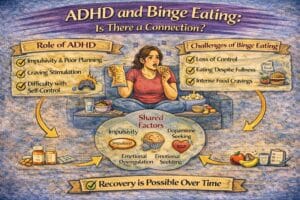
ADHD and Binge Eating: Is There a Connection?
Key Takeaways Binge eating carries real physical consequences too — see the metabolic health effects of binge eating disorder. ADHD and binge eating disorder frequently

ARFID and Anxiety: How Fear of Food Develops
Key Takeaways ARFID and anxiety are closely connected. For many people, intense fear, sensory sensitivity, or worry about aversive consequences such as choking or vomiting
Eating Disorders and Sleep Disorders: The Bidirectional Relationship
Key Takeaways Disrupted sleep and eating can intertwine in night eating syndrome. Eating disorders and sleep problems are closely linked and tend to fuel each
Social Anxiety and Eating Disorders: How They Reinforce Each Other
Key Takeaways Social anxiety and eating disorders frequently occur together, each reinforcing the other. Intense fear of being judged, especially about appearance, can drive disordered