















Refeeding Syndrome: A Guide for Eating Disorder Recovery
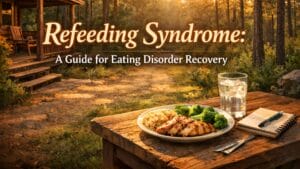
For individuals beginning the journey of recovery from a restrictive eating disorder, the process of renourishing the body is a monumental step. However, reintroducing nutrition
Understanding the cost of treatment and insurance coverage shouldn’t be another barrier to getting help. At Eating Disorder Solutions, our Weatherford-based admissions team works closely with individuals and families to explain costs, verify benefits, and explore treatment options with transparency and care.
Although your top priority should be finding the best eating disorder treatment center possible, many of our clients ask how much eating disorder treatment costs. To support increased access for eating disorder treatment, we accept over 80 major insurance plans, including all major providers such as Blue Cross Blue Shield, Cigna, Aetna, United Healthcare and more!
We understand that navigating the relationship with your insurance provider can be challenging, which is why we are here to help. We can help you with the following:
With your approval, our Admissions Specialists can contact your insurance company for you and communicate back to you in easy-to-understand terms, so you’re in the loop throughout the entire process. Our experienced insurance advocates will get you the insurance benefits you deserve for eating disorder treatment.
We believe cost should never stand in the way of reclaiming control over your life and future. That’s why we partner with many health insurance providers to make eating disorder treatment more affordable. Eating Disorder Solutions is in-network with Blue Cross, Magellan Health, Aetna, and Friday Health Plans plus we accept most other insurance.
Not sure whether your insurance covers eating disorder treatment? We can help. Call us at 855-245-0961 to quickly and confidentially verify your benefits, or submit the form on this page.
Every person's journey is unique. We offer personalized treatment programs designed to meet you where you are and support you every step of the way near Dallas, Texas in Weatherford.
24/7 inpatient eating disorder treatment providing structured, medically supported care in a safe, healing environment.
Daytime eating disorder treatment offering intensive support while allowing clients to live at home and maintain daily responsibilities.
High-level eating disorder treatment combining daily clinical care with increased flexibility outside of inpatient treatment.
Fully online eating disorder treatment delivering structured therapy and nutrition support from the comfort of home.
Ongoing eating disorder recovery support designed to maintain progress and reduce the risk of relapse after treatment.
Our Approach
We combine the latest research with compassionate, individualized care. Our multidisciplinary team works together to address the physical, emotional, and psychological aspects of eating disorders.
Cognitive Behavioral Therapy
Identify and change harmful thought patterns and behaviors.
Dialectical Behavior Therapy
Build skills for emotional regulation and distress tolerance.
Trauma-Informed Care
Address underlying trauma in a safe, supportive environment.
Although your top priority should be finding the best eating disorder treatment center possible, many of our clients ask how much eating disorder treatment costs. To support increased access for eating disorder treatment, we accept over 80 major insurance plans, including all major providers such as Blue Cross Blue Shield, Cigna, Aetna, United Healthcare and more!
We understand that navigating the relationship with your insurance provider can be challenging, which is why we are here to help. We can help you with the following:
With your approval, our Admissions Specialists can contact your insurance company for you and communicate back to you in easy-to-understand terms, so you’re in the loop throughout the entire process. Our experienced insurance advocates will get you the insurance benefits you deserve for eating disorder treatment.
We realize that not everyone struggling with an eating disorder may have insurance to cover their medical bills. Fortunately, we offer financing programs and payment plans to get people into treatment and on the road to recovery. With our different levels of care, we can accommodate various budgets and severities of eating disorders. Financing is a great option for our clients and families that:
We understand that different ages and situations require different approaches. Our specialized programs are tailored to meet specific needs.
Specialized eating disorder treatment designed to support adults balancing recovery with work, family, and daily responsibilities.

Eating disorder treatment tailored for athletes, addressing performance pressures, fueling needs, and sport-related stressors.

Inclusive eating disorder treatment providing affirming, holistic care for individuals in the LGBTQ+ community.

Specialized eating disorder treatment for professionals balancing recovery with work responsibilities, high stress, and the demands of daily life.

An insurance denial can be incredibly frustrating and stressful, however, it’s not the end-all-be-all for your treatment. The appeal process can be tricky to navigate, but we can help. To make your case, it’s important to document everything and provide support for your claim. Explain the history of your eating disorder, the full impact that your eating disorder has had on your life, and anything else you feel might be helpful to make your case. Letters from not only family and friends but doctors and clinicians can be powerful, too. Our team can walk you through the appeal process to lower the eating disorder residential treatment cost and provide support so you can focus on recovery.
Regardless of where you are in your recovery, it’s important to understand the costs associated with your eating disorder treatment, as well as the insurance nuances. Fortunately, Eating Disorder Solutions can guide you through the process. We have expert insurance advocates that will ask the right questions and get you into the treatment you deserve.
Recovery is possible. If you or a loved one are struggling with an eating disorder, don’t wait to seek help. Get in touch with the compassionate team at Eating Disorder Solutions to learn more.
Fill out the form below, and we’ll contact you shortly.
We provide specialized care for all types of eating disorders across the Dallas–Fort Worth area.
A restrictive eating disorder marked by fear of weight gain and distorted body image, requiring comprehensive medical, nutritional, and therapeutic care.

An eating disorder involving cycles of binge eating and compensatory behaviors, often driven by emotional distress and body image concerns.

Characterized by repeated episodes of eating large amounts of food with a sense of loss of control, without compensatory behaviors.

Recurrent episodes of overeating driven by emotional distress rather than physical hunger. Treatment helps address emotional triggers, reduce shame, and develop healthier coping strategies.

Persistent distress about perceived flaws in appearance that impact daily life. Treatment focuses on improving body image and reducing obsessive thoughts through structured therapeutic support.

An unhealthy fixation on eating “clean” or “healthy” foods that leads to rigid rules and anxiety around meals. Treatment promotes flexibility, balanced nutrition, and a more sustainable relationship with food.

An eating disorder occurring alongside conditions such as anxiety, depression, or trauma. Treatment addresses both concerns together to support lasting recovery and emotional stability.

Includes avoidant or restrictive eating patterns and other specified feeding or eating disorders that require individualized treatment approaches.

We work with most major insurance providers and offer flexible payment plans
Our admissions team will verify your insurance benefits at no cost and help you understand your coverage.
Most insurances have an eating disorder benefit and will typically cover the Eating Disorder Diagnoses, characterized by “Feeding and Eating Disorders” in the DSM-5, such as anorexia nervosa, binge-eating, bulimia nervosa, not other specified eating disorder, avoidant/restrictive intake disorder, and unspecified eating disorder.
Eating Disorder Solutions offers a full continuum of care for eating disorder patients. Finding out what level of care your insurance provider will pay for can be challenging. The coverage is variable depending on the insurance providers’ criteria for an admission, what benefits the plan will cover and what plan the member is enrolled in. Many insurance providers will require the patient to meet criteria in order to access comprehensive levels of care such as residential care, partial hospitalization and intensive outpatient programs.
The deductible is a specified amount of money that you will be required to pay before an insurance company will begin financial coverage. In other words, this is how much you will have to pay out-of-pocket. Once the deductible is met, many insurance plans will begin covering at 100%, while other plans require a member to pay a “co-insurance” or a percentage of the cost of treatment. This typically ranges from 10-50%.
This is very dependant on certain circumstances. The insurance provider will evaluate the client’s progress to determine if they will continue to provide benefits or deny benefits. They will also take into consideration the level of the client is receiving whether it is residential, partial hospitalization, or intensive outpatient.
Each treatment plan is customized based on medical, nutritional, and therapeutic needs. Higher levels of care or longer treatment durations naturally impact cost. Insurance coverage can also significantly affect out-of-pocket expenses.
Yes. Many clients use out-of-network benefits to access care. Our team helps maximize available coverage and explains how reimbursement may work.
Treatment may still be possible without insurance. Admissions can discuss self-pay options and help you understand costs clearly.
The first step is a confidential call to gather basic insurance information. From there, our team verifies benefits and explains options.
Eating Disorder Solutions near Dallas offers compassionate, evidence-based care in a peaceful, home-like setting designed to help clients feel safe, supported, and understood. Our multidisciplinary team provides individualized treatment across multiple levels of care, blending clinical excellence with real-world recovery skills that translate beyond treatment. With a strong focus on nutrition, therapy, and long-term healing, we help clients build a sustainable path to recovery, not just short-term progress.
Navigating the financial aspects of eating disorder treatment can be complex and overwhelming. Understanding the specific terminology used by insurance companies and treatment centers can help individuals and families make informed decisions about their care. Below are key terms discussed on this page:
The formal procedure of challenging an insurance company’s decision to deny coverage for treatment. The page explains that while a denial can be frustrating, the admissions team can help families document their clinical history and navigate the appeal to secure the necessary funding for residential care.
A fixed out-of-pocket amount paid by a patient for covered health care services, as determined by their insurance plan. The page notes that for families facing high co-pays, the facility offers financing options to ensure these immediate costs do not become a barrier to treatment.
The amount a patient must pay out-of-pocket for health care services before their insurance begins to cover costs. The page highlights that financing programs and payment plans are available specifically to assist families struggling with high deductibles.
Structured payment options offered directly by or through the treatment facility to help patients manage the cost of care over time. The page emphasizes that these programs are designed for individuals without insurance, those with high deductibles, or those whose benefits have been exhausted.
A status indicating that a healthcare provider or facility has a contracted agreement with a specific health insurance company to provide services at negotiated rates. The page lists several major providers—including Blue Cross, Aetna, and United Healthcare—that Eating Disorder Solutions is in-network with, making treatment more affordable.
A formal decision by an insurance company refusing to pay for a specific medical treatment or service. The page notes that denials can sometimes occur in the middle of treatment, but emphasizes that this is not the “end-all-be-all,” as the facility can assist with appeals or alternative financing.
A dedicated admissions professional who acts as an intermediary between the patient and the insurance company. The page explains that this advocate handles the complex communication, explains costs in easy-to-understand terms, and follows the claims process to secure the benefits the patient deserves.
For individuals beginning the journey of recovery from a restrictive eating disorder, the process of renourishing the body is a monumental step. However, reintroducing nutrition
Recovery is not a straight line. It’s more like a winding road full of unexpected detours, scenic overlooks, and a few potholes that might shake

What if you could time travel, just for a second? Not to some distant sci-fi future, but to a version of your life just one
Asking for help can feel like one of the most difficult things to do, especially when you’re struggling with an eating disorder. Whether it’s feelings
Eating disorders are complex conditions that affect not only your physical health but also your mental and emotional well-being. At Eating Disorder Solutions, we believe
“Healing is not a race; it’s a journey that requires time, patience, and self-compassion. Only by allowing ourselves to truly heal can we emerge stronger