
After completing 75 consecutive days of treatment at Eating Disorder Solutions, if you experience a significant setback you can receive an additional 75 consecutive days of treatment at no cost.
Meg's Eating Disorder Recovery Story
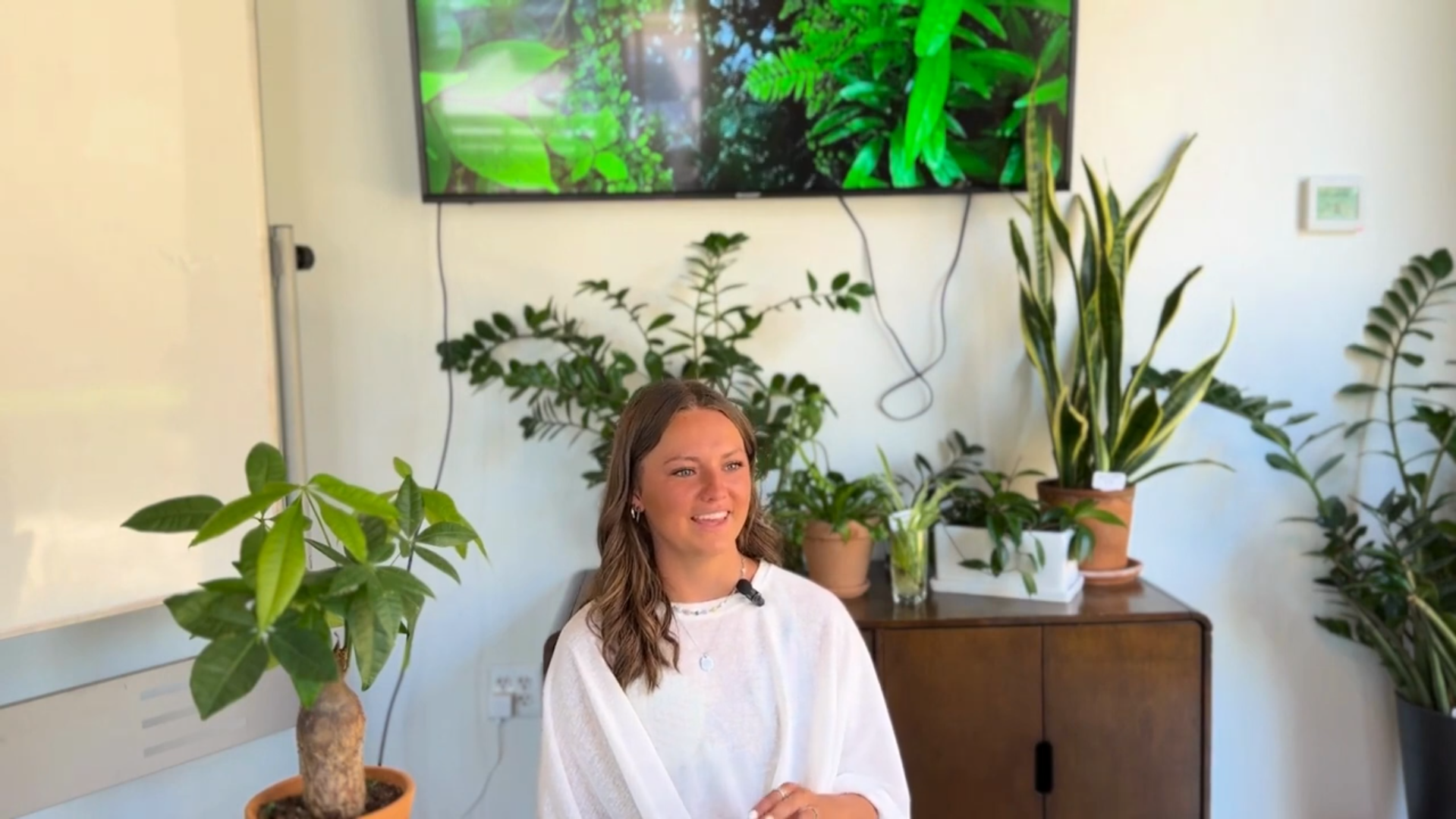
Meg, a remarkable individual of twenty years, has triumphed over her long-standing battle with eating disorder patterns of behavior thanks to the transformative support provided by Eating Disorder Solutions. From the tender age of eleven, Meg recognized that something was amiss, but her active involvement in school extracurricular activities, such as cheerleading, led her to conceal her inner struggles, hoping they would fade away on their own.
Despite having loving and supportive parents, Meg found it arduous to confide in them, fearing the potential shift in perception or judgment from others. Moreover, her eating disorder voice relentlessly fed her lies about her worth, making her believe that seeking help was an unattainable goal. However, when Meg reached the age of seventeen, she summoned the courage to confide in her therapist, initiating a pivotal turning point in her life.
The revelation was unexpected for her parents, yet they wholeheartedly rallied behind Meg’s decision to pursue treatment. In an unwavering display of love and determination, they delved into the realm of mental health, seeking to understand their daughter’s struggles better and providing invaluable support throughout her recovery journey.
It was during this time that Meg discovered Eating Disorder Solutions, an oasis of healing and hope. For the first time in years, she felt safe, seen, and genuinely heard—experiences she had rarely allowed herself due to her tireless efforts to conceal her struggles throughout her teenage years. The compassionate and comprehensive care provided by Eating Disorder Solutions empowered Meg to confront her demons, rebuild her relationship with her body and self-worth, and forge a path toward lasting recovery.
Now, on the cusp of embarking on her freshman year of college, Meg radiates a newfound vitality and determination. Her transformative experience at Eating Disorder Solutions has ignited a profound desire within her to help others who face similar challenges. Armed with her own journey of triumph, Meg aspires to pay forward the compassionate care and unwavering support she received, with the ultimate aim of guiding others toward a life of healing, growth, and empowerment.
Meg’s resilience, coupled with the life-changing impact of Eating Disorder Solutions, serves as a testament to the power of compassionate support and specialized treatment. Her story inspires hope and underscores the vital importance of mental health advocacy while reminding us that recovery is possible, even after years of silent suffering.
Video Testimonial Summary
Key Takeaways from Meg’s Story
•Eating Disorders Can Begin in Childhood and Go Undetected for Years: Megan’s disorder started at age 11 and wasn’t identified until she was 16 — illustrating how easily these conditions are missed, especially when the culture around them is one of silence.
•Partial Treatment Without Full Readiness Can Lead to Relapse: Megan completed PHP and IOP, convinced herself she was recovered, and relapsed within weeks of starting college. True recovery requires both the right level of care and genuine readiness.
•The Right Facility Feels Different: Out of 20 facilities Megan researched, EDS was the only one she felt compelled to call. The warmth of the admissions team, the home-like environment, and the Build-A-Bear activity on her first day told her she was in the right place.
•Therapeutic Trust Is the Foundation of Real Healing: Megan’s relationship with her therapist Clarissa was the central pillar of her recovery. Being met with honesty, love, and unwavering presence allowed her to do the deep work she had avoided for years.
•Recovery Is Not Linear — and That Is Okay: Megan’s message is that recovery has highs and lows, and struggling does not mean failing. The beauty is in the journey, not the destination.
Video Testimonial Transcript
Seven Years of Hiding — Starting at Eleven
Hi, my name is Megan. I am 19 years old. I am from Frisco, Texas, and this is my recovery story.
When I turned 16, I got diagnosed officially with anorexia nervosa. Early on, I got diagnosed with OCD, depression, and anxiety, which then led into that — and it was later down the road that we found out that diagnosis. I would say it was going on from sixth grade all the way to sophomore year. Kind of when COVID hit, I was all on my own until then. So that was 2020. So 2013 to 2020, I was in silence on my own, trying to figure out how to navigate this whole mindset I had all the time. Nobody knew — not even my parents. I was very quiet about it. I just wanted to deal with it on my own.
It was really challenging and really isolating at the same time, because I had no personality — because it took everything in me every single day to hide who I really was, because I was struggling so much.
Cheerleading, Body Image, and the Silence Around Eating Disorders
I was a cheerleader, and cheerleading took everything out of me. But it was very body image-focused. I didn’t struggle with my body or food until I turned 11. That’s when I started noticing these red flags. But as an 11-year-old, I had no idea. I was like, “This is normal. Everybody goes on these fad diets. Everybody follows what’s on the internet.” So as an 11-year-old, I was like, “Okay, I need to do this too.” It was just normalized.
Nobody I knew knew what eating disorders really were, because they were very not talked about. Nobody wanted to talk about them. Everybody was afraid of that word — eating disorders. So no one really caught on. No one believed me when I said there was something going on in my mind that I was scared of and didn’t understand.
When I got diagnosed with depression, anxiety, and OCD, my parents were like, “Okay, that’s what it is. That’s all it is.” And then when it turned into something more and they started noticing red flags — that’s when the real help started. But I wasn’t willing to take that help at that point, because I was like, “I’ve struggled this long, so I just need to continue struggling, because that’s what I deserve.”
Living on a Tightrope
It kind of felt like walking on a tightrope and hoping that you’re not going to fall or slip. Because every single morning I would wake up and put the same smile on my face that I did when I wasn’t struggling with any thoughts or any negative mindsets. And I would just walk it and hope that I wouldn’t slip and hope no one would catch on.
It makes you feel like you’re living on your own little island. Nobody’s catching on. Nobody is understanding how I’m speaking and how harmful it is to myself and others. Because I know, as a person who loves other people so much and so deeply, how harmful it became when I didn’t love the people the way I used to — and I didn’t love myself at all.
There were moments where I was like, “I can’t do this anymore. I have nothing to give to this world because I’m so ingrained in my eating disorder and so stuck in the ways that it tells me to live.”
The First Eye-Opening Moment: Senior Year
I’ve had two big eye-opening moments where I was like, “I need help. I need more than what is happening right now.”
The first was spring break of my senior year. I had a couple of months left before I left for college. I was with my therapist and my dietitian and I was like, “There has to be a change.” And they agreed. They don’t push until you push yourself too. You have to meet them in the middle. You have to be willing to put in the work and be willing to let go of something that has been your coping skill and has provided you comfort.
So I went into a PHP and IOP program. I did school virtually, finished everything, and graduated. And I was convincing myself I was better. I was convincing everybody. I was very manipulative — because I wanted college to still happen. I went through the treatment process, discharged, and was like, “I’m in recovery. This is the strongest I’ve ever been.” But deep down, I knew it was my eating disorder still telling me I was in quasi-recovery. I was still holding onto it, but still trying to do the things.
The Second Eye-Opening Moment: A College Dorm Room
I left for college two days after I discharged from treatment the first time. That was probably the best and worst decision I’ve ever made — because it was the first time I actually realized I was not okay. Not just half-okay or 25% okay. I knew there was something more.
I was sitting in my dorm room with my roommate and my therapist. I had just had a session and I told her I didn’t want to do this anymore. I didn’t want to live like this. I didn’t even know if I could keep breathing if I didn’t get the help I needed.
I was very manipulative — because that’s how eating disorders work. They’re very manipulative. So I had convinced everyone I was doing just fine. This was very out of the blue when I called my parents and said, “Hey, we need to do something more, or I don’t know what the next year is going to hold.”
That’s when I really got the help I needed.
Relapse, Denial, and the Decision to Search for Residential Treatment
The hardest part for me was learning how to make decisions for myself — knowing no one was patting me on the back for choosing recovery that day. It was all in my hands.
Growing up, I had very supportive parents, and I hadn’t had the experience of being on my own before college. When I got there, I was very scared. I immediately canceled all my recovery-focused appointments. And I think that really caused the relapse.
I was in full denial until I noticed I was eating maybe one meal a week and thinking that was enough to survive. That’s when I knew something had to change. School was going great — I was focused, doing well in classes — but mentally, I was slowly dying.
I met with my therapist virtually. She was in Texas while I was in Arkansas. She wanted me to take control and find a place where she thought my healing could really happen. So I looked up 20 different places. Nothing was catching my eye. Nothing felt like somewhere I could really heal.
Then I looked up places in Texas, and Eating Disorder Solutions was the first I saw. I don’t know — there was something in me. I was so afraid to make phone calls to every other facility, but this one I just pressed it and called. That same day, I got news that I could be admitted the following Monday. That right there was the sign for me — from God. This is the place you need to be.
The Admissions Call That Changed Everything
Even the admissions person was so caring and supportive. Not your everyday admissions person. They cared. And that really touched me.
I felt silenced for so long about anything relating to my eating disorder or my struggles — partially my own fault, because I had hidden for so long. And then it was like I came out of the blue. So having that admissions person so welcoming and so open to getting me help right away — because I was very honest in that admissions call, because I was like, “I need the help and I want it” — knowing they saw that, and then took it to the Clinical Director and got me in so quickly, it was truly the biggest blessing.
Arriving at EDS: Build-A-Bear and a Sign
I’ll be honest — when I was driving there, my parents took me, and I was emotionally exhausted. I was like, “I can’t do this. Never mind. Let’s turn around. I don’t deserve it.” We got there, and my mom and dad were pretty emotional, as all parents probably would be.
I got there and immediately the nurse I first interacted with was so welcoming. She comforted my mom and made me feel truly safe in a place I’d never been. While I was waiting for the next steps for admitting, one of the clients came out and said, “We’re going to Build-A-Bear today.” And I was like, “Oh wait, really?”
For me, Build-A-Bear growing up was my happy place. I had like 50 Build-A-Bears. That right there was another sign. I didn’t know you could still have fun while healing. So often you hear that healing is the hardest and darkest moments. But that was a light in my healing journey. And I was like, “I’m going to be okay.”
Meeting Clarissa: The Therapist Who Saw Through Everything
I had always not been a vulnerable person. Never willing to work through trauma. I would go to therapy and basically waste time by saying all the things the therapist wanted to hear.
Clarissa would not let me do that. She knew. She could see right through me. And she could feel what I felt. Her coming to my level, meeting me where I was, made me feel like, “Okay, I’m safe enough to say anything and everything I need to.” She said she can only take me as far as she’s gone — but she’s willing to never let me walk alone. I have never heard that from anybody.
It was hard, but it was beautiful at the same time. I struggled a lot with SI — suicidal ideation — especially when I was there. And for the first time, I was open and comfortable enough to talk about it. She never judged me. She never left my side. Because I have a really big fear of people leaving my life when they come into it, especially when I share personal stuff. And she never did. She walked me through every step of the way until I left.
The Breakthrough: Reading the Letter by the Fire Pit
When I first got there through around the middle of November, I didn’t think it was possible. I was like, “I’m wasting space. I’m taking up other people’s healing time. I’m not healing.” Because at the time I thought healing had to be quick and easy.
My biggest aha moment was when I was sitting outside and I had journaled a letter — to my eating disorder, and also to my inner child. Two separate letters. I wrote them and was very real, very vulnerable. I shared every thought I had about my eating disorder — the ways it did serve me in positive ways at the time, but also the very harmful things.
I never expected myself to share it. But all of a sudden, I had this wave of confidence. I was sitting out by the fire pit. Everybody came over — we were doing something related for Christmas. Every client was out there. Therapists were out there. And I read it. All of a sudden, I read that letter I was never going to read to anybody.
I think that was the first step into real healing. Because it was out there. My story — just a piece of it — wasn’t hidden anymore. That was the puzzle piece that was always holding on but still falling off at the same time. Now it’s held on for sure.
Having Clarissa out there — if I could give anybody my whole life, it would be her. She always gave me a different kind of confidence. Not the generic “Oh, you did so good.” She was straightforward, which is what I needed, but loving at the same time. And having her out there while I read it — it was like God’s way of telling me: you’re not the caterpillar of the butterfly journey anymore. You’re choosing to fly.
Group Therapy: From Silence to Impact
When I was in PHP the first time, I didn’t talk. I sat in the corner, coloring, half the time not even listening. And I think that played a big effect on what happened later.
When I came back to residential, my first day we had process group. I sat there and was like, “Y’all think I’m gonna talk? No. I am not telling anybody anything. I’ve gone since I was 11 years old without saying any of this.”
And then people here were so comfortable and so confident. That inspired me — but at the same time, I was still very closed off. It took a couple of weeks before I started talking. It was hard. It was terrifying. But when you take down that mask and you see the impact it makes on other people — how it helps other people — that’s when I was like, “Okay. This isn’t only helping me. It’s also helping other people.”
I no longer felt alone. I had people who understood. I also had people in different stages of recovery, and that made me believe I could get through all stages too. I saw people from day one to discharge, and the difference was beautiful. It’s literally like a caterpillar going to a butterfly.
Comparison, Love, and Learning You Don’t Have to Earn It
There were moments when comparing was hard. Eating disorders are already very comparative. A lot of times when you’re deep in your eating disorder, you want to be the sickest. I never wanted to be the sickest — but I wanted to be loved. I felt like I wasn’t being loved when I was who I was. And I think that played a big role in getting to my worst point — thinking, “Oh, maybe people will love me.”
When I got there and I wasn’t having to be the sickest — but people still saw me and loved me — that was when I was like, “Okay. I don’t need to worry about comparing. I don’t need to worry about who I am. I just need to be here.” We all have something. We’re all going through something. And we’re all choosing life every day while we’re here.
Three Coping Skills That Changed Everything
Coping skills — at first I was like, “This is stupid. These are not helping me.” But they weren’t helping because I wasn’t using them.
I have three favorite coping skills that I still use today.
Redirect and Reframe: Any negative thought that comes into my head, I redirect it. I might not be able to fully believe the redirection, but it can be a neutral statement. Like: “I don’t feel like I am who I am meant to be” becomes “I don’t know who I’m supposed to be, but I’m becoming who I’m meant to be.” That leads me into the gray area — being okay with who I am today, knowing tomorrow will be different.
Distraction Through Connection: I don’t like doing it alone. I like going out with friends or being on FaceTime. Just taking my mind off whatever I’m thinking by being with other people.
Fact-Checking: I’m very fact-based. If something doesn’t line up with what I’m thinking, I fact-check it. I used to be really afraid of water — I thought I’d drown or get eaten by a shark. But I had to fact-check: I’m learning to swim, there are people to save me. The biggest one I always had to do in residential was: “Nobody is going to leave me if I’m vulnerable.” I would fact-check that every time I was about to open up. No one is leaving. No one is mad. Everybody still sees you for who you are.
A Voice, a Life, and a Message
I just feel like I gained a voice and I gained life. So often you read on social media that you go into eating disorder treatment to gain XYZ things — but they can’t tell you what you’re going to receive. I think it gave me this sense of: it’s okay to not be okay, but it’s also okay to prioritize yourself.
I gained so much of my life back that I lost. It’s now allowing me to return to college. It’s allowing me to live every single day to the fullest and speak truth — not fake truth.
Your story isn’t over when you get to the lowest point. Your story is just beginning. It’s okay to not be okay. You’re not failing for needing help. You’re not failing for relapsing. You’re not failing if recovery isn’t working right now. Recovery happens when you’re ready for it to happen. It might take years. It might take weeks. It might take months. But just keep going.
If one life can be saved, many other lives can be saved too. You deserve to be breathing. You deserve to be heard. You deserve to just live.
Don’t hide anymore. Don’t hide — because there are people who are also struggling. And if they see your vulnerability, if they see your true colors, they’re going to feel comfortable enough to also go get help or speak on their struggles too.
Don’t let the struggles define your healing. So often we put so much power into the struggle and no power into the good that comes from it. The beauty is what shapes the struggle. You’re basically a puzzle — and puzzles can look so many different ways. Don’t judge it or compare it to other people’s puzzles. Be your own puzzle. Know that you’re going to be put together the way you need to be — if you’re willing to accept that healing isn’t going to be linear. It’s going to be up and it’s going to be down. But ultimately, you deserve it. And everybody deserves to know who they are, far beneath their struggles.

Anorexia Nervosa Treatment
Our anorexia nervosa treatment focuses on restoring healthy eating habits and addressing underlying psychological issues. Individual therapy, nutritional counseling, and medical monitoring are integrated to support clients in achieving a balanced relationship with food and body image.

Bulimia Nervosa Treatment
Bulimia treatment aims to break the binge-purge cycle by addressing the emotional triggers and behaviors associated with bulimia. Therapy and nutritional support help clients develop healthier coping mechanisms and improve their relationship with food.

Binge Eating Disorder Treatment
Our binge eating disorder treatment program focuses on managing the emotional factors that lead to overeating. Clients receive therapy and nutritional guidance to develop healthier eating habits and gain control over their eating behaviors.

Body Dysmorphia Treatment
Body dysmorphia treatment helps clients challenge distorted perceptions of their body image. Through specialized therapy, clients learn to develop a more realistic and positive view of their appearance, reducing obsession and anxiety.

ARFID Treatment
Treatment for Avoidant/Restrictive Food Intake Disorder (ARFID) focuses on expanding dietary variety and reducing food avoidance behaviors. Our program uses therapeutic interventions tailored to the individual’s needs to promote nutritional health.

OSFED Treatment
Other Specified Feeding or Eating Disorders (OSFED) are treated with customized care plans that address their unique symptoms. Our program provides therapy and support to help clients develop a healthy relationship with food.

UFED Treatment
For Unspecified Feeding or Eating Disorders (UFED), we offer personalized therapy that meets each client’s specific needs, promoting recovery and overall well-being.

Orthorexia Treatment
Orthorexia treatment focuses on reducing the obsession with “perfect” eating. Our approach helps clients develop a balanced relationship with food, emphasizing health without rigid dietary rules.

Compulsive Overeating Treatment
Our treatment for compulsive overeating targets the emotional triggers that lead to overeating. Clients learn to manage these triggers through therapy and nutritional counseling and adopt healthier eating patterns.

Co-Occurring Disorder Treatment
We provide integrated care for clients with eating disorders and co-occurring mental health conditions. This comprehensive approach ensures that all aspects of a client’s well-being are addressed, supporting recovery and overall mental health.
We’re Here to Help
Eating Disorder Solutions offers personalized residential and outpatient eating disorder treatment in the Dallas, TX area. We provide treatment with integrity, promoting holistic approaches that heal the mind, body, and soul. If you’re ready to begin your recovery journey, call us now at 855-245-0961 or complete the form.
What Sets Us Apart
- Personalized Treatment
- Licensed Specialists
- Same-Day Intake
- Flexible Scheduling
- Evidence-Based Therapies
- Long-Term Recovery
Request A Call
Fill out the form below, and we’ll contact you shortly.
Residential Center
Outpatient Center

Adults of All Ages
We treat adults across all life stages, from young professionals to those in midlife or retirement. Some have battled OSFED since adolescence, while others develop symptoms later in life due to stress, health changes, or personal loss.

College Students
College life can increase OSFED risk, with pressures from academics, social comparison, and irregular eating patterns. We help students develop balanced routines, manage campus triggers, and build coping strategies for dining halls, parties, and late-night study sessions.

LGBTQ+ Individuals
We provide affirming, culturally sensitive care for LGBTQ+ clients, recognizing the unique impact of stigma, body image pressures, or gender dysphoria. Our team creates a safe space where clients can explore identity issues and learn healthier ways to cope without relying on disordered eating.

Athletes
Athletes may develop OSFED due to weight pressures, performance demands, or rigid training routines. Our sports-informed team helps clients balance proper nutrition with athletic goals while addressing perfectionism and identity tied to sport.

Working Professionals
High-pressure careers can fuel disordered eating patterns like skipping meals, nighttime overeating, or extreme dieting. We offer flexible in-person and virtual OSFED treatment options to fit around busy work schedules and professional demands.
Most Insurances Accepted





Real People, Real Results
Frequently Asked Questions
Why are eating disorders so often hidden and undetected?
Eating disorders thrive in silence. Megan describes seven years of hiding her disorder from everyone, including her parents, because she didn’t have the language for it, because no one around her talked about eating disorders, and because her disorder convinced her she deserved to suffer alone. This is extremely common. EDS provides a safe, non-judgmental environment where patients can finally speak the truth they have been carrying for years.
Can eating disorders co-occur with OCD, depression, and anxiety?
Yes, and this is one of the most common presentations in eating disorder treatment. Megan was diagnosed with OCD, depression, and anxiety before her anorexia was identified. These co-occurring conditions can mask the eating disorder or be mistaken for the primary diagnosis. EDS takes a whole-person approach to treatment, addressing all co-occurring mental health conditions alongside the eating disorder itself.
What is "quasi-recovery" and why is it dangerous?
Quasi-recovery refers to a state in which a person appears to be recovering — and may even believe they are — while still holding onto core eating disorder behaviors and beliefs. Megan describes completing PHP and IOP, convincing herself and everyone around her that she was better, while her eating disorder was still directing her choices beneath the surface. Quasi-recovery is dangerous because it can delay full healing and increase the risk of relapse, particularly during major life transitions like starting college.
Is it possible to relapse after completing a PHP or IOP program?
Yes. Relapse after partial treatment is common, particularly when a patient has not fully engaged with the recovery process or when they face a significant life change without adequate support. Megan relapsed within weeks of starting college after discharging from her first treatment program. This is not a failure — it is a signal that a higher level of care may be needed. EDS offers residential treatment for patients who require a more intensive, immersive environment to achieve lasting recovery.
What is the difference between PHP, IOP, and residential treatment?
Residential treatment is the most intensive level of care, in which patients live on-site at EDS and receive around-the-clock support. PHP (Partial Hospitalization Program) involves full-day programming while returning home in the evenings. IOP (Intensive Outpatient Program) offers structured treatment for several hours per day, several days per week. EDS offers all three levels of care, allowing patients to step up or step down based on their clinical needs.
How does EDS handle patients who are resistant to treatment or not ready to open up?
EDS staff are trained to meet patients exactly where they are — including those who arrive resistant, closed off, or convinced they don’t deserve help. Megan describes spending her first weeks in group therapy completely silent, coloring in the corner. Her therapist Clarissa never forced her to open up before she was ready, but consistently created the conditions of safety and trust that eventually made vulnerability possible. EDS’s approach is patient-led and paced to each individual’s readiness.
What is "fact-checking" as a coping skill and how does it help in recovery?
Fact-checking is a technique in which a patient tests the eating disorder’s distorted beliefs against observable, verifiable reality. Megan used it most frequently to challenge the belief that people would leave her if she was vulnerable — by noting, after each act of openness, that no one left, no one was upset, and people still saw her for who she was. Over time, this practice weakened the eating disorder’s grip on her perception of relationships and safety.