
After completing 75 consecutive days of treatment at Eating Disorder Solutions, if you experience a significant setback you can receive an additional 75 consecutive days of treatment at no cost.
Mo's Eating Disorder Recovery Story
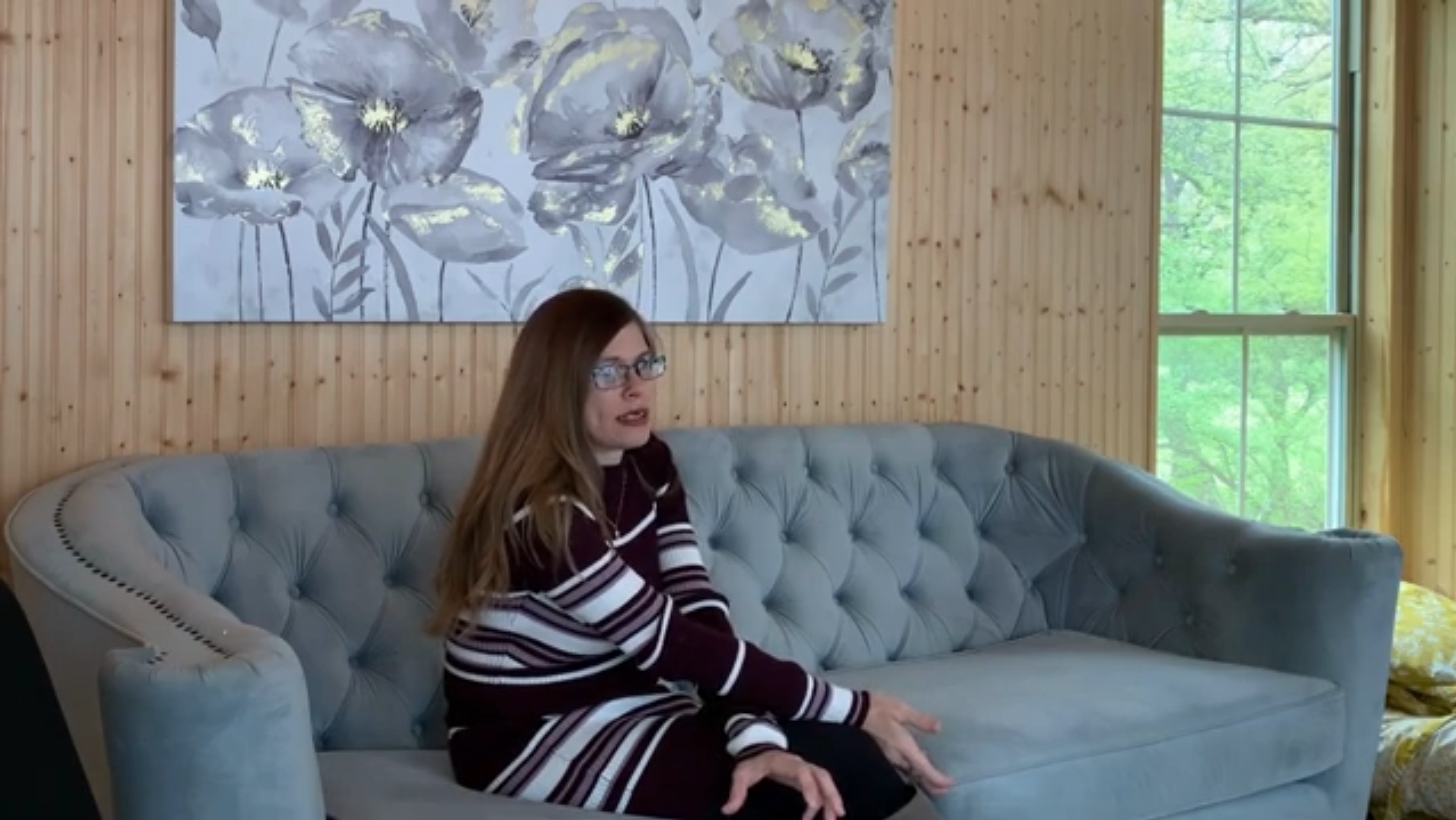
Mo’s journey to recovery began in a very confusing and shocking way – as she initially was looking for help with addiction, but soon found out that things were even deeper than she realized.
After admitting to Discovery Point Retreat, our partner addiction recovery center, the treatment team noticed she hadn’t eaten for a few days. A comprehensive assessment revealed that Mo was struggling with an eating disorder. It was critical to address that first before pursuing treatment for substance use and other co-occurring disorders.
Understandably, Mo reacted with certainty that she was not dealing with an eating disorder and thought there must have been some sort of mix-up. But after sitting down, discussing signs and symptoms, and viewing her test results herself – even though it was incredibly difficult to accept at first – she began to recognize that she did exhibit disordered eating behaviors, and she finally began to trust the process in front of her.
On her newfound journey to recovery at Eating Disorder Solutions, Mo was able to connect with our clinical staff on a much deeper level than any treatment center she had previously visited. She felt seen, heard, and cared for in many ways, and those clear signs of help allowed her to accept what was happening, talk her feelings through, and thrive in her new, healing surroundings.
Mo was very focused on treating her trauma, which she believed was the root of the problem. As she participated in group therapy, one-on-ones, and self-discovery – she soon realized that her eating disorder had actually been a part of her since she was 13 years old – and that was not an easy reality to accept. With the love, support, and compassion Mo received from her peers and staff, she turned a corner and realized that creating the life she had always wanted was entirely feasible – and it was not something she expected would happen so fast.
“I went through nine different facilities before I found Eating Disorder Solutions. They absolutely checked every single box – and it was a pretty extensive list of what I was looking for. They were the only ones that I genuinely felt were here to help people. They were not here for a paycheck – which many of the others seemed to be. I needed the help, and they had the help. From the very beginning, they’ve been a reliable support system. They helped with every milestone I’ve achieved and with any roadblock I had. At the end of the day, they’re absolutely here to help people.”
Within her testimonial, she discusses her coping mechanisms and how she uses them, as well as how the healing nature of each staff member helped her reach acceptance and recovery without feeling any shame or doubt.
“I’ve seen so many different backgrounds, stories, problems, and behaviors – anyone and everyone who walked through these doors found the help they needed. I’ve seen them turn people’s lives around; they’ve turned mine around. I feel like I got control of my life again. I have clarity; I can problem-solve. There are all kinds of things that I have learned here that will definitely benefit my life moving forward.”
Mo is now ready to take the next steps in her recovery process and feels confident about it. She has a new perspective on the real benefits of receiving treatment and knows that every single moment in treatment only gets her one step closer to her final goal – freedom within her mind, body, and soul.
Video Testimonial Summary
Key Takeaways from Mo’s Story
•Eating Disorders Can Be Masked by Other Medical Conditions: Mo’s anorexia went undetected for nearly 20 years because weight loss was attributed to lupus. This illustrates the importance of comprehensive clinical assessment, especially for patients with autoimmune or chronic illnesses.
•You Don’t Have to Know You Have an Eating Disorder to Need Treatment: Mo arrived at EDS seeking trauma care, not eating disorder treatment. The disorder was identified through lab work and clinical observation — not self-report. EDS meets patients wherever they are in their awareness.
•Trauma and Eating Disorders Are Deeply Connected: Mo’s story is a powerful example of how unresolved trauma, grief, and loss can fuel and sustain an eating disorder. EDS’s clinical team addressed both simultaneously, even without a formal dual diagnosis designation.
•There Is No “Sick Enough”: Mo’s message is direct — if your eating behaviors are ruling your life or interrupting it, you are already sick enough. Eating disorders come in all body types, backgrounds, and presentations.
•EDS Works With You From the Very Beginning: Even when Mo couldn’t cover the deposit and faced insurance challenges, EDS found a way to help. The facility’s commitment to access and care is a defining feature that sets it apart from the nine other facilities Mo tried.
Video Testimonial Transcript
An Unexpected Path to EDS
Hi, my name is Mo and I’m from Austin, Texas. I actually did not come here because of an eating disorder. I went looking for a trauma facility to deal with mental health issues and grief and loss. I ended up at DPR — Discovery Point Retreat — and they realized that I hadn’t eaten in the two days I was there. So they sent me to EDS.
After a lot of convincing and a lot of lab work and things like that, I finally came to the realization that I actually had anorexia — and have had it since I was 14. So it was absolutely a shock. I definitely had to practice some radical acceptance in order to realize that my health was actually on the line.
Lupus, Lab Work, and a Hidden Disorder
I always just thought that my weight loss was due to lupus. Come to find out, it absolutely was not. My restrictive diet was doing more damage than my autoimmune diseases were.
I ended up getting lab work back that showed my cholesterol level was that of somebody with either anorexia or someone who doesn’t have the ability to swallow. That’s when I realized — yeah, no, I absolutely am sick. And this needs to be addressed before I can move forward. Because if I’m going to heal trauma, and my eating disorder is absolutely tied into my emotions, then I’m definitely going to need to tackle the eating disorder first before I can try and deal with the emotional rollercoaster of trauma and grief.
Coming to Realization: Seeing My Own Patterns
I came to the realization probably about two, almost three weeks after I got here — because I was very much in arms. “It wasn’t what they were telling me. There’s no way that my eating has affected me this much.”
And then I started seeing my own patterns come up through all of the coping skill classes that we take, and listening to the other clients and their stories. And then I realized that I absolutely do have behaviors — and my own little rule book, so to speak, of what my eating disorder looked like and how I’ve managed to keep it functioning since I was 14. Without ever being documented that it was anorexia.
With the autoimmune diseases, I’m in and out of doctors all the time, doing lab work all the time. And no one caught it. No one caught it.
I just kept being told things that helped open my eyes — like the fact that my brain was only functioning at 25%. I was undergoing, in essence, starvation syndrome. And that in order to battle the ED urges, I would have to start putting in the work. And this process here is absolutely: you get what you put into it.
A Dual Diagnosis Journey: Trauma, BPD, Grief, and Anorexia
There was still a lot of fight from me, because I was still very much: “I need my trauma fixed. I need to work on that anxiety and that grief and that loss.” It very much turned into almost a dual diagnosis clinic for me, because I had a therapist who was skilled in Borderline Personality Disorder — which is what I have.
When it came to what they did to help me with trauma, it absolutely came down to getting me to open up about it. It was very much a taboo subject between me and my closest loved ones. We don’t talk about it. Instead of staying shut into myself and not really giving a whole lot during the process groups and things like that — I let it all out.
Coping Mechanisms: Finding What Works for You
Coping mechanisms are different for everybody. But that’s the beauty of here — you get taught them all, and then you get taught when to use them and how to use them. So you can absolutely find a way to ground yourself, or to ground others around you that you see struggling.
One of them is, ironically, distraction. If I am faced with a harder meal — a fear food, so to speak, or scarier food than my safe foods — me and another client here have come up with a team exercise during meals. We will tell each other stories. Whether they’re long-winded, or something we saw on Facebook, or something we went through as a kid — we use stories to distract each other so we can make it through the meal. And it has worked wonderfully.
Mine is my cross. I basically use it as a type of mindfulness. I assigned my cross as something tangible for me to hold on to when I’m either dissociating or really struggling. I’ll rub it — just like this — because there’s ridges on it.
Breathing, absolutely. Just taking those slow moments — even if it’s just for a count of one, two, three, four, five — and then going on. Trying to make sure that you stay in the here and now.
My therapist specifically told me: write a letter. Write it out. It started with a letter that had a lot of negativity in it. I stopped writing that one and started writing a positive letter. And when I told her that, she said, “Well, why’d you stop the negative letter?” And it kind of struck me — it’s okay to have those negative feelings. It’s okay to assign those feelings and to feel them. They don’t necessarily need to be shared, but they at least need to be recognized.
So I did. I finished the negative letter. And ever since then, I’ve just been covering milestone after milestone after milestone. I can’t stop. It’s been very exciting.
Progress in Real Time: Restricting Less, Recovering More
I might restrict one meal every two to three weeks now — when something drastic happens or I have anxiety about something. And it’s only for a meal. Because I now can recognize that I’m no longer needing to restrict because my emotions are going high. I might struggle with that one meal, but I can pull myself back out of it pretty quickly with all the coping mechanisms we’ve learned here.
It’s helped with my ED. It’s helped with my attitude. It has helped with my anger spikes. It’s helped with my anxiety. If I need to ground, if I need to pull out of a dissociation — I’ve done a complete 180 from the person that walked in these doors in February. Here we are almost in April, and I’m a completely different person. Absolutely completely different.
The Support System at EDS
The support here has just been absolutely amazing. Every single person on the clinical team — it doesn’t matter if they’re my direct clinical team or not — I’ve gotten really close relationships with everybody here. Very supportive overall.
They can almost pin it when I’m having a bad day and be like, “Okay, what’s going on? You’re quiet.” Whether I tell them or not is a different story. But just knowing that I have that support here has been amazing. They can tell when I’m holding back, and they know what to say to help me open up again — to actually let them in so they can deal with the root cause of things.
Because I’m very much surface-level. They’re very good at picking up when I’m trying not to be vulnerable and when I probably need to be. And they’re very kind in the way that they do it. It is a very inviting atmosphere between the clients and the clinical staff. They go above and beyond to make sure that happens. Which has been a godsend.
Inner Child Work and a New Level of Clarity
We did a lot of inner child work when I first got here, which I think helped heal a lot of that too. And now I absolutely can sit here and admit to myself what the problem really is, and what it is that I’m wanting to accomplish to fix the problem.
Whereas before, I was just sitting in a rat race — a hamster wheel — constantly going and not able to figure it out. It was very frustrating and very confusing. The more I tried to figure it out, the more confused and frustrated I got. Now I’m not so much. I have a new level of clarity from that vulnerability.
Navigating Weight Restoration and Body Changes
When I went through the first round of bloating, I hadn’t seen that much weight on my body in almost 10 years. And then when it filled out and I caught that second wave of bloating, I really started getting concerned. “Okay, I gained — awesome. I no longer see bones — awesome. When’s it stop?”
Here I am, almost seven or eight weeks into being here, and I stopped gaining that big of a jump. It did slow down. My metabolism started picking up — like, “Okay, we have food now.” It was recognizing that we need to process this out and put it where it belongs quickly. So there is no more of a two-week wait with the bloating. I might bloat for a day or two, and within the next couple of days I’m noticing that it’s gone where it needs to go. And I don’t think I’m going to continuously gain. I’ve pretty much leveled out at this point.
There Is No “Sick Enough”
In my opinion, there is no such thing as sick enough or not sick enough. If it comes down to it to where it’s interrupting your life or it’s ruling your life — you’re already sick enough. If you are practicing behaviors that are absolutely taking over and you feel out of control with them — you’re already sick enough.
We all come in different shapes and sizes. All the girls and boys here are all different shapes and sizes. I’ve seen all different types of body types walk through this door in my two months here, and we’re all sick enough.
If you’re in fear of coming, don’t be. These people will absolutely help you find the base cause. It’s not a surface-level fix. They will absolutely help you figure out what caused your eating disorder or your behaviors, and how to cope with them, and how to move past them, and also to help you solve the root cause of why. Why do you behave like this? Why do you enact these behaviors? Because there is a why. And a lot of it is very much emotion-based. A lot of it could be trauma-based. A lot of it could be anxiety-based.
Everybody deserves the help. Everybody. Eating disorders don’t have a specific size that counts. We’re all human. We all intrinsically have the right to be healthy and to have food. If there’s restriction or any of the other behaviors out there — yeah, you’re already sick enough. Because at the end of the day, you should be able to sit down and eat and not feel guilt. If you’re already thinking that, you’re already sick enough.
Nine Facilities — and Why EDS Was Different
I went through nine different facilities before I ended up finding EDS and Discovery Point Retreat. And they absolutely checked every single box that I was looking for — and it was a pretty extensive list.
They’re the only ones that I genuinely felt were here to help people. Not here for a paycheck. Not just to pay their bills every month — which a lot of the other ones definitely were.
I needed the help and they had the help. And it didn’t matter how much it was going to cost. They were willing to work with me from the very beginning, even if I couldn’t come up with the deposit, or if my insurance got kicked, or any of that. They just knew I needed the help and they had an open bed.
From the very beginning, EDS has absolutely helped from start to finish on every milestone, any roadblock that I’ve had. They’re absolutely here to help people. That’s why the people that are here do what they do. They’re very passionate about what they do.
Every Person Here Is Part of the Healing
I loved it here. I absolutely did. This is going to be an experience that I take with me forever. I’m going to miss everybody when I leave.
All the way from the nursing staff to the RCs to the therapists — even the director, who’s on-site Monday through Friday and we see passing by constantly. She’s fantastic. Every single person here has been a major part and loves what they do. They do it to help people. Which is awesome, because that’s what we need. We need more facilities like this.
I know that there are some people that bounce from program to program until they find that fit. But this place is literally one size fits all. I’ve seen so many different backgrounds and stories and problems and behaviors walk through these doors. And they have helped every single person here. I’ve seen them turn people’s lives around. They’ve turned mine around.
Becoming a Peer Support Specialist — Paying It Forward
I definitely feel comfortable moving forward and seeing what life has to offer. I’ve learned a lot — not just coping mechanisms, but a lot about myself. A lot that I was in denial about. And a lot of my traumas actually got healed here, even though we’re not a dual diagnosis place. I still absolutely got to deal with both.
It definitely opened my eyes that I want to help others as well. So I went and started doing my Peer Support Specialist certification. And EDS was gracious enough to let me start the courses here. When I go to IOP, I’ll be finishing the supplemental and turn around and be a peer support for somebody else.
I feel like I got control of my life again. Not just my life, but me. My brain is no longer running a rat race. I have clarity. I can problem-solve again. I can do conflict resolution. There are all kinds of things I have learned here that will definitely benefit my life moving forward. And I can’t wait to see what actually ends up happening.

Anorexia Nervosa Treatment
Our anorexia nervosa treatment focuses on restoring healthy eating habits and addressing underlying psychological issues. Individual therapy, nutritional counseling, and medical monitoring are integrated to support clients in achieving a balanced relationship with food and body image.

Bulimia Nervosa Treatment
Bulimia treatment aims to break the binge-purge cycle by addressing the emotional triggers and behaviors associated with bulimia. Therapy and nutritional support help clients develop healthier coping mechanisms and improve their relationship with food.

Binge Eating Disorder Treatment
Our binge eating disorder treatment program focuses on managing the emotional factors that lead to overeating. Clients receive therapy and nutritional guidance to develop healthier eating habits and gain control over their eating behaviors.

Body Dysmorphia Treatment
Body dysmorphia treatment helps clients challenge distorted perceptions of their body image. Through specialized therapy, clients learn to develop a more realistic and positive view of their appearance, reducing obsession and anxiety.

ARFID Treatment
Treatment for Avoidant/Restrictive Food Intake Disorder (ARFID) focuses on expanding dietary variety and reducing food avoidance behaviors. Our program uses therapeutic interventions tailored to the individual’s needs to promote nutritional health.

OSFED Treatment
Other Specified Feeding or Eating Disorders (OSFED) are treated with customized care plans that address their unique symptoms. Our program provides therapy and support to help clients develop a healthy relationship with food.

UFED Treatment
For Unspecified Feeding or Eating Disorders (UFED), we offer personalized therapy that meets each client’s specific needs, promoting recovery and overall well-being.

Orthorexia Treatment
Orthorexia treatment focuses on reducing the obsession with “perfect” eating. Our approach helps clients develop a balanced relationship with food, emphasizing health without rigid dietary rules.

Compulsive Overeating Treatment
Our treatment for compulsive overeating targets the emotional triggers that lead to overeating. Clients learn to manage these triggers through therapy and nutritional counseling and adopt healthier eating patterns.

Co-Occurring Disorder Treatment
We provide integrated care for clients with eating disorders and co-occurring mental health conditions. This comprehensive approach ensures that all aspects of a client’s well-being are addressed, supporting recovery and overall mental health.
We’re Here to Help
Eating Disorder Solutions offers personalized residential and outpatient eating disorder treatment in the Dallas, TX area. We provide treatment with integrity, promoting holistic approaches that heal the mind, body, and soul. If you’re ready to begin your recovery journey, call us now at 855-245-0961 or complete the form.
What Sets Us Apart
- Personalized Treatment
- Licensed Specialists
- Same-Day Intake
- Flexible Scheduling
- Evidence-Based Therapies
- Long-Term Recovery
Request A Call
Fill out the form below, and we’ll contact you shortly.
Residential Center
Outpatient Center

Adults of All Ages
We treat adults across all life stages, from young professionals to those in midlife or retirement. Some have battled OSFED since adolescence, while others develop symptoms later in life due to stress, health changes, or personal loss.

College Students
College life can increase OSFED risk, with pressures from academics, social comparison, and irregular eating patterns. We help students develop balanced routines, manage campus triggers, and build coping strategies for dining halls, parties, and late-night study sessions.

LGBTQ+ Individuals
We provide affirming, culturally sensitive care for LGBTQ+ clients, recognizing the unique impact of stigma, body image pressures, or gender dysphoria. Our team creates a safe space where clients can explore identity issues and learn healthier ways to cope without relying on disordered eating.

Athletes
Athletes may develop OSFED due to weight pressures, performance demands, or rigid training routines. Our sports-informed team helps clients balance proper nutrition with athletic goals while addressing perfectionism and identity tied to sport.

Working Professionals
High-pressure careers can fuel disordered eating patterns like skipping meals, nighttime overeating, or extreme dieting. We offer flexible in-person and virtual OSFED treatment options to fit around busy work schedules and professional demands.
Most Insurances Accepted




Real People, Real Results
Frequently Asked Questions
Can an eating disorder go undetected for decades when masked by another medical condition?
Yes. Mo’s story is a striking example of how an eating disorder can remain undiagnosed for nearly 20 years when its symptoms are attributed to another condition. Mo’s weight loss was consistently explained by lupus, and no clinician identified the anorexia despite frequent lab work and medical visits. EDS conducts thorough clinical assessments that look beyond surface-level explanations to identify the full picture of a patient’s health.
Can someone have anorexia without knowing it?
Yes. Mo arrived at EDS seeking trauma care and had no awareness that they had anorexia. The diagnosis emerged through lab work and clinical observation. This is more common than many people realize — particularly in patients whose restrictive behaviors developed gradually over many years and were never labeled as disordered. EDS meets patients wherever they are in their awareness and never requires self-identification as a prerequisite for care.
What is "starvation syndrome" and how does it affect the brain?
Starvation syndrome refers to the cluster of physical and psychological effects that occur when the body is chronically undernourished. Mo was told their brain was functioning at approximately 25% capacity as a result of long-term restriction. Cognitive effects can include difficulty concentrating, impaired decision-making, emotional dysregulation, and a reduced ability to engage in therapy. Nutritional restoration is therefore a foundational first step in eating disorder treatment at EDS.
What is radical acceptance and how is it used in eating disorder recovery?
Radical acceptance is a DBT (Dialectical Behavior Therapy) skill in which a person fully acknowledges a painful reality — without judgment, without fighting it, and without trying to change what cannot be changed. Mo used radical acceptance to come to terms with their anorexia diagnosis after years of not knowing. At EDS, radical acceptance is taught as part of the broader DBT skill set and is particularly useful for patients who are resistant to their diagnosis or ambivalent about treatment.
Can EDS treat patients with co-occurring autoimmune conditions like lupus?
EDS takes a whole-person approach to treatment and works closely with each patient’s medical history and existing conditions. Patients with autoimmune diseases, chronic illnesses, or complex medical histories are assessed individually to ensure the treatment plan is safe and appropriate. Mo’s case illustrates how EDS can serve patients whose eating disorders are intertwined with other medical conditions.
Does EDS treat patients with Borderline Personality Disorder (BPD)?
Yes. EDS’s clinical team includes therapists with specialized training in BPD and related presentations. Mo’s therapist was specifically skilled in BPD, and their treatment plan incorporated DBT-informed approaches alongside eating disorder-specific interventions. EDS regularly treats patients with co-occurring personality disorders, mood disorders, and trauma histories.
Can EDS address trauma even though it is not a formal dual diagnosis facility?
Yes. While EDS is primarily an eating disorder treatment center, the clinical team is equipped to address the trauma, grief, and emotional pain that frequently underlie eating disorders. Mo’s story is a testament to this — they came seeking trauma care and found that EDS was able to address both the eating disorder and the trauma simultaneously. The connection between trauma and disordered eating is well-established, and EDS’s treatment model reflects that reality.