

Why Bulimia Treatment Matters Now
Bulimia treatment offers proven pathways to recovery through a combination of therapy, medical support, and nutritional counseling. Here’s what works:
Most Effective Treatment Options:
- Cognitive Behavioral Therapy (CBT-E) – Proven to reduce binge-purge cycles and change thought patterns
- Fluoxetine (60mg) – The only FDA-approved medication specifically for bulimia
- Nutritional Counseling – Helps restore healthy eating patterns and repair nutritional damage
- Family-Based Treatment (FBT) – Doubles success rates for adolescents
- Support Groups – Provides community and reduces isolation
Recovery is possible. Research shows that 74% of people achieve remission within five years of treatment, and the majority remain in recovery long-term.
Maybe you’ve been living with bulimia for months or years, feeling trapped in the cycle of binging and purging. Or perhaps you’re reading this for someone you love, trying to understand how to help.
One peer mentor who recovered from bulimia shared that she wishes she’d known earlier about treatment options. Now, years after recovery, she still needs annual throat examinations due to damage from purging. “Untreated bulimia creates a life full of barriers and regret,” she explained.
But here’s what matters: you deserve help, and treatment works.
Bulimia nervosa affects approximately 1.5% of women and 0.5% of men in the United States. It’s a serious mental health condition that involves repeated episodes of binge eating followed by compensatory behaviors like self-induced vomiting, laxative misuse, or excessive exercise.
The physical risks are real. Bulimia can cause electrolyte imbalances, heart problems, dental erosion, throat damage, and digestive issues. The psychological toll includes anxiety, depression, and intense feelings of shame.
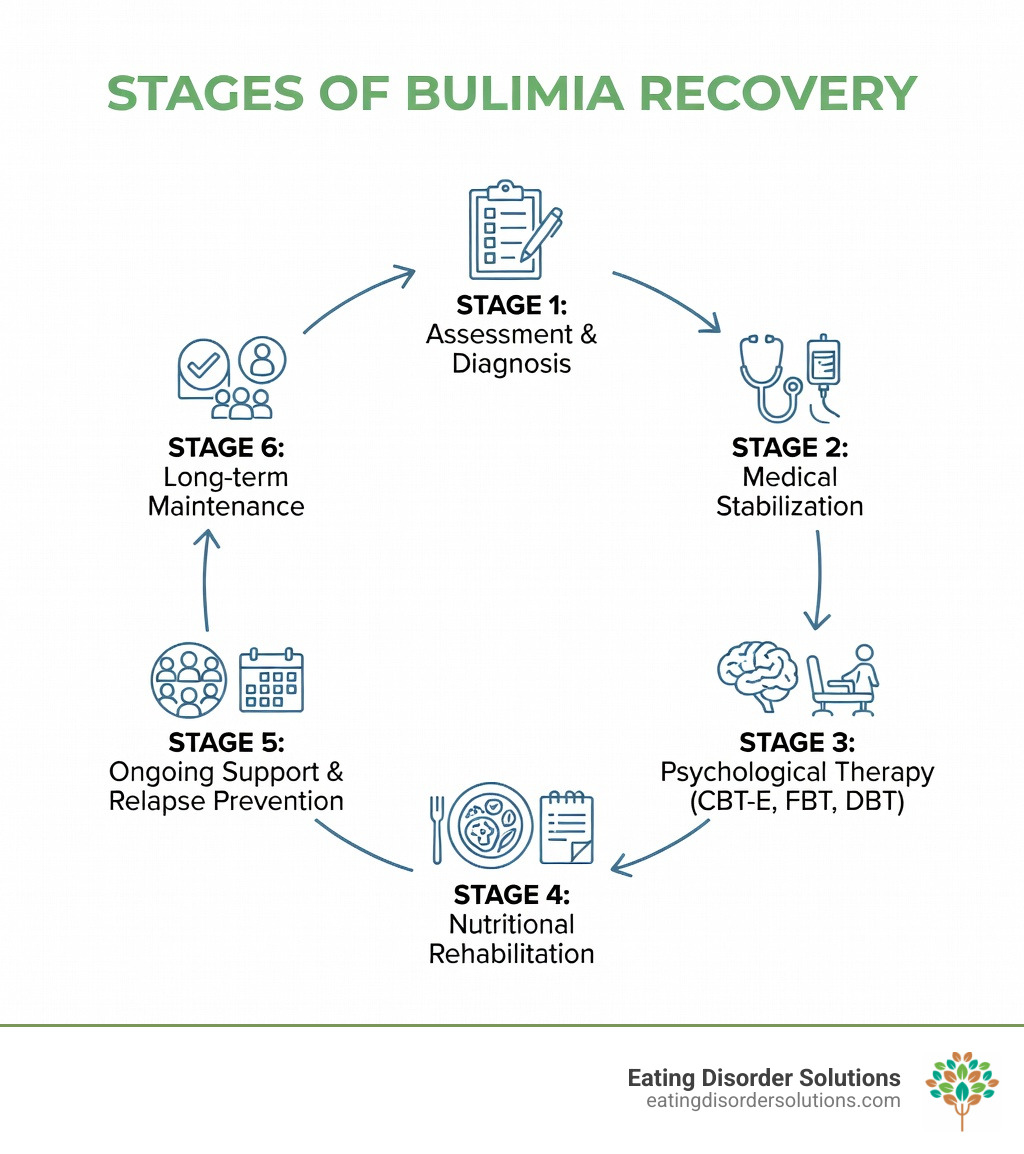
Treatment typically involves multiple components working together: therapy to address the thoughts and behaviors driving the disorder, medical monitoring to manage health complications, nutritional support to rebuild a healthy relationship with food, and sometimes medication to reduce symptoms.
The good news? With proper treatment, more than half of individuals with bulimia improve significantly. Recovery isn’t just about stopping behaviors—it’s about healing your relationship with food, your body, and yourself.
Understanding Bulimia Nervosa: Definition and Diagnosis
When we talk about bulimia nervosa, we are looking at a complex behavioral condition. According to the DSM-V criteria, bulimia is defined by two primary behaviors: recurrent episodes of binge eating and recurrent inappropriate compensatory behaviors to prevent weight gain.
What exactly constitutes a “binge”? It’s more than just overeating at Thanksgiving. It involves eating an amount of food that is definitely larger than what most people would eat in a similar timeframe (usually under two hours) while feeling a profound sense of loss of control. After the binge comes the “purge” or compensatory behavior. This might include self-induced vomiting, the misuse of laxatives or diuretics, fasting, or excessive exercise.
To meet the formal diagnostic criteria, these cycles must occur, on average, at least once a week for three months. However, we want to emphasize that even if your symptoms don’t perfectly match this frequency, you still deserve support. Any level of binging and purging can be dangerous.
It is also important to understand the differences between anorexia and bulimia. While both involve a preoccupation with body weight and shape, individuals with bulimia often maintain a weight that is within or even above the normal range, which can sometimes make the disorder “invisible” to friends and family for a long time.
Diagnostic Warning Signs
Because bulimia is often shrouded in secrecy, healthcare professionals look for specific physical markers during an evaluation. One of the most common is Russell’s sign, which refers to calluses or scars on the knuckles or the back of the hand from repeated self-induced vomiting.
Other physical signs we look for include:
- Parotid swelling: The salivary glands near the jaw can become swollen, often called “chipmunk cheeks,” due to repeated vomiting.
- Dental erosion: Stomach acid is incredibly harsh. Frequent vomiting wears down tooth enamel, leading to cavities, sensitivity, and discoloration.
- Chronic sore throat: The esophagus can become inflamed or even torn from the pressure and acidity of purging.
During a physical exam, a doctor might also find low blood pressure (hypotension), dry skin, or irregular heartbeats. These aren’t just “side effects”—they are signals from the body that it needs help.
Evidence-Based Bulimia Treatment Options

When you decide to pursue bulimia treatment, you aren’t just “trying harder” to stop. You are engaging in a structured, evidence-based process. Research shows that a multidisciplinary team approach—including a therapist, a dietitian, and a medical doctor—is the gold standard for care.
The most widely recognized and effective treatment for bulimia is Enhanced Cognitive Behavioral Therapy (CBT-E). This isn’t just standard talk therapy; it is a specialized version that targets the specific mechanisms that keep an eating disorder going. We focus on normalizing eating patterns, identifying triggers for binges, and challenging the obsessive thoughts about weight and body image.
Another powerful tool is Dialectical Behavior Therapy (DBT). Originally developed for borderline personality disorder, DBT is incredibly effective for bulimia because it teaches emotional regulation and distress tolerance. If you use binging or purging as a way to “numb out” or cope with intense feelings, DBT gives you a new set of skills to handle those emotions without turning to food.
You can explore more about these eating disorder therapy options to see which might be the best fit for your specific needs.
Psychological Therapy Approaches
Beyond CBT and DBT, we often incorporate other specialized approaches:
- Family-Based Treatment (FBT): For adolescents and young adults, involving the family is crucial. FBT empowers parents to support their child’s nutritional recovery and has been shown to double success rates in younger patients.
- Interpersonal Psychotherapy (IPT): This approach focuses on resolving underlying relationship issues or life transitions that may be fueling the eating disorder.
- Trauma-Informed Care: Many people with bulimia have a history of trauma. At Eating Disorder Solutions, we recognize that the eating disorder is often a survival mechanism. By addressing the root trauma in a safe, home-like environment, we help you find more sustainable ways to feel secure.
Medical and Nutritional Components of Recovery
Recovery isn’t just “in your head”—it’s in your body, too. The impact of purging on your body and mind can be severe and requires careful medical management.
The most immediate concern is often electrolyte imbalance. When you purge through vomiting or laxatives, you lose vital minerals like potassium, sodium, and chloride. This isn’t just a minor issue; low potassium can lead to cardiac arrhythmias or even heart failure. This is why regular blood tests and sometimes an ECG (electrocardiogram) are necessary during early treatment.
| Purging Method | Potential Health Risks |
|---|---|
| Self-Induced Vomiting | Dehydration, electrolyte imbalance, esophageal tears, dental erosion, parotid gland swelling |
| Laxative Misuse | Chronic constipation (bowel dependency), laxative abuse dangers, severe dehydration, electrolyte depletion |
| Excessive Exercise | Stress fractures, heart strain, torn ligaments, exhaustion |
| Diuretic Misuse | Kidney damage, extreme dehydration, dangerous drops in blood pressure |
Scientific research on medical complications highlights that while bulimia doesn’t always result in the extreme weight loss seen in anorexia, the internal damage can be just as life-threatening.
The Role of Medication in Bulimia Treatment
While therapy is the primary treatment, medication can be a very helpful “sidekick.” Fluoxetine (Prozac) is currently the only FDA-approved medication specifically for the treatment of bulimia nervosa.
Research has shown that a 60mg dose of fluoxetine can significantly reduce the frequency of binge eating and vomiting episodes, even in individuals who do not have clinical depression. It works by affecting serotonin levels in the brain, which helps regulate both mood and appetite.
Other medications, such as mood stabilizers or different types of SSRIs, may be prescribed to treat co-occurring conditions like anxiety or bipolar disorder. However, we always approach medication as one part of a larger, holistic plan.
Nutritional Counseling: A Pillar of Bulimia Treatment
You can’t think your way out of a nutritional deficit. This is where nutritional therapy comes in. Working with a registered dietitian who specializes in eating disorders is essential.
In the beginning, the goal is often “nutritional rehabilitation.” This means:
- Normalizing Eating Patterns: Moving away from the “all or nothing” mentality and toward regular, scheduled meals.
- Overcoming Fear Foods: Slowly reintroducing foods that previously triggered a binge or were strictly forbidden.
- Relearning Hunger Cues: Bulimia often silences the body’s natural “I’m hungry” or “I’m full” signals. We help you tune back into what your body is actually telling you.
Our dietitians provide meal support to help you navigate the anxiety that often arises during and after eating, ensuring you don’t feel alone in the process.
Determining the Right Level of Care
One of the most common questions we hear is, “How much help do I actually need?” The answer depends on your medical stability, the frequency of your behaviors, and your psychological safety.
For some, residential eating disorder treatment is the best choice. This provides a 24/7 supportive environment where you can step away from the stressors of daily life and focus entirely on healing. It’s especially helpful if you find it impossible to stop purging at home or if you are dealing with severe medical complications.
Inpatient vs. Outpatient Support
If you are medically stable but still need significant structure, there are other options:
- Partial Hospitalization Program (PHP): You spend the majority of your day at the treatment center but return home (or to supportive housing) at night. This is a great “step down” from residential care.
- Intensive Outpatient Program (IOP): Usually involves several hours of therapy and meal support a few days a week, allowing you to maintain some work or school commitments.
- Outpatient Treatment: This involves weekly sessions with your therapist and dietitian. It is often the final stage of the recovery journey.
Hospitalization is usually reserved for acute crises, such as severe electrolyte imbalances, suicidal ideation, or heart problems that require constant monitoring.
Health Risks and Long-Term Recovery Outlook
The road to recovery isn’t always a straight line, but the statistics are encouraging. More than half of people with bulimia improve with treatment. Even though relapse can occur—with about 47% of people in remission experiencing a setback within five years—these moments are not failures. They are simply signs that the treatment plan needs a little adjustment.
Long-term risks of untreated bulimia include permanent dental damage, gastrointestinal issues like IBS (which affects 69% of bulimia patients), and even an increased risk of type 2 diabetes. Most seriously, mortality rates for eating disorders are among the highest of any mental illness, which is why early intervention is so critical.
Strategies for Maintaining Recovery
Staying recovered requires a toolkit of strategies:
- Support Groups: Whether peer-led or professional, groups like those offered by Beat or local Texas organizations provide a community where you don’t have to explain yourself—they already “get it.”
- Trigger Management: Identifying the people, places, or feelings that make you want to binge and having a plan in place (like calling a friend or practicing a DBT skill).
- Self-Compassion: This is perhaps the hardest skill. Learning to forgive yourself for a “bad day” is the best way to prevent a slip from becoming a full-blown relapse.
- Family Involvement: Continued family therapy can help create a supportive home environment that reinforces healthy habits.
Frequently Asked Questions about Bulimia Treatment
How long does treatment typically last?
Every journey is unique. Some people find stability within a few months, while others may benefit from support for a year or more. At Eating Disorder Solutions, we focus on sustainable healing rather than a “quick fix,” which is why we offer a 75-day treatment guarantee to ensure you get the foundation you need.
Can I recover from bulimia without medication?
Yes, many people do! While fluoxetine is a helpful tool for reducing the “biological” urge to binge and purge, the core of recovery is usually psychological and nutritional. If you prefer not to take medication, we will work with you to build a robust therapy and nutrition-based plan.
What should I do if I relapse during recovery?
First, take a deep breath. Relapse is a common part of the process, especially during times of high stress. The best thing to do is to be honest with your treatment team immediately. We don’t judge; we just help you look at what triggered the relapse and how to get back on track.
Conclusion
Taking the first step toward bulimia treatment is an act of incredible courage. It means choosing a life of freedom over a life of secrecy and physical pain.
At Eating Disorder Solutions, we believe in the power of human connection. We provide holistic, trauma-informed care in warm, home-like settings in Dallas and Weatherford, TX. Whether you are looking for residential support or an intensive outpatient program, our team is here to walk beside you.
We understand that different types of eating disorders require different approaches, and we are committed to providing you with an individualized plan that respects your unique story.
If you’re ready to reclaim your life from bulimia, we’re ready to help. You don’t have to do this alone.
Start your bulimia treatment journey today


