
Key Takeaways
Your care team usually includes a dietitian; here is what a dietitian does in eating disorder treatment.
An eating disorder treatment plan is a coordinated, individualized roadmap that brings together therapy, medical care, and nutrition support. Good plans are tailored to the person, adjusted over time, and built around a team rather than a single provider. Understanding the parts of a plan can make treatment feel less overwhelming and easier to begin.
- A treatment plan coordinates psychological therapy, medical monitoring, and nutritional support in one individualized roadmap.
- Evidence-based therapies, such as cognitive behavioral therapy and family-based treatment, are central components.
- Plans are matched to the level of care a person needs, from outpatient to residential or inpatient settings.
- Good plans also address co-occurring conditions and include a strategy for long-term recovery.
- You do not have to be “sick enough” to deserve help; early, individualized treatment improves outcomes.
Why Eating Disorder Treatment Plans Are the Foundation of Recovery
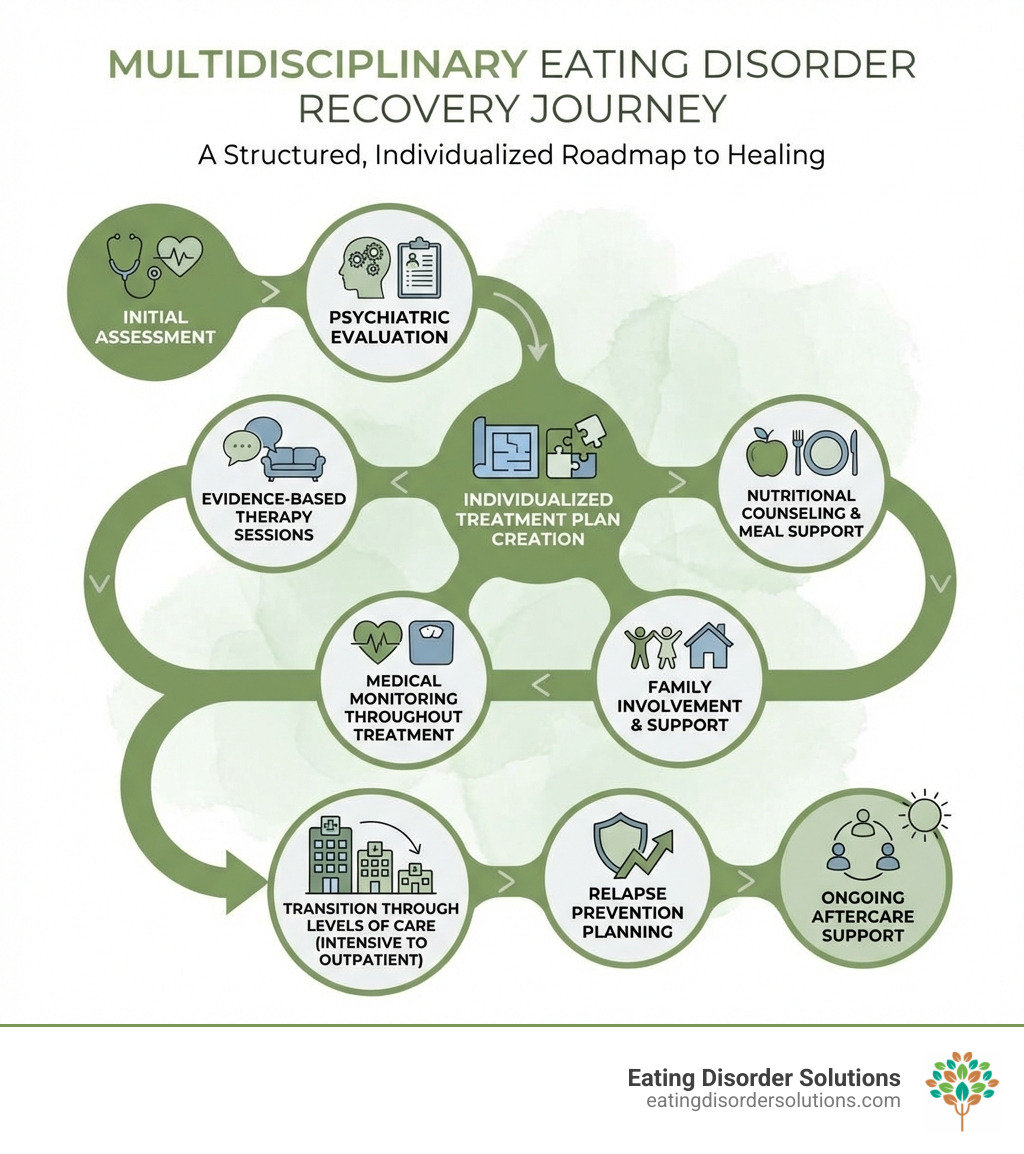
Eating disorder treatment plans are structured, individualized roadmaps that guide recovery through a combination of medical care, psychotherapy, nutritional counseling, and ongoing monitoring. These plans are created by a multidisciplinary team and tailored to each person’s specific diagnosis, symptoms, physical health, and life circumstances. Key components of an effective eating disorder treatment plan include:- Comprehensive assessment – Physical exam, psychiatric evaluation, nutritional status, and medical lab work
- Evidence-based psychotherapy – CBT-ED, DBT, FBT, or IPT tailored to your disorder type
- Medical monitoring – Vital signs, weight restoration, electrolyte balance, and cardiac health
- Nutritional counseling – Meal planning, education, and supervised eating support
- Appropriate level of care – Outpatient, intensive outpatient (IOP), partial hospitalization (PHP), residential, or inpatient based on severity
- Treatment for co-occurring conditions – Addressing depression, anxiety, trauma, or substance use alongside the eating disorder
- Family involvement – Especially crucial for adolescents and young adults
Understanding Common Types and Risks
Eating disorders are serious, potentially life-threatening mental illnesses that affect people of all ages, racial backgrounds, and body weights. To build effective eating disorder treatment plans, we must first understand the specific nuances of the condition being treated.- Anorexia Nervosa: Characterized by extreme food restriction and an intense fear of gaining weight. It has an alarmingly high mortality rate compared to other mental disorders, often due to medical complications or suicide.
- Bulimia Nervosa: Involves cycles of binge eating followed by compensatory behaviors like self-induced vomiting, excessive exercise, or laxative misuse.
- Binge-Eating Disorder (BED): The most common eating disorder in the U.S., marked by recurrent episodes of eating large quantities of food without compensatory purging.
- ARFID (Avoidant Restrictive Food Intake Disorder): Unlike other types, ARFID is usually driven by sensory issues or fear of aversive consequences (like choking) rather than body image concerns.
- OSFED (Other Specified Feeding or Eating Disorder): A category for those who meet many, but not all, criteria for other disorders, yet still experience significant distress.
Components of Effective Eating Disorder Treatment Plans
 Here’s what we know for certain: recovery isn’t a straight line, and it definitely isn’t one-size-fits-all. Effective eating disorder treatment plans are built around you, your history, your struggles, your strengths, and your goals.
That’s why we assemble a multidisciplinary team from day one. Your therapist, dietitian, and medical doctor don’t work in silos. They talk, they collaborate, and they adjust your plan together as you progress. This team approach ensures nothing falls through the cracks.
Everything starts with a thorough psychiatric evaluation and medical stabilization. We need to understand what’s happening in your mind and your body before we can create a roadmap forward. At Eating Disorder Solutions, we follow the 6 stages of our holistic eating disorder treatment, which means we’re looking at the physical, emotional, and spiritual aspects of your healing, not just the symptoms on the surface.
Nutritional therapy is another essential building block. But it’s not about handing you a meal plan and calling it a day. It’s about rebuilding trust with food, learning what your body actually needs, and having someone sit with you through the hard meals when anxiety spikes.
Goal setting happens early and often. Your treatment plan isn’t something that gets written once and filed away. It evolves with you, reflecting where you are now and where you want to be next month, next season, next year.
When it comes to therapy modalities, we draw from the best evidence-based options. Cognitive Behavioral Therapy for Eating Disorders (CBT-ED) helps you identify and change the distorted thoughts driving disordered behaviors, it’s particularly effective for bulimia, binge-eating disorder, and anorexia in adults. Dialectical Behavioral Therapy (DBT) focuses on building skills like distress tolerance and emotional regulation, especially helpful for those who struggle with intense emotions or self-harm. And Family-Based Treatment (FBT) empowers parents and caregivers to support their adolescent or young adult through the refeeding process at home. These familybased treatment strategies for recovery emphasize the importance of a strong support system during rehabilitation. By fostering open communication and encouraging family involvement, individuals can experience a more guided and compassionate journey toward healing. Ultimately, these approaches not only address the individual’s needs but also strengthen familial bonds through shared experiences and understanding.
Here’s what we know for certain: recovery isn’t a straight line, and it definitely isn’t one-size-fits-all. Effective eating disorder treatment plans are built around you, your history, your struggles, your strengths, and your goals.
That’s why we assemble a multidisciplinary team from day one. Your therapist, dietitian, and medical doctor don’t work in silos. They talk, they collaborate, and they adjust your plan together as you progress. This team approach ensures nothing falls through the cracks.
Everything starts with a thorough psychiatric evaluation and medical stabilization. We need to understand what’s happening in your mind and your body before we can create a roadmap forward. At Eating Disorder Solutions, we follow the 6 stages of our holistic eating disorder treatment, which means we’re looking at the physical, emotional, and spiritual aspects of your healing, not just the symptoms on the surface.
Nutritional therapy is another essential building block. But it’s not about handing you a meal plan and calling it a day. It’s about rebuilding trust with food, learning what your body actually needs, and having someone sit with you through the hard meals when anxiety spikes.
Goal setting happens early and often. Your treatment plan isn’t something that gets written once and filed away. It evolves with you, reflecting where you are now and where you want to be next month, next season, next year.
When it comes to therapy modalities, we draw from the best evidence-based options. Cognitive Behavioral Therapy for Eating Disorders (CBT-ED) helps you identify and change the distorted thoughts driving disordered behaviors, it’s particularly effective for bulimia, binge-eating disorder, and anorexia in adults. Dialectical Behavioral Therapy (DBT) focuses on building skills like distress tolerance and emotional regulation, especially helpful for those who struggle with intense emotions or self-harm. And Family-Based Treatment (FBT) empowers parents and caregivers to support their adolescent or young adult through the refeeding process at home. These familybased treatment strategies for recovery emphasize the importance of a strong support system during rehabilitation. By fostering open communication and encouraging family involvement, individuals can experience a more guided and compassionate journey toward healing. Ultimately, these approaches not only address the individual’s needs but also strengthen familial bonds through shared experiences and understanding.
Evidence-Based Psychotherapy in Treatment Plans
If there’s one thing that will carry you through recovery, it’s good therapy. Not just any therapy, evidence-based, research-backed approaches that have been proven to work. Cognitive Behavioral Therapy for Eating Disorders (CBT-ED) has strong evidence for bulimia nervosa and binge eating disorder and is among the most studied of the eating disorder psychotherapies (Linardon et al., 2017). It focuses on the “here and now,” helping you interrupt harmful thought patterns before they turn into harmful actions. Instead of dwelling endlessly on the past, CBT-ED teaches you practical tools to use today. We also lean heavily on Dialectical Behavioral Therapy (DBT), especially for clients who experience intense emotional swings. Learning to practice distress tolerance in eating disorder recovery is a game-changer. It teaches you how to sit with uncomfortable feelings, like anxiety, shame, or sadness, without immediately reaching for disordered behaviors to numb them. Interpersonal Psychotherapy (IPT) is another valuable tool, particularly when relationship struggles or grief are feeding the eating disorder. IPT helps you understand how your connections with others impact your mental health and gives you strategies to improve those relationships. For some clients, exposure therapy becomes a critical piece of the puzzle. This involves gradually facing the foods, situations, or body-related experiences that trigger fear. It’s not about forcing yourself to be uncomfortable for no reason, it’s about teaching your brain that the feared outcome (weight gain, loss of control, judgment from others) isn’t as catastrophic as it feels. And because so many eating disorders are rooted in or worsened by past trauma, we provide trauma-informed care in everything we do. This means creating a safe, predictable environment where you can process painful memories without being retraumatized. Our approach aligns with The American Psychiatric Association Practice Guideline, ensuring that every method we use is grounded in the latest clinical research.The Role of Medical Monitoring in Eating Disorder Treatment Plans
You can’t heal a mind that’s trapped in a starving body. That’s why medical monitoring isn’t optional, it’s foundational. When someone is medically compromised, therapy simply can’t be as effective. The brain needs adequate nutrition to function, to process emotions, to make decisions. Without it, you’re trying to build a house on quicksand. Weight restoration is often a necessary (and frankly, non-negotiable) part of recovery. We know this can be one of the scariest parts of treatment, but weight restoration is an essential piece to finding your peace. When your body reaches a healthier weight, your brain starts working properly again. Suddenly, therapy clicks in a way it couldn’t before. We closely monitor vital signs like heart rate, blood pressure, and body temperature. We track electrolyte balance through regular lab work because imbalances can quickly become life-threatening. Cardiac monitoring, including ECGs, helps us catch any heart-related complications early. One condition we watch for vigilantly is refeeding syndrome, a potentially dangerous shift in fluids and electrolytes that can happen when a severely malnourished person begins eating again. It sounds scary, but with proper medical oversight, it’s entirely preventable. Even for clients in lower levels of care, medical monitoring remains a priority. We offer various eating disorder outpatient meal support options so that as you gain independence, your physical health is still being carefully tracked. The bottom line? Your eating disorder treatment plan must address the body and the mind. You can’t separate the two and expect lasting recovery. When facing challenges in eating disorder recovery, it is essential to seek support from professionals who understand the complexities of these issues. Additionally, building a strong network of friends and family can provide the encouragement needed to navigate difficult moments. Emphasizing self-compassion and patience is crucial as you work towards healing and resilience.Navigating Levels of Care
Recovery isn’t a single destination; it’s a transition through various levels of care. Depending on the severity of the symptoms, a patient might start at a high level of intensity and “step down” as they gain stability.- Medical Hospitalization: For those in acute medical crisis (e.g., unstable heart rate or severe electrolyte imbalance).
- Residential Treatment: Our residential eating disorder treatment program provides 24/7 care in a warm, home-like setting. This is ideal for those who need a break from their daily environment to focus entirely on healing.
- Partial Hospitalization Program (PHP): Our PHP offers structured treatment for the majority of the day (often 5-6 days a week) while allowing clients to sleep at home or in supportive housing.
- Intensive Outpatient Program (IOP): The IOP level of care provides several hours of therapy a few days a week, helping clients transition back to work or school.
- Outpatient Care: This is the least intensive level, involving weekly sessions with a therapist and dietitian through an outpatient program.
Addressing Comorbidities and Long-Term Recovery
It is rare for an eating disorder to exist in a vacuum. Most of our clients also struggle with depression, anxiety, or bipolar disorder. If these aren’t addressed, the risk of relapse remains high. Our co-occurring disorder treatment ensures that we are treating the “why” behind the behaviors. For example, if someone uses binge eating to numb the pain of depression, we must treat the depression to truly stop the bingeing. Long-term recovery also requires a robust relapse prevention plan. This involves identifying and handling relapse triggers, such as stress, diet culture, or body image changes. We don’t just say goodbye when you finish a program; we emphasize aftercare planning to ensure you have a support system waiting for you in the “real world.”Frequently Asked Questions about Eating Disorder Treatment
What is an Eating Disorder Treatment and Management Plan (EDP)?
An EDP is a structured framework often used in clinical settings (and specifically defined within the Australian Medicare system) to provide up to 40 psychological sessions and 20 dietetic sessions over 12 months. While the specific “EDP” terminology is often linked to the Quick Reference Guide for Eating Disorder MBS items, the concept of a multi-session, multidisciplinary plan is the global standard for high-quality care.How do I know if I am “sick enough” for a treatment plan?
This is a common fear, but the truth is that you do not need to be at death’s door to deserve care. If your relationship with food is causing you distress or interfering with your life, you are “sick enough.” We encourage you to read our guide, Am I Sick Enough for Treatment?, to help quiet that inner critic.Can family members be involved in the treatment plan?
Absolutely. In fact, family therapy and involvement are often the “secret sauce” for long-term success. Whether it’s through Family-Based Treatment (FBT) for younger clients or supportive family sessions for adults, healing the family system helps create a recovery-friendly environment at home.Conclusion
At Eating Disorder Solutions, we understand that the journey toward recovery can feel overwhelming. That’s why we’ve dedicated ourselves to providing holistic, trauma-informed care in Weatherford, TX. We believe that healing happens best in a warm, home-like setting where human connection is the priority. Our eating disorder treatment plans are designed to meet you exactly where you are. We are deeply committed to our individualized, compassionate approach to care. Whether you are seeking binge eating disorder treatment in TX or support for anorexia or bulimia, our team is here to walk beside you every step of the way. Recovery isn’t just about stopping behaviors; it’s about reclaiming your life. Let us help you start that journey today.References
Choosing the right setting starts with understanding the levels of care available for eating disorder treatment.
- Linardon J, Wade TD, de la Piedad Garcia X, Brennan L. The efficacy of cognitive-behavioral therapy for eating disorders: a systematic review and meta-analysis. J Consult Clin Psychol. 2017;85(11):1080-1094. doi:10.1037/ccp0000245
- Lock J, Le Grange D, Agras WS, Moye A, Bryson SW, Jo B. Randomized clinical trial comparing family-based treatment with adolescent-focused individual therapy for adolescents with anorexia nervosa. Arch Gen Psychiatry. 2010;67(10):1025-1032. doi:10.1001/archgenpsychiatry.2010.128
- Treasure J, Duarte TA, Schmidt U. Eating disorders. Lancet. 2020;395(10227):899-911. doi:10.1016/S0140-6736(20)30059-3
Support and Crisis Resources
If you or someone you love is struggling, support is available. If you are in crisis or need immediate help, call or text 988 to reach the 988 Suicide and Crisis Lifeline, a free, confidential service available 24/7.
Related Reading
- The Intertwined Struggle: Eating Disorders and Depression Explained
- Is Your Relationship with Food Healthy? A Self-Test to Find Out
For more educational articles and resources on eating disorder recovery, visit our Educational Resources page.
Your care team usually includes a dietitian; here is what a dietitian does in eating disorder treatment.
An eating disorder treatment plan is a coordinated, individualized roadmap that brings together therapy, medical care, and nutrition support. Good plans are tailored to the person, adjusted over time, and built around a team rather than a single provider. Understanding the parts of a plan can make treatment feel less overwhelming and easier to begin.
- A treatment plan coordinates psychological therapy, medical monitoring, and nutritional support in one individualized roadmap.
- Evidence-based therapies, such as cognitive behavioral therapy and family-based treatment, are central components.
- Plans are matched to the level of care a person needs, from outpatient to residential or inpatient settings.
- Good plans also address co-occurring conditions and include a strategy for long-term recovery.
- You do not have to be “sick enough” to deserve help; early, individualized treatment improves outcomes.
Why Eating Disorder Treatment Plans Are the Foundation of Recovery
Eating disorder treatment plans are structured, individualized roadmaps that guide recovery through a combination of medical care, psychotherapy, nutritional counseling, and ongoing monitoring. These plans are created by a multidisciplinary team and tailored to each person’s specific diagnosis, symptoms, physical health, and life circumstances. Key components of an effective eating disorder treatment plan include:- Comprehensive assessment – Physical exam, psychiatric evaluation, nutritional status, and medical lab work
- Evidence-based psychotherapy – CBT-ED, DBT, FBT, or IPT tailored to your disorder type
- Medical monitoring – Vital signs, weight restoration, electrolyte balance, and cardiac health
- Nutritional counseling – Meal planning, education, and supervised eating support
- Appropriate level of care – Outpatient, intensive outpatient (IOP), partial hospitalization (PHP), residential, or inpatient based on severity
- Treatment for co-occurring conditions – Addressing depression, anxiety, trauma, or substance use alongside the eating disorder
- Family involvement – Especially crucial for adolescents and young adults
Understanding Common Types and Risks
Eating disorders are serious, potentially life-threatening mental illnesses that affect people of all ages, racial backgrounds, and body weights. To build effective eating disorder treatment plans, we must first understand the specific nuances of the condition being treated.- Anorexia Nervosa: Characterized by extreme food restriction and an intense fear of gaining weight. It has an alarmingly high mortality rate compared to other mental disorders, often due to medical complications or suicide.
- Bulimia Nervosa: Involves cycles of binge eating followed by compensatory behaviors like self-induced vomiting, excessive exercise, or laxative misuse.
- Binge-Eating Disorder (BED): The most common eating disorder in the U.S., marked by recurrent episodes of eating large quantities of food without compensatory purging.
- ARFID (Avoidant Restrictive Food Intake Disorder): Unlike other types, ARFID is usually driven by sensory issues or fear of aversive consequences (like choking) rather than body image concerns.
- OSFED (Other Specified Feeding or Eating Disorder): A category for those who meet many, but not all, criteria for other disorders, yet still experience significant distress.
Components of Effective Eating Disorder Treatment Plans
Here’s what we know for certain: recovery isn’t a straight line, and it definitely isn’t one-size-fits-all. Effective eating disorder treatment plans are built around you, your history, your struggles, your strengths, and your goals.
That’s why we assemble a multidisciplinary team from day one. Your therapist, dietitian, and medical doctor don’t work in silos. They talk, they collaborate, and they adjust your plan together as you progress. This team approach ensures nothing falls through the cracks.
Everything starts with a thorough psychiatric evaluation and medical stabilization. We need to understand what’s happening in your mind and your body before we can create a roadmap forward. At Eating Disorder Solutions, we follow the 6 stages of our holistic eating disorder treatment, which means we’re looking at the physical, emotional, and spiritual aspects of your healing, not just the symptoms on the surface.
Nutritional therapy is another essential building block. But it’s not about handing you a meal plan and calling it a day. It’s about rebuilding trust with food, learning what your body actually needs, and having someone sit with you through the hard meals when anxiety spikes.
Goal setting happens early and often. Your treatment plan isn’t something that gets written once and filed away. It evolves with you, reflecting where you are now and where you want to be next month, next season, next year.
When it comes to therapy modalities, we draw from the best evidence-based options. Cognitive Behavioral Therapy for Eating Disorders (CBT-ED) helps you identify and change the distorted thoughts driving disordered behaviors, it’s particularly effective for bulimia, binge-eating disorder, and anorexia in adults. Dialectical Behavioral Therapy (DBT) focuses on building skills like distress tolerance and emotional regulation, especially helpful for those who struggle with intense emotions or self-harm. And Family-Based Treatment (FBT) empowers parents and caregivers to support their adolescent or young adult through the refeeding process at home. These familybased treatment strategies for recovery emphasize the importance of a strong support system during rehabilitation. By fostering open communication and encouraging family involvement, individuals can experience a more guided and compassionate journey toward healing. Ultimately, these approaches not only address the individual’s needs but also strengthen familial bonds through shared experiences and understanding.
Evidence-Based Psychotherapy in Treatment Plans
If there’s one thing that will carry you through recovery, it’s good therapy. Not just any therapy, evidence-based, research-backed approaches that have been proven to work. Cognitive Behavioral Therapy for Eating Disorders (CBT-ED) has strong evidence for bulimia nervosa and binge eating disorder and is among the most studied of the eating disorder psychotherapies (Linardon et al., 2017). It focuses on the “here and now,” helping you interrupt harmful thought patterns before they turn into harmful actions. Instead of dwelling endlessly on the past, CBT-ED teaches you practical tools to use today. We also lean heavily on Dialectical Behavioral Therapy (DBT), especially for clients who experience intense emotional swings. Learning to practice distress tolerance in eating disorder recovery is a game-changer. It teaches you how to sit with uncomfortable feelings, like anxiety, shame, or sadness, without immediately reaching for disordered behaviors to numb them. Interpersonal Psychotherapy (IPT) is another valuable tool, particularly when relationship struggles or grief are feeding the eating disorder. IPT helps you understand how your connections with others impact your mental health and gives you strategies to improve those relationships. For some clients, exposure therapy becomes a critical piece of the puzzle. This involves gradually facing the foods, situations, or body-related experiences that trigger fear. It’s not about forcing yourself to be uncomfortable for no reason, it’s about teaching your brain that the feared outcome (weight gain, loss of control, judgment from others) isn’t as catastrophic as it feels. And because so many eating disorders are rooted in or worsened by past trauma, we provide trauma-informed care in everything we do. This means creating a safe, predictable environment where you can process painful memories without being retraumatized. Our approach aligns with The American Psychiatric Association Practice Guideline, ensuring that every method we use is grounded in the latest clinical research.The Role of Medical Monitoring in Eating Disorder Treatment Plans
You can’t heal a mind that’s trapped in a starving body. That’s why medical monitoring isn’t optional, it’s foundational. When someone is medically compromised, therapy simply can’t be as effective. The brain needs adequate nutrition to function, to process emotions, to make decisions. Without it, you’re trying to build a house on quicksand. Weight restoration is often a necessary (and frankly, non-negotiable) part of recovery. We know this can be one of the scariest parts of treatment, but weight restoration is an essential piece to finding your peace. When your body reaches a healthier weight, your brain starts working properly again. Suddenly, therapy clicks in a way it couldn’t before. We closely monitor vital signs like heart rate, blood pressure, and body temperature. We track electrolyte balance through regular lab work because imbalances can quickly become life-threatening. Cardiac monitoring, including ECGs, helps us catch any heart-related complications early. One condition we watch for vigilantly is refeeding syndrome, a potentially dangerous shift in fluids and electrolytes that can happen when a severely malnourished person begins eating again. It sounds scary, but with proper medical oversight, it’s entirely preventable. Even for clients in lower levels of care, medical monitoring remains a priority. We offer various eating disorder outpatient meal support options so that as you gain independence, your physical health is still being carefully tracked. The bottom line? Your eating disorder treatment plan must address the body and the mind. You can’t separate the two and expect lasting recovery. When facing challenges in eating disorder recovery, it is essential to seek support from professionals who understand the complexities of these issues. Additionally, building a strong network of friends and family can provide the encouragement needed to navigate difficult moments. Emphasizing self-compassion and patience is crucial as you work towards healing and resilience.Navigating Levels of Care
Recovery isn’t a single destination; it’s a transition through various levels of care. Depending on the severity of the symptoms, a patient might start at a high level of intensity and “step down” as they gain stability.- Medical Hospitalization: For those in acute medical crisis (e.g., unstable heart rate or severe electrolyte imbalance).
- Residential Treatment: Our residential eating disorder treatment program provides 24/7 care in a warm, home-like setting. This is ideal for those who need a break from their daily environment to focus entirely on healing.
- Partial Hospitalization Program (PHP): Our PHP offers structured treatment for the majority of the day (often 5-6 days a week) while allowing clients to sleep at home or in supportive housing.
- Intensive Outpatient Program (IOP): The IOP level of care provides several hours of therapy a few days a week, helping clients transition back to work or school.
- Outpatient Care: This is the least intensive level, involving weekly sessions with a therapist and dietitian through an outpatient program.
Addressing Comorbidities and Long-Term Recovery
It is rare for an eating disorder to exist in a vacuum. Most of our clients also struggle with depression, anxiety, or bipolar disorder. If these aren’t addressed, the risk of relapse remains high. Our co-occurring disorder treatment ensures that we are treating the “why” behind the behaviors. For example, if someone uses binge eating to numb the pain of depression, we must treat the depression to truly stop the bingeing. Long-term recovery also requires a robust relapse prevention plan. This involves identifying and handling relapse triggers, such as stress, diet culture, or body image changes. We don’t just say goodbye when you finish a program; we emphasize aftercare planning to ensure you have a support system waiting for you in the “real world.”Frequently Asked Questions about Eating Disorder Treatment
What is an Eating Disorder Treatment and Management Plan (EDP)?
An EDP is a structured framework often used in clinical settings (and specifically defined within the Australian Medicare system) to provide up to 40 psychological sessions and 20 dietetic sessions over 12 months. While the specific “EDP” terminology is often linked to the Quick Reference Guide for Eating Disorder MBS items, the concept of a multi-session, multidisciplinary plan is the global standard for high-quality care.How do I know if I am “sick enough” for a treatment plan?
This is a common fear, but the truth is that you do not need to be at death’s door to deserve care. If your relationship with food is causing you distress or interfering with your life, you are “sick enough.” We encourage you to read our guide, Am I Sick Enough for Treatment?, to help quiet that inner critic.Can family members be involved in the treatment plan?
Absolutely. In fact, family therapy and involvement are often the “secret sauce” for long-term success. Whether it’s through Family-Based Treatment (FBT) for younger clients or supportive family sessions for adults, healing the family system helps create a recovery-friendly environment at home.Conclusion
At Eating Disorder Solutions, we understand that the journey toward recovery can feel overwhelming. That’s why we’ve dedicated ourselves to providing holistic, trauma-informed care in Weatherford, TX. We believe that healing happens best in a warm, home-like setting where human connection is the priority. Our eating disorder treatment plans are designed to meet you exactly where you are. We are deeply committed to our individualized, compassionate approach to care. Whether you are seeking binge eating disorder treatment in TX or support for anorexia or bulimia, our team is here to walk beside you every step of the way. Recovery isn’t just about stopping behaviors; it’s about reclaiming your life. Let us help you start that journey today.References
Choosing the right setting starts with understanding the levels of care available for eating disorder treatment.
- Linardon J, Wade TD, de la Piedad Garcia X, Brennan L. The efficacy of cognitive-behavioral therapy for eating disorders: a systematic review and meta-analysis. J Consult Clin Psychol. 2017;85(11):1080-1094. doi:10.1037/ccp0000245
- Lock J, Le Grange D, Agras WS, Moye A, Bryson SW, Jo B. Randomized clinical trial comparing family-based treatment with adolescent-focused individual therapy for adolescents with anorexia nervosa. Arch Gen Psychiatry. 2010;67(10):1025-1032. doi:10.1001/archgenpsychiatry.2010.128
- Treasure J, Duarte TA, Schmidt U. Eating disorders. Lancet. 2020;395(10227):899-911. doi:10.1016/S0140-6736(20)30059-3
Support and Crisis Resources
If you or someone you love is struggling, support is available. If you are in crisis or need immediate help, call or text 988 to reach the 988 Suicide and Crisis Lifeline, a free, confidential service available 24/7.
Related Reading
- The Intertwined Struggle: Eating Disorders and Depression Explained
- Is Your Relationship with Food Healthy? A Self-Test to Find Out
For more educational articles and resources on eating disorder recovery, visit our Educational Resources page.