

Beyond Constipation: Unpacking What Laxatives Do
What laxatives do is help your body have a bowel movement when you’re constipated. They’re a type of medicine used to relieve discomfort when lifestyle changes, like eating more fiber and drinking plenty of water, haven’t worked.
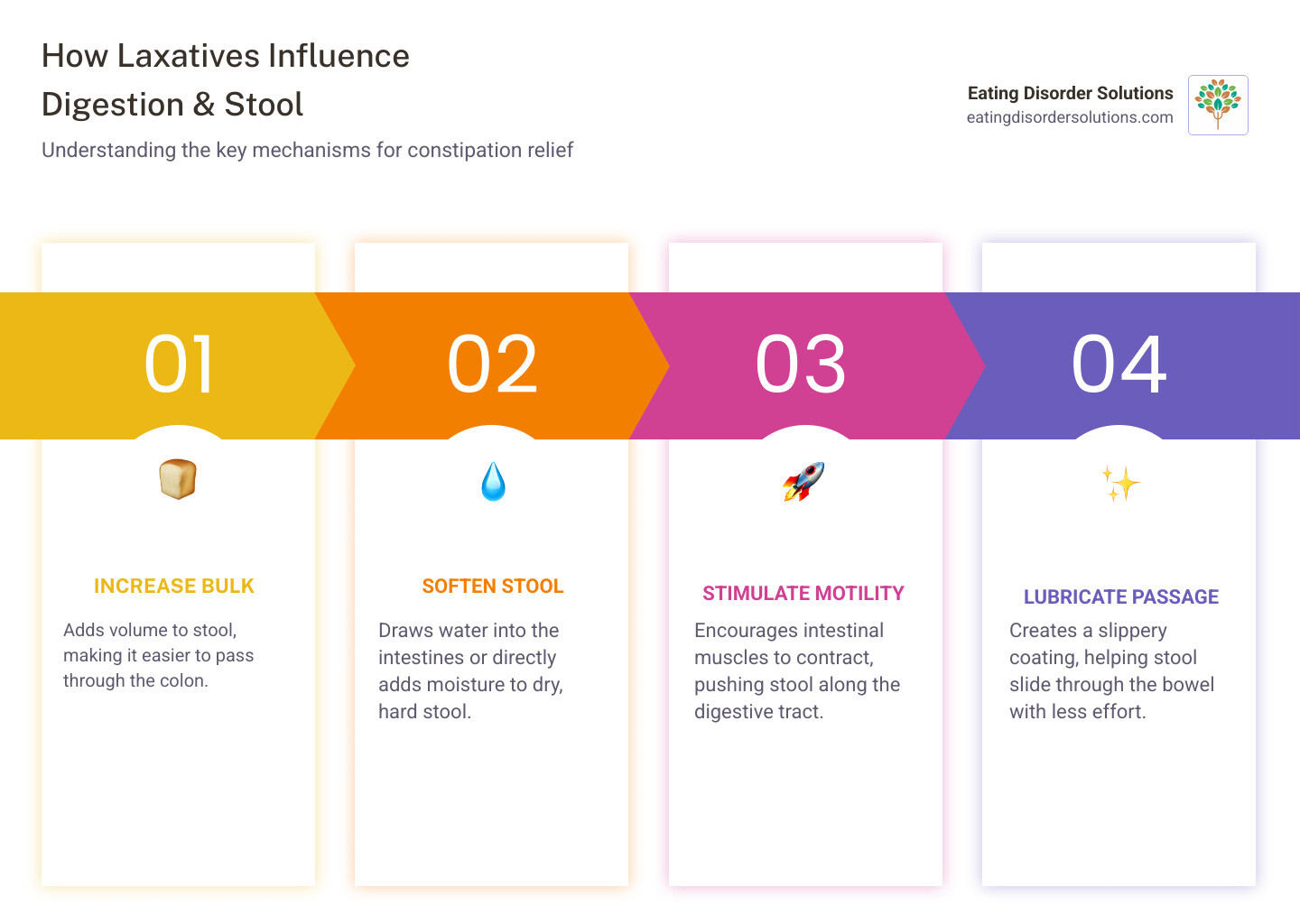
Simply put, laxatives assist your digestive system in several key ways to ease constipation:
- Increase stool bulk: They add volume to your stool, making it easier to pass.
- Soften stool: They draw water into the intestines or add moisture to the stool itself.
- Stimulate bowel movement: Some types gently encourage your intestinal muscles to contract and move stool along.
- Lubricate the bowel: Others help stool slide through more easily.
Most of us know the misery of constipation—struggling to poop, hard stools, or feeling like your bowels are never truly empty. It can be a lonely and confusing experience, especially when you’re trying to manage your health. This guide is here to give you clear, non-judgmental information about laxatives, how they work, and how to use them safely. We want to help you feel informed and supported on your path to better digestive health.
What Laxatives Do: A Comprehensive Guide to Digestive Health
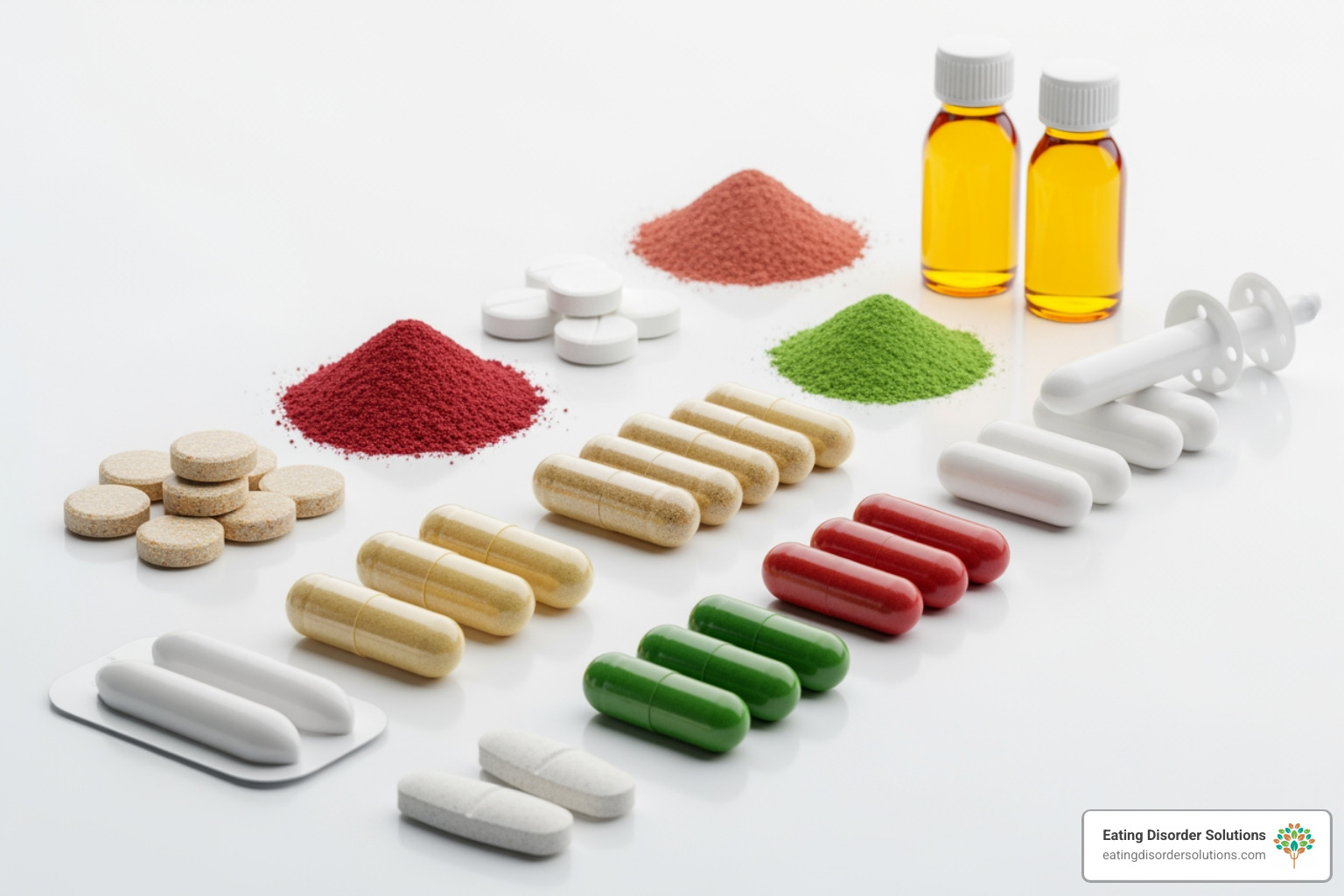
When we talk about what laxatives do, we are looking at a broad category of substances designed to facilitate bodily excretion. While many people think of them as a “quick fix,” they are actually complex tools that interact with our physiology in specific ways. Chronic idiopathic constipation (CIC) affects approximately 8% to 12% of the US population, meaning millions of people are reaching for these products every day.
Laxatives are primarily indicated for the treatment of constipation, but they are also used for bowel preparation before medical procedures like colonoscopies or to prevent straining in patients with heart disease or hemorrhoids. According to Scientific research on laxative classifications and mechanisms, these medications are categorized based on how they interact with the gut.
Understanding what laxatives do to stool consistency
The texture and moisture content of your stool are the biggest factors in how easy it is to pass. Several types of laxatives focus specifically on these physical properties:
- Water Retention: Osmotic laxatives draw water from surrounding body tissues into the bowel. This extra fluid makes the stool softer and easier to move.
- Stool Softening: Emollient laxatives (stool softeners) act like a detergent, allowing water and fats to penetrate the stool, preventing it from becoming hard and “pebbly.”
- Bulking Action: Fiber-based laxatives absorb liquid in the intestines to create larger, softer stools. This “bulk” puts pressure on the intestinal walls, which signals the body that it is time for a bowel movement.
| Laxative Type | Common Mechanism | Typical Onset Time |
|---|---|---|
| Bulk-forming | Absorbs liquid to add mass | 12 hours to 3 days |
| Stool Softener | Adds moisture/fat to stool | 12 hours to 3 days |
| Osmotic (Oral) | Draws water into the colon | 1 to 3 days |
| Saline Osmotic | Rapid fluid draw-in | 30 minutes to 6 hours |
| Stimulant | Triggers muscle contractions | 6 to 12 hours |
| Rectal (Suppository) | Localized action | 15 to 60 minutes |
What laxatives do to stimulate bowel motility
While some laxatives focus on the stool, others focus on the “plumbing” itself. Stimulant laxatives work by irritating the intestinal lining or stimulating the nerves in the gut. This irritation triggers the muscles in the colon to contract more frequently and with more force—a process known as peristalsis.
This increased motility speeds up the transit time, meaning the stool spends less time in the colon where water is normally reabsorbed. By moving things along faster, the stool remains more hydrated, and the urge to go becomes more urgent. While effective, this “shoving” action can lead to tummy cramps and is generally recommended only as a third-line treatment after other methods have failed.
Classifying Laxatives: Types and Functions
Navigating the pharmacy aisle can be overwhelming. To understand what laxatives do for your specific situation, it helps to know which “family” a product belongs to. We generally categorize them into four main groups, plus a few specialized prescription options.
Bulk-forming and osmotic agents
These are often considered the “gentlest” options and are usually the first place we recommend starting if lifestyle changes haven’t done the trick.
- Bulk-forming Laxatives: These include psyllium (Metamucil), methylcellulose (Citrucel), and wheat dextrin (Benefiber). They are essentially concentrated fiber. Because they work naturally with your body’s mechanics, they are often the safest for long-term management under medical supervision. However, you must drink plenty of water with them; otherwise, they can actually cause a blockage.
- Osmotic Laxatives: These include polyethylene glycol (MiraLAX), magnesium hydroxide (Milk of Magnesia), and lactulose. They work by keeping water in the stool. Magnesium-based osmotics are often used for faster relief, while PEG is frequently used for management of chronic constipation because it is well-tolerated and doesn’t usually cause the same “urgency” as stimulants.
Stimulants and stool softeners
When the gentle approach isn’t enough, or if the stool is particularly hard, these categories come into play.
- Stimulant Laxatives: Bisacodyl (Dulcolax) and Senna (Senokot) are the most common. These are the “powerhouses” that trigger muscle contractions. They are effective for occasional, stubborn constipation but carry a higher risk of side effects like cramping and diarrhea.
- Stool Softeners: Docusate (Colace) is the primary example here. Interestingly, some Scientific research suggests that docusate may not be much more effective than a placebo for some people, but it is frequently prescribed after surgery to prevent straining.
- Lubricant Laxatives: Mineral oil is the classic example. It coats the stool and the intestinal wall with a waterproof layer, allowing the stool to slide through the colon more easily.
Safety Guidelines and Proper Administration
Taking a laxative might seem as simple as swallowing a pill, but proper administration is key to avoiding “tummy trouble” and ensuring the medicine actually works.
Safe usage and dosage guidelines
First and foremost: Always read the label. Many people assume that because laxatives are over-the-counter (OTC), they can’t be harmful. However, taking more than the recommended dose can lead to severe dehydration and electrolyte imbalances.
- Hydration is non-negotiable: Most laxatives work by manipulating water. If you aren’t drinking enough (aim for 8–10 glasses a day), bulk-forming laxatives can harden like concrete in your gut, and osmotic laxatives will pull water from your vital organs instead of your waste.
- Timing matters: Stimulant laxatives are often taken at bedtime so that a bowel movement occurs the following morning.
- The “One Week” Rule: OTC laxatives are intended for short-term use—usually no more than seven days. If you find you need them longer, it is time to talk to a doctor. Persistent constipation can sometimes mask more serious issues like colorectal cancer or bowel obstructions.
Misusing these medications can have a significant impact of purging on the body, leading to a cycle where the body forgets how to function naturally.
Precautions for special populations
Not every laxative is safe for every person. We always suggest checking with a healthcare provider if you fall into one of these groups:
- Children: Never give a child under age 6 a laxative unless a pediatrician recommends it. Their fluid balance is much more delicate than an adult’s.
- Pregnancy and Breastfeeding: Constipation is very common during pregnancy, but stimulant laxatives can sometimes trigger uterine contractions. Bulk-forming agents are usually the preferred choice. Some ingredients can also pass into breast milk and cause diarrhea in nursing infants.
- The Elderly: Older adults are at a higher risk for dehydration and electrolyte disturbances, especially if they have kidney or heart issues.
- Chronic Conditions: People with Crohn’s disease, ulcerative colitis, or kidney disease must be extremely cautious, as certain laxatives (especially those containing magnesium or sodium) can cause dangerous metabolic shifts.
The Dangers of Long-Term Use and Abuse
While laxatives are helpful tools for occasional relief, they can become dangerous when used incorrectly or for the wrong reasons. At Eating Disorder Solutions, we frequently see the physical and emotional toll that laxative misuse takes on individuals.
Physical and psychological risks of overuse
The human body is remarkably adaptive, but it can become “lazy” if we rely too heavily on external help.
- Dependency and “Cathartic Colon”: Over time, especially with stimulant laxatives, the colon can lose its muscle tone and nerve sensitivity. This is sometimes called “cathartic colon.” The body becomes dependent on the laxative to move stool at all, creating a vicious cycle of worsening constipation.
- Electrolyte Imbalance: This is perhaps the most dangerous risk. Laxatives can flush out essential minerals like potassium, magnesium, and sodium. These laxative abuse dangers can lead to heart arrhythmias, kidney damage, seizures, and even death.
- Dehydration: Chronic diarrhea caused by laxative overuse strips the body of water, leading to dizziness, fainting, and organ strain.
Recognizing the signs of laxative misuse
Laxative abuse is often a hidden struggle. It is frequently used as a method of “purging” in eating disorders like Bulimia Nervosa or Anorexia (Binge-Eating/Purging Type). There is a common misconception that laxatives can prevent the absorption of calories. In reality, laxatives work on the large intestine (colon), but most calorie absorption happens in the small intestine before the laxative takes effect.
Any weight loss seen with laxatives is almost entirely water and stool weight, which returns as soon as the person rehydrates. Signs that someone might be struggling with misuse include:
- Spending excessive time in the bathroom.
- Frequent complaints of abdominal pain or cramping.
- Evidence of empty laxative packaging in the trash.
- Significant fluctuations in “water weight” or visible swelling (edema) in the hands and feet.
If you or a loved one is using laxatives to control weight, please know that help is available. Our team provides compassionate, trauma-informed care to help you break this cycle and restore your body’s natural rhythm.
Lifestyle Alternatives for Constipation Relief
Before reaching for the medicine cabinet, we always encourage looking at the “Big Three” of digestive health: fiber, fluids, and movement.
Natural ways to support bowel health
Most adults do not get the recommended 20 to 30g of dietary fiber daily. In fact, increasing fiber intake can resolve constipation for many people without the need for any medication.
- Eat the Rainbow: Focus on fruits like berries, apples (with the skin!), and pears. Vegetables like broccoli, Brussels sprouts, and carrots are also excellent.
- Whole Grains: Switch from white bread and pasta to whole-wheat versions, oats, and brown rice.
- Legumes: Beans and lentils are fiber powerhouses.
- Hydrate: Fiber needs water to work. Aim for 8–10 glasses of water daily. If you increase fiber without increasing water, you may actually become more constipated.
Behavioral changes for regularity
Our bodies love routine. You can actually “train” your digestive system to be more regular through simple behavioral shifts.
- The Gastrocolic Reflex: Your body is most likely to have a bowel movement about 30 minutes after a meal (especially breakfast). Try to set aside time each morning to sit on the toilet, even if you don’t feel the urge.
- Don’t Ignore the Urge: When your body signals that it’s time to go, listen. Delaying a bowel movement allows the colon to soak up more water from the stool, making it harder and more difficult to pass later.
- Get Moving: Physical activity helps “massage” the intestines and speeds up the movement of waste through your system. Even a 20-minute walk after dinner can make a difference.
- Probiotics: While not a laxative, probiotics can help balance the “good” bacteria in your gut, which plays a role in overall regularity.
Frequently Asked Questions about Laxatives
How long do different laxatives take to work?
It depends entirely on the type. Rectal suppositories and enemas are the fastest, often working within 15 to 60 minutes. Oral stimulants usually take 6 to 12 hours. Bulk-forming and osmotic laxatives are the slowest, typically taking 1 to 3 days to produce a result.
Are laxatives safe for daily use?
Generally, no. Most OTC laxatives are meant for occasional use for up to one week. The only exception is usually bulk-forming fiber supplements, which some doctors may recommend for daily use. However, you should never take any laxative daily without a doctor’s supervision, as it can lead to dependency and electrolyte issues.
When should I see a doctor for constipation?
You should consult a healthcare professional if:
- You haven’t had a bowel movement in over a week.
- You have blood in your stool.
- You have severe abdominal pain or vomiting.
- Your bowel habits have suddenly changed for no apparent reason.
- You find yourself unable to have a movement without using laxatives.
Conclusion
Understanding what laxatives do is the first step toward taking control of your digestive health. While these medicines provide vital relief for many, they are best used as a temporary bridge while you implement sustainable lifestyle changes.
At Eating Disorder Solutions, we understand that the relationship between our bodies and our digestion can be complicated. Whether you are dealing with occasional constipation or struggling with the dangers of laxative abuse, our team in Dallas and Weatherford, TX, is here to support you. We provide holistic, individualized care in a warm, home-like setting to help you heal the connection between your mind and body.
You don’t have to navigate this alone. Human connection is at the heart of everything we do, and we are committed to helping you find a path to wellness that is safe, sustainable, and empowering. Reach out to us today to learn more about how we can help you on your journey to recovery.


