
Key Takeaways
Eating disorders and depression often occur together, and each can intensify the other. Shared roots, such as genetics, perfectionism, and trauma, help explain why they overlap so frequently. Integrated care that addresses the eating disorder and the depression at the same time is the recommended approach.
- Eating disorders and depression frequently co-occur, and the relationship runs in both directions.
- Shared risk factors include genetics, brain chemistry, perfectionism, trauma, and difficult life environments.
- Depression can raise the risk of serious complications, including suicidal thoughts, so timely help matters.
- Treating only one condition while ignoring the other tends to leave people vulnerable to relapse.
- Integrated treatment that addresses the eating disorder and depression together is the recommended approach.
Understanding Eating Disorders and Depression: A Complex Connection
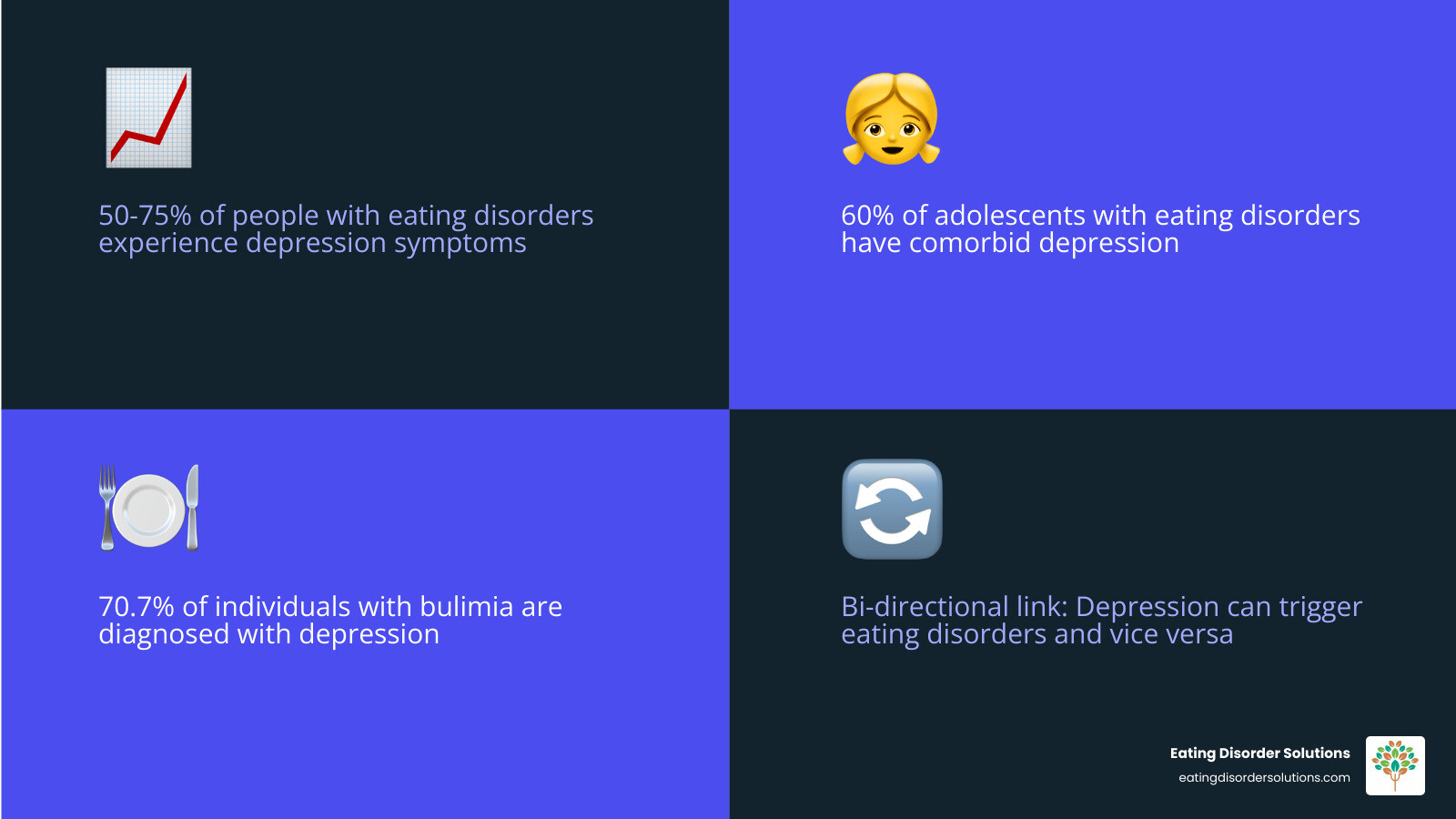
Eating disorder and depression are deeply interconnected mental health conditions that frequently occur together, affecting millions of people. If you’re struggling with both, you’re not alone, and understanding this connection is the first step toward healing. Quick Facts About Eating Disorders and Depression:- 50-75% of people with an eating disorder also experience symptoms of depression
- 60% of adolescents diagnosed with an eating disorder receive a co-morbid diagnosis of depression
- The relationship is bi-directional: depression can contribute to eating disorder development, and eating disorders can worsen or trigger depression
- Shared risk factors include trauma history, low self-esteem, perfectionism, and emotional dysregulation
- These conditions require simultaneous, integrated treatment for the best outcomes
Understanding the Link Between Eating Disorders and Depression
At Eating Disorder Solutions, we see every day how eating disorder and depression act like two sides of the same coin. They aren’t just “co-occurring” by chance; they are deeply enmeshed. Statistics show that up to three out of four people seeking help for an eating disorder will also meet the criteria for a depressive disorder. The frequency of this “dual diagnosis” is particularly striking in younger populations. Approximately 60% of adolescents diagnosed with an eating disorder (ED) also receive a comorbid diagnosis of depression. This isn’t just a coincidence-it’s a reflection of how the brain and body respond to psychological distress. According to Scientific research on comorbidity, major depressive disorder is typically the main underlier for those with eating disorders. When depression is present, the world can feel gray and hopeless. For some, the structure and “rules” of an eating disorder provide a temporary, albeit dangerous, sense of purpose or control. For others, the numbness that comes with starvation or the temporary dopamine hit from a binge episode serves as a way to self-medicate the heavy weight of depression.
The Bi-directional Nature of Symptoms
One of the most common questions we hear at our Dallas and Weatherford facilities is: “Which came first?” The answer is often “both” or “it’s complicated.” The relationship is bi-directional, meaning one can lead to the other, and they often maintain each other in a vicious cycle. Research suggests that for many, depression creates the “fertile ground” where an eating disorder can take root. A significant study on adolescent girls found that nearly 30% of those with depression went on to develop an eating disorder within four years. Conversely, an eating disorder can physically cause depression. Malnutrition from restrictive eating literally changes brain chemistry. When the brain is starved of essential nutrients, it cannot produce the neurotransmitters (like serotonin) needed to regulate mood. This leads to what clinicians call “starvation syndrome,” where symptoms like irritability, social withdrawal, and low mood are actually direct physical consequences of not eating enough. In these cases, the eating disorder is the driver, and the depression is the passenger.Shared Risk Factors: Why They Often Occur Together
Why do these two struggles seem to go hand-in-hand so often? It’s because they often sprout from the same roots. We believe in looking at the whole person, biological, psychological, and environmental, to understand why these conditions have emerged.Genetic and Biological Factors
Science tells us that there is a strong hereditary component to both conditions. A study on genetic links suggests that the comorbidity of anorexia nervosa and major depression is likely due to shared genetic vulnerabilities. If you have a family history of mood disorders, your brain may be more predisposed to the neurochemical shifts that trigger both depression and disordered eating.Psychological Traits: The Role of Perfectionism
Perfectionism is a major bridge between eating disorder and depression. Many of our clients are high-achievers who set impossibly high standards for themselves. When they inevitably feel they’ve “failed” to meet these standards, whether in their career, relationships, or body image, it can trigger a depressive spiral. Research on perfectionism shows it is a key maintaining factor for eating disorders, providing a sense of “control” that perfectionists crave.Trauma and Environment
A history of trauma is another common thread. Whether it’s childhood neglect, physical abuse, or “weight bullying” during school years, trauma can lead to emotional dysregulation. When a person hasn’t been given the tools to process intense emotions, they may turn to food (or the avoidance of it) to cope. In our trauma-informed care at Eating Disorder Solutions, we focus on healing these underlying wounds to break the cycle of both disorders.How Specific Eating Disorders Interact with Depressive Symptoms
While the link is universal, the way depression manifests can look different depending on the specific eating disorder.| Eating Disorder | Common Interaction with Depression | Key Symptom Links |
|---|---|---|
| Anorexia Nervosa | Depression often stems from malnutrition and the isolation of restrictive rules. | Low self-esteem, social withdrawal, rigid thinking. |
| Bulimia Nervosa | High rates of shame and guilt following binge-purge cycles fuel depression. | Emotional dysregulation, impulsivity, intense guilt. |
| Binge Eating Disorder | Feelings of “loss of control” and body dissatisfaction lead to a depressive state. | Shame, weight fluctuations, “numbing” with food. |
Anorexia Nervosa and Depression
In the context of anorexia, depression often makes the “voice” of the disorder louder. 2021 research on anorexia severity indicates that individuals living with depression often have more severe symptoms, including a lower BMI and a higher number of hospitalizations. When you are undernourished, your brain enters a “survival mode” that makes it nearly impossible to feel joy or connection. This creates a chronic state of depression that can only be lifted through nutritional rehabilitation and weight restoration. We focus on “food as medicine” to help the brain begin functioning well enough to engage in the deeper emotional work of therapy.Bulimia and Binge Eating Disorder and Depression
Bulimia nervosa has the highest co-occurrence rate with major depressive disorder, with 70.7% of individuals diagnosed with both simultaneously. The cycle of binging and purging is often driven by a desperate need to “get rid” of negative emotions. However, the temporary relief is quickly replaced by intense shame and self-loathing, which plunges the person deeper into depression. Binge Eating Disorder (BED) follows a similar path. A study on binge eating highlights that more than half of adults with BED experience depressive symptoms. Because BED involves eating large amounts of food without compensatory behaviors (like purging), the resulting weight changes and feelings of powerlessness often exacerbate a person’s depressive mood.Complications and the Risk of Suicide
We cannot ignore the gravity of these conditions. Eating disorders are among the deadliest mental illnesses, second only to opioid overdose. When you add depression to the mix, the risks increase significantly. A diagnosis of major depressive disorder alongside an eating disorder is associated with higher rates of suicide attempts and suicide-related mortality. Research on adolescent suicide risk emphasizes that the combination of emotional pain from depression and the physical toll of an ED creates a high-stakes environment. Physical Complications to Watch For:- Bradycardia (slow heart rate): Common in restrictive disorders and exacerbated by the lack of energy characteristic of depression.
- Electrolyte Imbalances: Often caused by purging, leading to heart palpitations or seizures.
- Chronic Fatigue: A hallmark of both conditions that makes daily tasks feel insurmountable.
Challenges in Diagnosing and Treating Eating Disorders and Depression
Diagnosing eating disorder and depression can be tricky because their symptoms often overlap. Fatigue, weight changes, and insomnia are common to both. This can lead to “diagnostic overshadowing,” where a doctor might only treat the depression while missing the underlying eating disorder, or vice versa. Furthermore, there is the challenge of “treatment resistance.” Research on treatment outcomes suggests that when depression is left untreated, it can act as a barrier to ED recovery. If a person feels no hope for the future, they may have little motivation to do the hard work of normalized eating. Conversely, we’ve found that when a person begins to give up their eating disorder behaviors, their depression may initially worsen. This is because the eating disorder was their primary coping mechanism. Without it, they are left “raw” with their emotions. This is why a warm, home-like setting, like our facilities in Weatherford, is so important. It provides a safe container for these difficult emotions to emerge.Integrated Treatment for Eating Disorder and Depression
Because eating disorders and depression so often occur together (Hudson et al., 2007), the recommended standard of care is integrated treatment. This means treating both conditions at the same time, in the same place, with the same team. We utilize evidence-based modalities like Cognitive Behavioral Therapy (CBT) and Dialectical Behavior Therapy (DBT) to address both the distorted thoughts around food and the emotional dysregulation of depression. Study on treatment seeking shows that addressing the psychosocial impairment of both disorders leads to much higher rates of long-term success. Our approach at Eating Disorder Solutions is holistic and trauma-informed, ensuring that we aren’t just fixing a “eating problem” but helping a human being find their way back to a life worth living.Frequently Asked Questions about Eating Disorders and Depression
Can depression cause an eating disorder?
Yes. While it is rarely the only cause, depression can create the emotional instability and lack of self-worth that make a person vulnerable to developing an eating disorder as a way to cope or gain control.Which eating disorder has the highest rate of depression?
Bulimia Nervosa typically shows the highest rates of co-occurring depression, with over 70% of individuals struggling with both. The cycle of binging and purging is often a direct, albeit harmful, response to depressive emotions.Why are eating disorders considered so deadly?
They are deadly because of the combination of severe physical complications (like heart failure and organ damage) and the high risk of suicide, especially when comorbid with depression. They have the second-highest mortality rate of any mental illness.Conclusion
The connection between eating disorder and depression is undeniable, but it does not have to be a life sentence. We understand that this journey is about more than just food, it’s about reclaiming your joy, your identity, and your health. At Eating Disorder Solutions, we provide a path forward through our holistic, trauma-informed care. Located in the heart of Texas with centers in Dallas and Weatherford, we offer an individualized approach in a warm, home-like setting. We believe in the power of human connection and are deeply committed to our integrated, compassionate approach. If you or a loved one is struggling with the heavy burden of an eating disorder and depression, please reach out to us. We are here to help you navigate the complexities of these conditions and find a lasting recovery. You don’t have to do this alone. We can heal together.References
- Hudson JI, Hiripi E, Pope HG, Kessler RC. The prevalence and correlates of eating disorders in the National Comorbidity Survey Replication. Biol Psychiatry. 2007;61(3):348-358. doi:10.1016/j.biopsych.2006.03.040
- Linardon J, Wade TD, de la Piedad Garcia X, Brennan L. The efficacy of cognitive-behavioral therapy for eating disorders: a systematic review and meta-analysis. J Consult Clin Psychol. 2017;85(11):1080-1094. doi:10.1037/ccp0000245
- Miniati M, Benvenuti A, Bologna E, et al. Mood spectrum comorbidity in patients with anorexia and bulimia nervosa. Eat Weight Disord. 2018;23(3):305-311. doi:10.1007/s40519-016-0333-1
Support and Crisis Resources
If you or someone you love is struggling, support is available. If you are in crisis or need immediate help, call or text 988 to reach the 988 Suicide and Crisis Lifeline, a free, confidential service available 24/7.
Related Reading
- Is Your Relationship with Food Healthy? A Self-Test to Find Out
- Facing Fear Foods in Eating Disorder Recovery
For more educational articles and resources on eating disorder recovery, visit our Educational Resources page.