








Eating Disorder Recovery: Stages, Treatment & Hope

Eating disorder recovery is a journey that encompasses much more than just physical healing—it involves reclaiming emotional well-being, rebuilding self-esteem, and establishing a balanced relationship with food and body image.

Joint Commission - Eating Disorder Solutions

Joint Commissions

Certified

75+75 Treatment Guarantee

Treatment Guarantee

75+75

Hall of Fame Health Elite Care Center

Elite Care Center

Hall of Fame

Psychology Today

Verified

What Is Eating Disorder Recovery_

What Is Eating Disorder Recovery?

Eating disorder recovery refers to a multidimensional process that involves overcoming disordered eating behaviors and thoughts, such as restrictive eating in anorexia nervosa or binge-purge cycles in bulimia nervosa, restoring physical health, and improving psychological well-being. Recovery is not simply the absence of symptoms but the development of sustainable healthy habits, resilience, and self-compassion. It acknowledges that healing is highly individual and may require ongoing support, including nutrition counseling and mental health treatment addressing co-occurring disorders like depression, anxiety, or trauma. Early intervention and a strong support system often improve outcomes in eating disorder treatment, emphasizing the importance of evidence-based approaches tailored to each person’s needs.

How Common Is Full Recovery?

Understanding the likelihood of full recovery can provide much-needed reassurance and clarity. According to a comprehensive review by Solmi et al. (2024), approximately 50% to 70% of individuals with eating disorders, such as anorexia nervosa, bulimia nervosa, and binge-eating disorder, achieve full recovery when engaged in appropriate, evidence-based treatment and support. Recovery rates can vary depending on factors such as the type of eating disorder, age at onset, treatment timing, co-occurring mental health conditions like anxiety or depression, and the availability of trauma-informed care. This research underscores that while eating disorder recovery can be challenging, particularly given the disorder’s impact on physical and mental health, it is by no means out of reach with the right treatment options including cognitive behavioral therapy and family-based treatment.

How Common Is Full Recovery_

Our Levels of Care

Every person's journey is unique. We offer personalized treatment programs designed to meet you where you are and support you every step of the way near Dallas, Texas in Weatherford.

Residential Treatment at Eating Disorder Solutions House Icon

Residential Treatment

24/7 inpatient eating disorder treatment providing structured, medically supported care in a safe, healing environment.

Outpatient Eating Disorder Treatment Icon

Outpatient Treatment

Daytime eating disorder treatment offering intensive support while allowing clients to live at home and maintain daily responsibilities.

Partial Hospitalization Program Outpatient at Eating Disorder Solutions Icon

Partial Hospitalization

High-level eating disorder treatment combining daily clinical care with increased flexibility outside of inpatient treatment.

Intensive Outpatient Program at Eating Disorder Solutions Icon

Intensive Outpatient

High-level eating disorder treatment combining daily clinical care with increased flexibility outside of inpatient treatment.

Virtual Outpatient Program Telehealth at Eating Disorder Solutions Icon

Virtual Outpatient

Fully online eating disorder treatment delivering structured therapy and nutrition support from the comfort of home.

Aftercare Treatment at Eating Disorder Solutions Icon

Aftercare

Ongoing eating disorder recovery support designed to maintain progress and reduce the risk of relapse after treatment.

Our Approach

Evidence-Based Care with Heart

We combine the latest research with compassionate, individualized care. Our multidisciplinary team works together to address the physical, emotional, and psychological aspects of eating disorders.

Cognitive Behavioral Therapy Talking Icon

Cognitive Behavioral Therapy

Identify and change harmful thought patterns and behaviors.

Dialectical Behavior Therapy at Eating Disorder Solutions Brain Icon

Dialectical Behavior Therapy

Build skills for emotional regulation and distress tolerance.

Truama-Informed Care at Eating Disorder Solutions Care Icon

Trauma-Informed Care

Address underlying trauma in a safe, supportive environment.

Evidence-Based Care with Heart_ at Eating Disorder Solutions
Full Recovery vs Partial Recovery_

Full Recovery vs. Partial Recovery

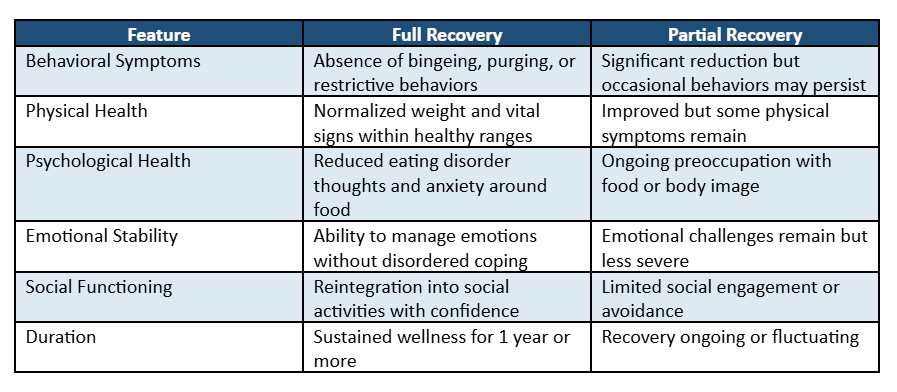
Eating disorder recovery can be categorized into full recovery and partial recovery. Full recovery typically means a person has ceased disordered eating behaviors—including bingeing, purging, or restrictive eating—restored physical health through weight restoration and nutrition counseling, and attained psychological wellness with improved body image and emotional stability. Partial recovery indicates improvements in symptoms but with lingering challenges such as ongoing preoccupation with food or body image concerns, which may require continued intervention like cognitive behavioral therapy or dialectical behavior therapy. Recognizing these differences helps tailor treatment plans such as residential treatment, partial hospitalization, or intensive outpatient programs and sets realistic expectations throughout the stages of recovery.

The 6 Stages of Eating Disorder Recovery

Eating disorder recovery is often mapped through six core stages that reflect evolving milestones in healing and self-growth. These stages help individuals and clinicians recognize progress and address setbacks holistically while integrating behavioral health therapies and nutrition counseling:

1. Admission and Recognition: Acknowledging the problem, identifying symptoms, and seeking help through early intervention to prevent chronic illness.
2. Stabilization: Addressing acute health issues like malnutrition, dehydration, and physical complications related to anorexia nervosa, bulimia nervosa, or binge-eating disorder.
3. Rebuilding: Restoring eating patterns, weight restoration, and improving physical health with comprehensive meal planning and nutrition counseling.
4. Emotional Processing: Exploring underlying trauma, co-occurring mental disorders such as anxiety or depression, and triggers through trauma-informed therapy like EMDR or acceptance and commitment therapy.
5. Relapse Prevention: Developing coping skills, utilizing treatments such as cognitive behavioral therapy or dialectical behavior therapy, and building a strong support system to maintain gains.
6. Integration: Achieving lasting independence, full recovery, and life balance without disordered eating behaviors.

Navigating these stages requires patience, compassion, specialized mental health treatment, and a commitment to ongoing healing.

Specialized Programs

We understand that different ages and situations require different approaches. Our specialized programs are tailored to meet specific needs.

Who We Eat for Compulsive Overeating Adults of All Ages

Adult Program

Specialized eating disorder treatment designed to support adults balancing recovery with work, family, and daily responsibilities.

OSFED Who We Treat at Eating Disorder Solutions Adult Athletes

Athlete Program

Eating disorder treatment tailored for athletes, addressing performance pressures, fueling needs, and sport-related stressors.

LGBTQ+ Eating Disorder Treatment Programs at Eating Disorder Solutions

LGBTQ+ Program

Inclusive eating disorder treatment providing affirming, holistic care for individuals in the LGBTQ+ community.

Who We Eat for Compulsive Overeating Professionals

Professionals Program

Specialized eating disorder treatment for professionals balancing recovery with work responsibilities, high stress, and the demands of daily life.

OSFED Who We Treat at Eating Disorder Solutions College Students

College Students Program

Specialized eating disorder treatment for professionals balancing recovery with work responsibilities, high stress, and the demands of daily life.

Behavioral and Physical Milestones_

Behavioral and Physical Milestones

Key indicators of progress in eating disorder recovery include observable behavioral and physical changes. These milestones often serve as tangible goals within treatment programs and provide encouragement:

– Regularly consuming balanced meals and snacks without restriction, bingeing, or purging.
– Achieving and maintaining a medically healthy weight and stable vital signs through weight restoration and nutrition counseling.
– Reducing compensatory behaviors such as excessive exercise, purging, or fasting associated with anorexia nervosa or bulimia nervosa.
– Improved sleep patterns, energy levels, and physical health indicators.
– Enhanced ability to tolerate food-related anxiety and discomfort, thanks to therapeutic approaches like cognitive behavioral therapy and dialectical behavior therapy.

Successfully meeting these milestones establishes a foundation for deeper psychological and emotional recovery, promoting long-term physical health and well-being for people with eating disorders.

Psychological and Emotional Milestones

Beyond physical health, eating disorder recovery encompasses important psychological and emotional achievements. These milestones reflect meaningful shifts in mindset and self-perception, which are vital to sustaining recovery from any type of eating disorder:

– Decreased preoccupation with body weight, shape, and food, improving body image.
– Increased self-compassion and reduced self-criticism, bolstering self-esteem.
– Development of healthier coping skills for managing stress, anxiety, depression, and emotions.
– Willingness and confidence to engage in social interactions, relationships, and community involvement.
– Reclaiming interests, goals, and a sense of identity outside the eating disorder.

These internal changes often require trauma-informed care, interpersonal therapy, and supportive environments to nurture, representing hopeful signs of enduring mental health recovery and emotional well-being.

Psychological and Emotional Milestones_
Evidence-Based Treatment Options_

Evidence-Based Treatment Options

Eating disorder recovery is most successful when supported by evidence-based treatment modalities tailored to individual needs and types of eating disorders. Some of the most effective options include:

– Cognitive Behavioral Therapy (CBT): Focuses on identifying and changing unhealthy thought patterns and behaviors influencing eating behavior, particularly effective for bulimia nervosa and binge-eating disorder.
– Dialectical Behavior Therapy (DBT): Emphasizes emotion regulation, distress tolerance, and mindfulness skills essential for relapse prevention.
– Family-Based Treatment (FBT): Engages family members as part of the support system, particularly effective for adolescents with anorexia nervosa.
– Partial Hospitalization Program (PHP): Provides intensive daytime treatment with structured therapy and medical monitoring for moderate severity.
– Residential Treatment: Delivers 24/7 care in a live-in facility, often required for severe or chronic cases.
– Intensive Outpatient Program (IOP): Allows flexible, structured therapy several days per week, facilitating community integration.

Additional therapies such as acceptance and commitment therapy, interpersonal therapy, and trauma-informed approaches including EMDR support treatment of co-occurring disorders like depression, anxiety, and trauma. Successful eating disorder treatment combines medical care, nutrition counseling, and mental health treatment to promote full recovery and reduce relapse risks.

Request A Call

Fill out the form below, and we’ll contact you shortly. 

Conditions We Treat

We provide specialized care for all types of eating disorders in Dallas, Texas.

ARFID Treatment Icon

Anorexia Nervosa

A restrictive eating disorder marked by fear of weight gain and distorted body image, requiring comprehensive medical, nutritional, and therapeutic care.

Bulimia Disorder Treatment Icon

Bulimia Nervosa

An eating disorder involving cycles of binge eating and compensatory behaviors, often driven by emotional distress and body image concerns.
Binge Eating Disorder Treatment Icon

Binge Eating Disorder

Characterized by repeated episodes of eating large amounts of food with a sense of loss of control, without compensatory behaviors.

OSFED Treatment Icon

Compulsive Overeating

Recurrent episodes of overeating driven by emotional distress rather than physical hunger. Treatment helps address emotional triggers, reduce shame, and develop healthier coping strategies.

Body Dysmorphia Treatment Grey Icon

Body Dysmorphia

Persistent distress about perceived flaws in appearance that impact daily life. Treatment focuses on improving body image and reducing obsessive thoughts through structured therapeutic support.

EDS Orthorexia Icon

Orthorexia

An unhealthy fixation on eating “clean” or “healthy” foods that leads to rigid rules and anxiety around meals. Treatment promotes flexibility, balanced nutrition, and a more sustainable relationship with food.

EDS Co-Occurring Disorders Icon

Co-Occurring Disorders

An eating disorder occurring alongside conditions such as anxiety, depression, or trauma. Treatment addresses both concerns together to support lasting recovery and emotional stability.

ARFID & Other Disorders

Includes avoidant or restrictive eating patterns and other specified feeding or eating disorders that require individualized treatment approaches.

What Does 'Recovery' Actually Mean? Debunking Common Myths

Recovery from an eating disorder is often misunderstood, leading to harmful misconceptions that can prevent people from seeking or recognizing their own path to healing. One common myth is the belief that you must be underweight to have an eating disorder. In reality, eating disorders affect individuals across all body sizes and shapes. Weight alone is not a reliable indicator of the presence or severity of an eating disorder. Additionally, many assume that recovery simply means “eating normally.” However, recovery is a much broader concept that involves restoring physical health, developing a balanced relationship with food, healing emotional wounds, and rebuilding one’s quality of life. True recovery is a personal and ongoing journey, not just a return to typical eating patterns.

Is Eating Disorder Recovery Possible? What the Research Says

Hope is a key component in the recovery process, and the latest clinical research supports that recovery is indeed possible for many individuals with eating disorders. Studies show that, with appropriate treatment and support, recovery rates improve significantly over time. According to Solmi et al., 2024 [2], the longer someone remains engaged in treatment and healing, the greater the likelihood of sustained recovery. This encouraging evidence reinforces that eating disorders are treatable conditions and recovery can lead to lasting physical and emotional well-being. At Eating Disorder Solutions in Texas, we are committed to providing compassionate, evidence-based care to guide you or your loved ones toward a hopeful future.

Is Eating Disorder Recovery Possible What the Research Says_

Most Insurances Accepted

We work with most major insurance providers and offer flexible payment plans

Our admissions team will verify your insurance benefits at no cost and help you understand your coverage.

Real People, Real Results

The duration of eating disorder recovery varies widely depending on the individual, disorder severity, co-occurring conditions, and treatment type. On average, recovery can take months to several years, with ongoing maintenance, support, and behavioral health interventions often needed to sustain progress.

Yes, relapse is a common aspect of eating disorder recovery and does not mean failure. It signals areas needing further attention and provides opportunities to strengthen coping skills, reinforce meal planning, and adapt treatment approaches to achieve lasting recovery.

While some individuals may improve on their own, professional eating disorder treatment significantly increases the likelihood of full recovery by providing specialized care, monitoring physical and mental health, and evidence-based strategies tailored to the type of eating disorder.

Supportive family and friends are vital to eating disorder recovery by offering encouragement, understanding, and accountability. Family-based therapies and a strong support system are particularly effective in adolescent treatment and help foster lasting recovery.

Choosing the right eating disorder treatment involves assessing the individual’s medical status, type of eating disorder, co-occurring mental health conditions, and personal preferences. Consulting with healthcare providers and specialized behavioral health centers helps determine the best fit within treatment options like residential treatment, partial hospitalization, or intensive outpatient programs.

Why Choose Eating Disorder Solutions Near Dallas?

Eating Disorder Solutions near Dallas offers compassionate, evidence-based care in a peaceful, home-like setting designed to help clients feel safe, supported, and understood. Our multidisciplinary team provides individualized treatment across multiple levels of care, blending clinical excellence with real-world recovery skills that translate beyond treatment. With a strong focus on nutrition, therapy, and long-term healing, we help clients build a sustainable path to recovery, not just short-term progress.

Eating Disorder Recovery References

[1] National Institute of Mental Health — Eating Disorders: What You Need to Know — https://www.nimh.nih.gov/health/publications/eating-disorders

[2] Solmi M et al. — Outcomes in people with eating disorders: a systematic review and meta-analysis (World Psychiatry, 2024) — https://pmc.ncbi.nlm.nih.gov/articles/PMC10785991/

[3] Kass AE et al. — Psychological Treatments for Eating Disorders (Curr Opin Psychiatry, 2013) — https://pmc.ncbi.nlm.nih.gov/articles/PMC4096990/

[4] NCBI StatPearls — Eating Disorders (Balasundaram & Santhanam, 2023) — https://www.ncbi.nlm.nih.gov/books/NBK567717/

[5] MedlinePlus / U.S. National Library of Medicine — Eating Disorders — https://medlineplus.gov/eatingdisorders.html

[6] National Eating Disorders Association (NEDA) — Statistics and Research on Eating Disorders — https://www.nationaleatingdisorders.org/statistics/