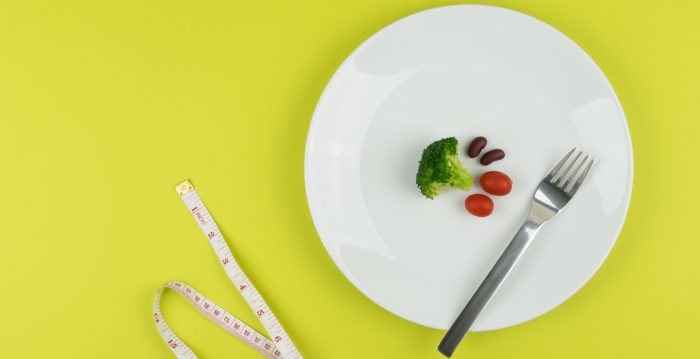
- Fad diets promote a quick solution to weight loss
- Does not focus on the health of your body or mind
- “Healthy” is not defined by physical appearance
- Why they don’t work:
- Often limit/eliminate certain food groups
- Elimination of food groups make a diet unsustainable
- Typically, after diet “ends” people regain the weight that was lost as they tend to overindulge in foods that were restricted
- During the diet period, people often lose muscle mass which is directly related to metabolism
- As muscle mass decreases, metabolic rate decreases
- Tip: if it sounds too good to be true, it probably is
- How does it contribute to disordered eating?
- Causes categorization of foods such as “healthy” or “unhealthy”
- Can cause feelings of guilt/shame when you do indulge in foods that are “not part of the diet”
- Takes the enjoyment out of food and meal times
- So what does work?
- A balanced diet that includes ALL foods in moderation
- Eating intuitively…if you feel hungry that is your body telling you it needs nourishment!
- Our nutrient intake does not only affect us physically but also mentally
- To stay in a good headspace, you must nourish your body with what it needs
- This directly affects your personality and emotional well-being
Why Fad Diets Fail
Fad diets promise fast results by cutting out foods or whole food groups. They tend to fail for the same reasons every time: they are too restrictive to sustain, they trigger rebound eating once the rules break, and they teach people to distrust their own hunger rather than work with it.
The Link Between Dieting and Eating Disorders
This is the part that matters most on an eating-disorder site: restrictive dieting is one of the strongest behavioral risk factors for developing an eating disorder. The restrict-then-rebound cycle a fad diet creates is the same cycle that underlies binge eating and other disordered patterns. If dieting has tipped into something that feels out of control, our free self-test is a good first step.
A Healthier Alternative
Sustainable change comes from a balanced, flexible relationship with food, not another set of rules. Approaches like intuitive eating and working with a dietitian focus on nourishment and trust rather than restriction. Learn about our nutritional therapy.
Frequently Asked Questions
Why don’t fad diets work?
They are too restrictive to maintain, they set up a cycle of restriction and rebound eating, and they ignore individual needs — so the results rarely last and can harm your relationship with food.
Can dieting lead to an eating disorder?
Restrictive dieting is one of the strongest behavioral risk factors for developing an eating disorder. It does not affect everyone the same way, but the restrict-rebound cycle can be a starting point.
What’s a healthier alternative to dieting?
A flexible, balanced approach — such as intuitive eating or working with a registered dietitian — that focuses on nourishment and trusting your body rather than rigid rules.
References
Academy of Nutrition and Dietetics — Staying Away from Fad Diets (https://www.eatright.org/health/wellness/diet-trends/staying-away-from-fad-diets)
NEDA — The Dangers of Diet Culture (https://www.nationaleatingdisorders.org/dangers-diet-culture/)