

















Adult Program
Specialized eating disorder treatment designed to support adults balancing recovery with work, family, and daily responsibilities.

Athlete Program
Eating disorder treatment tailored for athletes, addressing performance pressures, fueling needs, and sport-related stressors.

LGBTQ+ Program
Inclusive eating disorder treatment providing affirming, holistic care for individuals in the LGBTQ+ community.

Professionals Program
Specialized eating disorder treatment for professionals balancing recovery with work responsibilities, high stress, and the demands of daily life.

College Students Program
Specialized eating disorder treatment for professionals balancing recovery with work responsibilities, high stress, and the demands of daily life.

Complex Long Standing Program
Specialized eating disorder treatment for individuals with a long-standing or treatment-resistant history, focused on sustainable progress and renewed hope.


Anorexia Nervosa
A restrictive eating disorder marked by fear of weight gain and distorted body image, requiring comprehensive medical, nutritional, and therapeutic care.
Bulimia Nervosa
An eating disorder involving cycles of binge eating and compensatory behaviors, often driven by emotional distress and body image concerns.
Binge Eating Disorder
Characterized by repeated episodes of eating large amounts of food with a sense of loss of control, without compensatory behaviors.
Compulsive Overeating
Recurrent episodes of overeating driven by emotional distress rather than physical hunger. Treatment helps address emotional triggers, reduce shame, and develop healthier coping strategies.

Body Dysmorphia
Persistent distress about perceived flaws in appearance that impact daily life. Treatment focuses on improving body image and reducing obsessive thoughts through structured therapeutic support.

Orthorexia
An unhealthy fixation on eating “clean” or “healthy” foods that leads to rigid rules and anxiety around meals. Treatment promotes flexibility, balanced nutrition, and a more sustainable relationship with food.
Co-Occurring Disorders
An eating disorder occurring alongside conditions such as anxiety, depression, or trauma. Treatment addresses both concerns together to support lasting recovery and emotional stability.
ARFID & Other Disorders
Includes avoidant or restrictive eating patterns and other specified feeding or eating disorders that require individualized treatment approaches.
















Mental Illness Awareness Week: What It Means for Eating Disorder Recovery
Mental Illness Awareness Week runs October 4-10. Here is why co-occurring anxiety, depression, OCD, and trauma matter in eating disorder recovery.
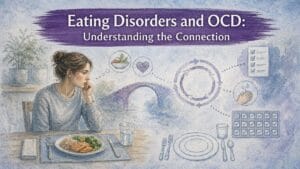
Eating Disorders and OCD: Understanding the Connection
Key Takeaways Eating disorders and obsessive-compulsive disorder (OCD) frequently co-occur and share overlapping features such as rigidity, intrusive thoughts, and repetitive behaviors. When both are
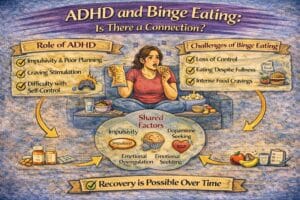
ADHD and Binge Eating: Is There a Connection?
Key Takeaways Binge eating carries real physical consequences too — see the metabolic health effects of binge eating disorder. ADHD and binge eating disorder frequently

ARFID and Anxiety: How Fear of Food Develops
Key Takeaways ARFID and anxiety are closely connected. For many people, intense fear, sensory sensitivity, or worry about aversive consequences such as choking or vomiting
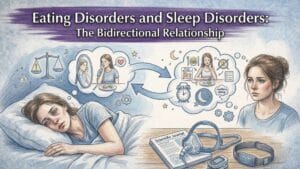
Eating Disorders and Sleep Disorders: The Bidirectional Relationship
Key Takeaways Disrupted sleep and eating can intertwine in night eating syndrome. Eating disorders and sleep problems are closely linked and tend to fuel each
Social Anxiety and Eating Disorders: How They Reinforce Each Other
Key Takeaways Social anxiety and eating disorders frequently occur together, each reinforcing the other. Intense fear of being judged, especially about appearance, can drive disordered