
















Myths and Facts About Eating Disorders
Eating disorders are often misunderstood. Get clear, compassionate facts that help college students and adults recognize the signs, challenge harmful myths, and explore support options.
- Modified Date:
- Same-Day Admissions
- Free Insurance Verification
- Most Insurance Accepted
Understanding Eating Disorders: Beyond the Surface
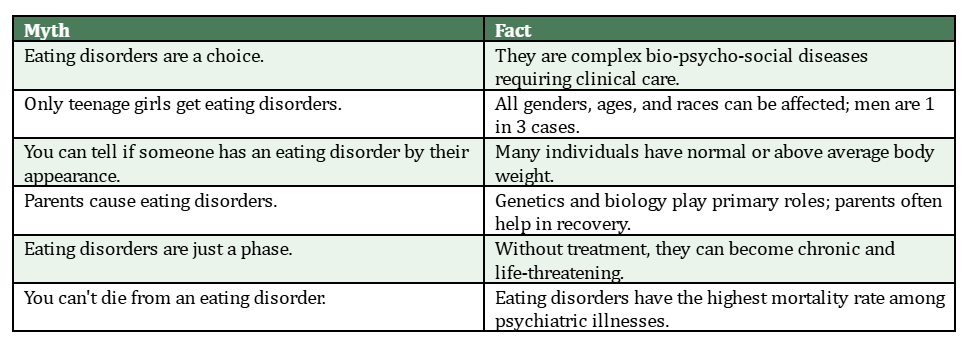
Eating disorders are serious mental health conditions characterized by unhealthy eating behaviors and distorted attitudes toward food, weight, and body image. They are complex bio-psycho-social diseases influenced by genetics, biology, psychology, and environmental factors. Contrary to popular belief, eating disorders are not a lifestyle choice but real illnesses requiring professional treatment [1].
Prevalence Among Adults and College Students
It is estimated that 28.8 to 30 million Americans will experience an eating disorder at some point in their lives, including a significant number of adults and college-age individuals. Eating disorders do not discriminate by age, gender, or ethnicity. Men, for instance, represent approximately one-third of all cases, highlighting that these illnesses affect a diverse population far beyond the stereotype of teenage girls [1].
Our Levels of Care
Every person's journey is unique. We offer personalized treatment programs designed to meet you where you are and support you every step of the way near Dallas, Texas in Weatherford.
Residential Treatment
24/7 inpatient eating disorder treatment providing structured, medically supported care in a safe, healing environment.
Outpatient Treatment
Daytime eating disorder treatment offering intensive support while allowing clients to live at home and maintain daily responsibilities.
Partial Hospitalization
High-level eating disorder treatment combining daily clinical care with increased flexibility outside of inpatient treatment.
Intensive Outpatient
High-level eating disorder treatment combining daily clinical care with increased flexibility outside of inpatient treatment.
Virtual Outpatient
Fully online eating disorder treatment delivering structured therapy and nutrition support from the comfort of home.
Aftercare
Ongoing eating disorder recovery support designed to maintain progress and reduce the risk of relapse after treatment.
Our Approach
Evidence-Based Care with Heart
We combine the latest research with compassionate, individualized care. Our multidisciplinary team works together to address the physical, emotional, and psychological aspects of eating disorders.
Cognitive Behavioral Therapy
Identify and change harmful thought patterns and behaviors.
Dialectical Behavior Therapy
Build skills for emotional regulation and distress tolerance.
Trauma-Informed Care
Address underlying trauma in a safe, supportive environment.
Common Misconceptions About Eating Disorders
Several widespread misconceptions about eating disorders contribute to stigma and delay in seeking treatment. These include incorrect beliefs about the causes, appearance, and severity of these illnesses. Understanding the truth behind these myths can foster empathy and encourage those affected to pursue recovery.
Eating Disorder Myths Debunked: The Truth About Causes
A common misconception is that eating disorders are caused solely by environmental factors or family dynamics. While upbringing can influence development, biological and genetic predispositions significantly impact the risk of developing an eating disorder. Recent research highlights that these conditions stem from an interplay of neurobiological, psychological, and social factors rather than parental blame [1].
Specialized Programs
We understand that different ages and situations require different approaches. Our specialized programs are tailored to meet specific needs.
Adult Program
Specialized eating disorder treatment designed to support adults balancing recovery with work, family, and daily responsibilities.

Athlete Program
Eating disorder treatment tailored for athletes, addressing performance pressures, fueling needs, and sport-related stressors.

LGBTQ+ Program
Inclusive eating disorder treatment providing affirming, holistic care for individuals in the LGBTQ+ community.

Professionals Program
Specialized eating disorder treatment for professionals balancing recovery with work responsibilities, high stress, and the demands of daily life.

College Students Program
Specialized eating disorder treatment for professionals balancing recovery with work responsibilities, high stress, and the demands of daily life.
Appearance Can Be Deceptive
One of the most damaging myths is that eating disorders only affect individuals who appear extremely underweight. In reality, many people with eating disorders fall within a normal or higher weight range. This misconception often causes individuals who do not fit the stereotypical image to go unnoticed and untreated, potentially worsening their prognosis [1].
The Seriousness and Mortality of Eating Disorders
Eating disorders hold the highest mortality rate of any psychiatric illness, with untreated anorexia nervosa leading to death in up to 20% of chronic cases. The physical complications-from cardiac issues to critical organ damage-can be life-threatening. However, with timely treatment, approximately 60% of patients achieve full recovery, emphasizing the importance of early intervention and professional care [2].
Request A Call
Fill out the form below, and we’ll contact you shortly.
Conditions We Treat
We provide specialized care for all types of eating disorders in Dallas, Texas.
Anorexia Nervosa
A restrictive eating disorder marked by fear of weight gain and distorted body image, requiring comprehensive medical, nutritional, and therapeutic care.

Bulimia Nervosa
An eating disorder involving cycles of binge eating and compensatory behaviors, often driven by emotional distress and body image concerns.
Binge Eating Disorder
Characterized by repeated episodes of eating large amounts of food with a sense of loss of control, without compensatory behaviors.

Compulsive Overeating
Recurrent episodes of overeating driven by emotional distress rather than physical hunger. Treatment helps address emotional triggers, reduce shame, and develop healthier coping strategies.

Body Dysmorphia
Persistent distress about perceived flaws in appearance that impact daily life. Treatment focuses on improving body image and reducing obsessive thoughts through structured therapeutic support.

Orthorexia
An unhealthy fixation on eating “clean” or “healthy” foods that leads to rigid rules and anxiety around meals. Treatment promotes flexibility, balanced nutrition, and a more sustainable relationship with food.
Co-Occurring Disorders
An eating disorder occurring alongside conditions such as anxiety, depression, or trauma. Treatment addresses both concerns together to support lasting recovery and emotional stability.
ARFID & Other Disorders
Includes avoidant or restrictive eating patterns and other specified feeding or eating disorders that require individualized treatment approaches.

Why Treatment Matters: Recovery Is Possible
Contrary to the myth that eating disorders are phases that individuals can simply outgrow, these illnesses often worsen without treatment, becoming chronic and harder to reverse. Fortunately, effective, evidence-based treatments exist that address the biological, psychological, and social aspects of eating disorders. Informed, compassionate treatment leads most patients toward recovery and improved quality of life [2].
Supporting Loved Ones and Seeking Help
Family and friends often wonder how they can support those struggling with an eating disorder. While parents are not responsible for causing these illnesses, they and other loved ones play a vital role in the recovery process by offering understanding and encouragement. If you or someone you know is facing disordered eating, seeking professional help as early as possible is crucial for the best outcomes.
Most Insurances Accepted
We work with most major insurance providers and offer flexible payment plans
Our admissions team will verify your insurance benefits at no cost and help you understand your coverage.
Real People, Real Results
Can men develop eating disorders?
Yes. Men account for about one-third of all eating disorder cases, proving these illnesses affect all genders.
Is an eating disorder always visible from appearance?
No. Many people with eating disorders may have a normal or higher body weight, making it difficult to recognize the illness based on appearance alone.
Are eating disorders simply a choice or lifestyle?
Eating disorders are complex medical and psychological diseases, not choices or phases that one can easily control or overcome without treatment.
What is the mortality rate associated with eating disorders?
Eating disorders have the highest mortality rate of any psychiatric illness. Without treatment, chronic anorexia nervosa in particular can be fatal in up to 20% of cases.
Can recovery from an eating disorder be achieved?
Yes. With appropriate treatment, about 60% of individuals with eating disorders can make a full recovery.
Do parents cause eating disorders?
No. While family dynamics may influence the illness, biological and genetic factors are the primary causes. Parents often play a key role in supporting recovery.
Why Choose Eating Disorder Solutions Near Dallas?
Eating Disorder Solutions near Dallas offers compassionate, evidence-based care in a peaceful, home-like setting designed to help clients feel safe, supported, and understood. Our multidisciplinary team provides individualized treatment across multiple levels of care, blending clinical excellence with real-world recovery skills that translate beyond treatment. With a strong focus on nutrition, therapy, and long-term healing, we help clients build a sustainable path to recovery, not just short-term progress.
Eating Disorder Myths and Facts References
[1] National Eating Disorders Association (NEDA) — Busting the Myths About Eating Disorders — https://www.nationaleatingdisorders.org/busting-myths-about-eating-disorders/
[2] Johns Hopkins Medicine — Myths and Facts About Eating Disorders in Adolescents — https://www.hopkinsmedicine.org/health/conditions-and-diseases/eating-disorders/facts-about-eating-disorders-in-adolescents
[3] National Institute of Mental Health (NIMH) — Eating Disorders — https://www.nimh.nih.gov/health/topics/eating-disorders
[4] NCBI StatPearls — Eating Disorders (Balasundaram & Santhanam, 2023) — https://www.ncbi.nlm.nih.gov/books/NBK567717/
[5] MedlinePlus / U.S. National Library of Medicine — Eating Disorders — https://medlineplus.gov/eatingdisorders.html
[6] American Psychiatric Association — What Are Eating Disorders? — https://www.psychiatry.org/patients-families/eating-disorders