
After completing 75 consecutive days of treatment at Eating Disorder Solutions, if you experience a significant setback you can receive an additional 75 consecutive days of treatment at no cost.
Kacie's Eating Disorder Recovery Story
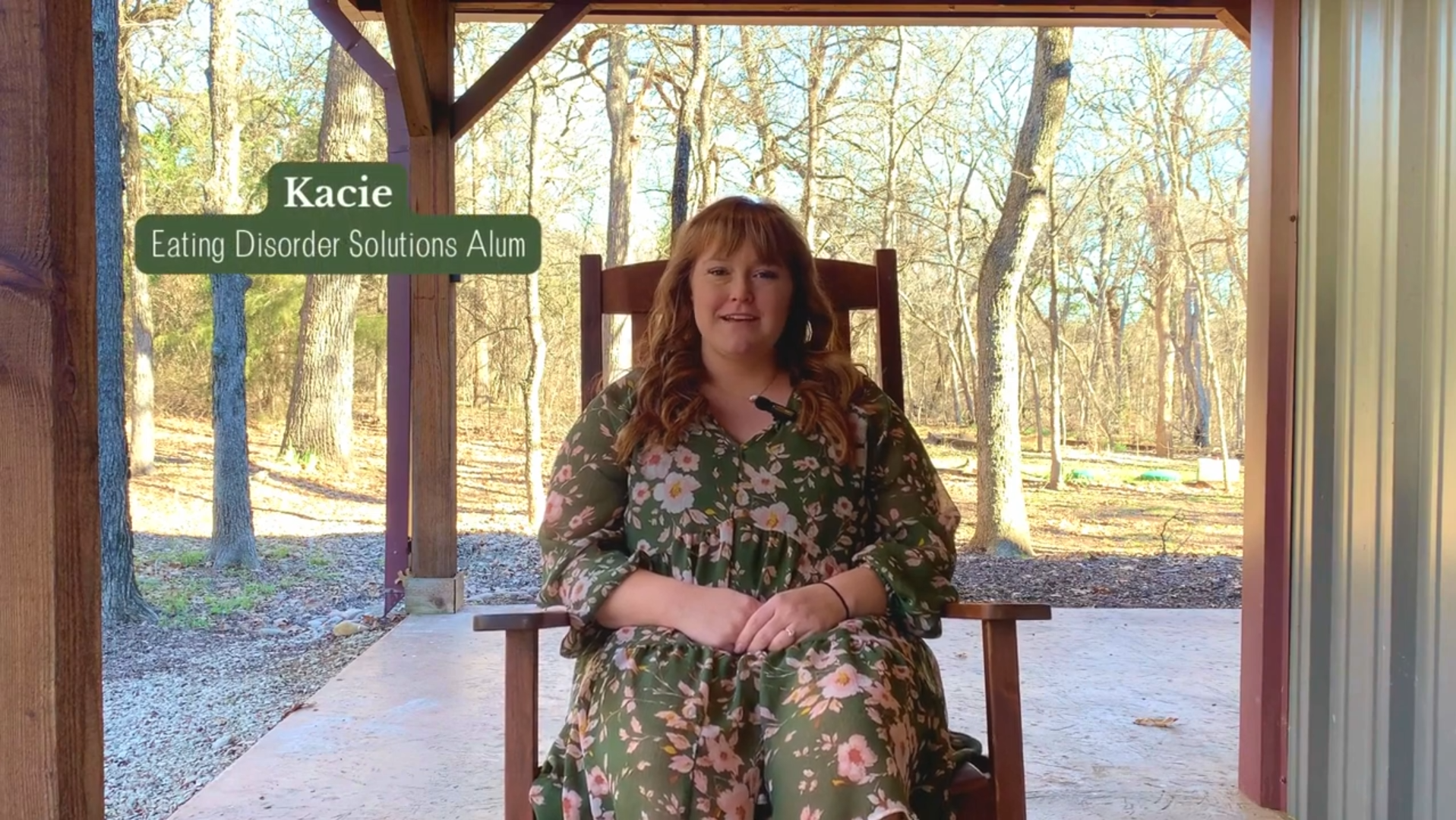
Kacie’s eating disorder started out as many do – quietly. Her condition wasn’t obvious to her or the people around her immediately, although Kacie always felt something was wrong. After a career-ending injury to her softball dreams in high school, Kacie was left feeling defeated and worried about her future.
“The only way these things came out was like stomach aches and pains and all of these things. I would just vomit when I ate because I was so stressed that my stomach just couldn’t bear it.”
Although she attempted to get help, seeing multiple doctors about her pains and struggles, no one ever mentioned the possibility of an eating disorder. However, after 13 years of struggling and trying to manage things on her own, a simple yet brutal comment made her realize the gravity of the situation.
“I was trying to manage things independently, which did not work. One day I had a grilled cheese and someone close to me said, “‘Well, don’t go and throw that up now.’” That hit hard to realize I was not hiding it – and someone did see it. It took me hours of crying before I could even say the words ‘“I have an eating disorder.” I had never said it out loud.”
After that, Kacie researched the best possible treatment center for herself, and she ended up in Eating Disorder Solution’s loving and welcoming arms. After speaking with the first team member on the phone and visiting the center, Kacie knew it was the right home for her to heal.
“This is a personal journey shaped by people who care about us and have the education, therapy-wise, nutrition-wise, medication-wise, to allow us to thrive in our environment. They teach us about each aspect of food, what it offers, and how it interacts and fuels our bodies for good. All food fits. There are no bad foods. And so I think it surprised me that this is a journey fully geared by me. You get to run with it and decide whether you’re ready, how you’re ready, and what that means for you. And so I think that was the biggest surprise: they were like, “‘Here you go, take control, just run with it, and we’ll intervene when it gets too much. Other than that, we’re here to support you in your decisions.”’
While her time at Eating Disorder Solutions was devoted to recovery and healing, she was still trying to remain committed to her professional life. Fortunately, Eating Disorder Solutions offers accommodations for professionals and college students, so finding time to take care of responsibilities outside recovery was easy and doable.
“It was extremely different that I could work remotely while I was here. A huge aspect of recovery is helping people ease into everyday life, so the staff wanted me to push forward with my commitment to my job. I could sit in the offices here and do my virtual platform just like I would from home, talking with my clients and seeing them. If you want to work or continue your education during treatment, just tell them what you need and they are happy to make that happen for you; they are very supportive.”
“I’ve never been with a staff where they care so much. You can tell they love to be here; it shows in how they care for us. There’s no moment we ever feel alone or like we don’t have somebody. We go to restaurants and outings together and have a lot of freedom, but much of that time is spent together. We are not alone in this whatsoever. There are very deep relationships that happen here. It’s just a genuine love for people, which was important to me. It’s important to anyone.”
“There’s no shame in seeking mental health treatment. Eating disorders look so different for everyone. It doesn’t mean that we’re not lovable. It doesn’t mean our world has to continue crashing down. We have to work on it every day – but we don’t have to do those things alone.”
Video Testimonial Summary
Key Takeaways from Kacie’s Story
•Thirteen Years of Silence: Kacie struggled with her eating disorder for thirteen years before saying the words out loud — a powerful reminder of how long shame and denial can keep someone from seeking help.
•A Therapist in Treatment: As a licensed therapist, Kacie brings a unique clinical perspective to her recovery story, offering insight into the cognitive distortions, core values, and CBT frameworks that EDS uses in treatment.
•Patient-Led Recovery: EDS’s approach surprised Kacie with its emphasis on patient autonomy — allowing her to make her own food choices and run her own recovery journey with clinical support, rather than following a rigid protocol.
•Working Remotely During Treatment: EDS accommodated Kacie’s need to continue seeing therapy clients during her evening breaks, providing office space and support — a level of individualized flexibility she had never seen at other facilities.
•The Ranch Environment: Kacie describes waking up to deer and cows, walking barefoot outside, and feeling an automatic sense of calm — highlighting how EDS’s natural setting supports grounding and healing.
Video Testimonial Transcript
Thirteen Years Before Saying It Out Loud
My name is Kacie and I am from Flower Mound, Texas. I knew probably about eight months ago that it was time for me to seek treatment for my eating disorder. And it had been actually 13 years and I never admitted it to myself until about eight months ago. I was trying to manage things on my own, which did not work. And one day I had had a grilled cheese or something and someone close to me asked me — or like commented — and said, “Well, don’t go throw that up now.” And that hit really hard. And to realize that I was not hiding it and someone did see it.
It took me a good like two hours of crying before I could even say the words “I have an eating disorder” out of my mouth. I never said it out loud. And so 13 years of never saying something out loud makes something extremely scary and extremely huge.
How It Started: Anxiety, Injury, and an Undiagnosed Behavior
I was right out of high school. I’d gotten hurt so I lost my softball career and I didn’t know how to deal with my anxiety and my depression. And the only way that these things came out was like stomach aches and pains and all these things, which then meant that I would just vomit when I would eat because I was just so stressed that my stomach just couldn’t handle it. And that continued for years. And I did not know. We did a bunch of medical testing — everything that they could to try and figure out what was wrong. There was never anything that was wrong. And I never had anybody even ask me if I had an eating disorder. So I was able to kind of hide that and that just became a behavior and a crutch to lean on until it was just too much.
A Therapist Who Found EDS on Google
So I’m actually a therapist. And so I knew a bunch of different eating disorder clinics that I had sent patients to prior — more of like a hospital type setting, not necessarily a retreat setting. And so I didn’t want to have the worries of running into a previous patient or something. So I was like, okay, let me look and see what’s out there. And I found EDS on Google and just looked at all the pictures and their retreat and the fact that you’re in a serene space. That was a very different setting for me that I was very excited about. And from there I made the call and they pretty much were like, “Yeah, we’re gonna see you here.”
The Clinical Framework: CBT and Core Values
With Eating Disorder Solutions, we do a lot of different therapies — group therapy and individual therapy, as well as psychoeducation. And in our group therapies we use a lot of cognitive behavioral therapy. So we’re realizing the fact that we have these cognitive distortions that lead us to feeling a certain way about ourselves.
So we have a core value that might start as a great thing — or maybe it’s a negative thing. Sometimes it’s a standard of perfection and we’re held to a certain standard and then we take that to an extreme. So if we are not perfect, then we are failing. And so there’s no in between. It’s one thing or the other thing. And failing is like this life-altering thing, when in reality it’s this minuscule thing that happens. But in our minds we catastrophize and we go, “Oh my gosh, I failed at this — guess what, I’m a failure. Well then I’m just gonna give in to every bad thing I’ve ever done and let that take over.”
There’s a lot to do with that. There’s a lot of just really figuring out who we are to the core. What is our core foundation built on? What do we truly believe and what do we truly value? Honesty, family, and compassion. And we look at those things and figure out how we show them to others but also how we show them to ourselves. The way that we react automatically tends to kind of do the opposite of what our core value is. We have this negative thought of, “I’m awful, I’m terrible, I’m ugly, I’m all these things.” And that’s in reaction to our internal demons just going, “Oh, you ate that brownie, you must be some sort of way.” And that’s not true.
So really taking the time to understand that we have a good core value — that that ugly thought is based off of it — breaking that down and reminding ourselves. Every time: food is good. I’m fueling myself, whether it’s a brownie or if it’s broccoli. It’s something that I can enjoy and that I don’t have to feel one way or the other about. And what I eat does not have any value whatsoever on me as a person.
The Surprise of Patient-Led Recovery
There is always an aspect of surprise in treatment and the things that we go through. You expect treatment to be X, Y, Z and it’s going to go a certain way. With eating, it feels like it’s going to be very planned out for us — it’s going to be healthy. And that is not something that here at EDS they want us to just follow. They want us to learn for ourselves and make the decisions for ourselves. What do we want to eat? What sides do we want with our dinner? What snacks do we want and how much of things do we want?
This is a personal journey that is shaped by people who care about us and who have the education — therapy wise, nutrition wise, medication wise — in order to allow us to really thrive in our environment and fuel ourselves with the foods that we believe are good for us. They really teach us the understanding of what each aspect of food offers us and how it interacts and fuels our bodies for good. All food fits. There’s no bad foods.
So I think it really surprised me that this is a journey that was fully geared by me. You get to run with it and you get to decide when you’re ready, how you’re ready, and what that means for you. That was the biggest surprise — they were like, “Here you go, take control, just run with it. And we’ll intervene when it gets to be too much. And other than that, we’re here to support you in whatever your decisions are.”
Vulnerability and the Letter to a Best Friend
When I first came in I was very resistant and had this mindset of, “I can only do so much, I can only do these things.” When in reality, they really help us find our strengths here. The fact that we are so powerful — and with power it’s fueled by vulnerability. So sitting here and having to have the discussions of the ugly stuff and the things that got us to where we are, we had to talk about what vulnerability means to us. In the form of a letter to someone that we love. I chose my best friend. In writing that letter about what our relationship is and how being able to be completely myself and completely vulnerable has opened me up to have the trust and have the stability of my own inner strengths. I’m never going to be alone.
The Ranch, the Peers, and the Staff
EDS is a very special place. Obviously, we’re waking up and there are deer and there are cows and it’s just very peaceful. We’re kind of in the middle of nowhere, so it gives you a sense of like automatic calm. It’s a place where you could go outside and walk barefoot and you are just grounded and just feel better.
The clients are wonderful. My peers are amazing. We have so much fun. And they’re people that I never would have run into outside of here. But we all have a really safe, similar struggle and we kind of create a sense of love with each other. It’s just one of those things — they’re siblings, they’re family, and it just feels wonderful.
And the staff as well — I have never seen a place like this. I’ve been through so many tours and so many aspects of watching other people interact. But I’ve never been with a staff that cares so much. They love to be here and it really shows in how they care for us. There’s not a moment where we ever feel like we’re alone and don’t have somebody — whether it’s a peer, whether it’s a staff member — that we can truly just say, “I need help, I need this.” We go to restaurants together, we go to outings together, and we have a lot of freedom. But a lot of that time is honestly just spent together. We are not alone in this whatsoever.
There are very deep relationships that happen here. It’s just a genuine love that you feel from people. They’re truly sad that I’m leaving and they want to make sure that everything’s okay. They know I’m about to face the next chapter of my journey and they’re so excited for me. It’s just nice to feel so supported and loved by people who otherwise wouldn’t know me.
Working Remotely as a Therapist During Treatment
Another thing that was really important to me and was just extremely different was that I was able to actually work remotely while I was here. So during my evening breaks — we have a 4 to 5:30 break and then a 6:30 to 8:30 break — I was able to see clients as a therapist here, once I was at a good point and the team agreed, “Okay, you’re at a good point. We want you to ease back into everyday life. We want you to be able to do what you do.” And for me, that meant seeing clients.
So I was able to sit in the offices here and do my virtual platform just the way I would do it from home and talk with my clients and see them. I’ve been doing that now for about a month. Having the freedom to feel like you’re kind of easing back into real life — but also understanding that I could have the support I needed if I needed it, just from the stress of work — was really important to me.
And it was really important to the people I work with as well as everyone here. So it was just a huge, off-the-wall thing that they were like, “Yeah, you can work while you’re here. We’ll support you. Get you whatever it is that you need. Just tell us and we’re happy for you to do that.” I just needed my laptop and Wi-Fi. They provided office space — whether that was one of the therapy offices up front or Lord’s office in the back. They would even go out of their office and work at the nurse’s station if I had a client. My needs and the things my patients needed were a priority.
“Do you need a computer? Do you need a headset? Whatever it is that you need, we’re happy to do that for you.” And so it’s just the freedom of, “Here’s your block of time. That’s your free time. If you want to work or do school, whatever it is, just tell us what you need and we’re happy to make that happen for you.”
Personalized Comforts and Coping Skills
As far as ordering things for anything, they’re very supportive of that. If you have certain crafts that are therapeutic to you but there’s nothing here, you just let them know. I needed these things and they were like, “Sure, we got it.” And that’s it — it’s that easy. Sometimes in typical treatment it’s like, “Okay, we have this or we have that.” And sometimes that doesn’t work with what your passions are, what your coping skills are. So they want to make your time here mirror what you would do at home.
For me, two other girls taught me how to crochet. I have made a scarf and a baby blanket and I’m working on a giant blanket. And they just provided me with everything that I need. I was just like, “I want to do this,” and they were like, “Okay, well let’s go get some yarn.”
A Message to Anyone Who Is Struggling
There’s no shame in seeking mental health treatment — for anxiety, for depression, or for the more severe things like eating disorders. Eating disorders look so different for everyone. And a lot of the times we don’t realize that they’re an issue until they have overcome us and taken over and they are in the driver’s seat.
So really, just any little thing that you notice — you’re more depressed, you’re more anxious — it’s okay to go and talk to somebody about that. It is okay to have to need medication in order to have a balanced brain. There’s so much support in the mental health community of finding resources, finding therapists, psychiatrists, or seeking that higher level of care. There are so many people out there that have such vast knowledge and there are so many people that just have an open heart and compassion and loving empathy. They just want to make sure that you know: having something like this — whether it’s anxiety, depression, or an eating disorder — that does not mean that we’re broken. It doesn’t mean that we’re unlovable. And it doesn’t mean that our world has to come crashing down. It’s something that we can live with every single day. But we don’t have to do those things alone.
Anorexia Nervosa Treatment
Our anorexia nervosa treatment focuses on restoring healthy eating habits and addressing underlying psychological issues. Individual therapy, nutritional counseling, and medical monitoring are integrated to support clients in achieving a balanced relationship with food and body image.

Bulimia Nervosa Treatment
Bulimia treatment aims to break the binge-purge cycle by addressing the emotional triggers and behaviors associated with bulimia. Therapy and nutritional support help clients develop healthier coping mechanisms and improve their relationship with food.

Binge Eating Disorder Treatment
Our binge eating disorder treatment program focuses on managing the emotional factors that lead to overeating. Clients receive therapy and nutritional guidance to develop healthier eating habits and gain control over their eating behaviors.

Body Dysmorphia Treatment
Body dysmorphia treatment helps clients challenge distorted perceptions of their body image. Through specialized therapy, clients learn to develop a more realistic and positive view of their appearance, reducing obsession and anxiety.

ARFID Treatment
Treatment for Avoidant/Restrictive Food Intake Disorder (ARFID) focuses on expanding dietary variety and reducing food avoidance behaviors. Our program uses therapeutic interventions tailored to the individual’s needs to promote nutritional health.

OSFED Treatment
Other Specified Feeding or Eating Disorders (OSFED) are treated with customized care plans that address their unique symptoms. Our program provides therapy and support to help clients develop a healthy relationship with food.

UFED Treatment
For Unspecified Feeding or Eating Disorders (UFED), we offer personalized therapy that meets each client’s specific needs, promoting recovery and overall well-being.

Orthorexia Treatment
Orthorexia treatment focuses on reducing the obsession with “perfect” eating. Our approach helps clients develop a balanced relationship with food, emphasizing health without rigid dietary rules.
Compulsive Overeating Treatment
Our treatment for compulsive overeating targets the emotional triggers that lead to overeating. Clients learn to manage these triggers through therapy and nutritional counseling and adopt healthier eating patterns.

Co-Occurring Disorder Treatment
We provide integrated care for clients with eating disorders and co-occurring mental health conditions. This comprehensive approach ensures that all aspects of a client’s well-being are addressed, supporting recovery and overall mental health.
We’re Here to Help
Eating Disorder Solutions offers personalized residential and outpatient eating disorder treatment in the Dallas, TX area. We provide treatment with integrity, promoting holistic approaches that heal the mind, body, and soul. If you’re ready to begin your recovery journey, call us now at 855-245-0961 or complete the form.
What Sets Us Apart
- Personalized Treatment
- Licensed Specialists
- Same-Day Intake
- Flexible Scheduling
- Evidence-Based Therapies
- Long-Term Recovery
Request A Call
Fill out the form below, and we’ll contact you shortly.
Residential Center
Outpatient Center

Adults of All Ages
We treat adults across all life stages, from young professionals to those in midlife or retirement. Some have battled OSFED since adolescence, while others develop symptoms later in life due to stress, health changes, or personal loss.

College Students
College life can increase OSFED risk, with pressures from academics, social comparison, and irregular eating patterns. We help students develop balanced routines, manage campus triggers, and build coping strategies for dining halls, parties, and late-night study sessions.

LGBTQ+ Individuals
We provide affirming, culturally sensitive care for LGBTQ+ clients, recognizing the unique impact of stigma, body image pressures, or gender dysphoria. Our team creates a safe space where clients can explore identity issues and learn healthier ways to cope without relying on disordered eating.

Athletes
Athletes may develop OSFED due to weight pressures, performance demands, or rigid training routines. Our sports-informed team helps clients balance proper nutrition with athletic goals while addressing perfectionism and identity tied to sport.

Working Professionals
High-pressure careers can fuel disordered eating patterns like skipping meals, nighttime overeating, or extreme dieting. We offer flexible in-person and virtual OSFED treatment options to fit around busy work schedules and professional demands.
Most Insurances Accepted





Real People, Real Results
Frequently Asked Questions
Can someone struggle with an eating disorder for over a decade without acknowledging it?
Yes. Kacie’s eating disorder went unacknowledged for thirteen years before she was able to say the words out loud. Denial, shame, and the absence of a formal diagnosis can allow eating disorders to persist silently for many years. EDS provides a compassionate, non-judgmental space for patients to finally name what they are experiencing.
Can therapists and mental health professionals seek eating disorder treatment?
Absolutely. Kacie is a licensed therapist who sought treatment at EDS. Mental health professionals are not immune to eating disorders, and seeking help is a sign of strength — not a contradiction of professional identity. EDS treats patients from all backgrounds and professions.
What is cognitive behavioral therapy (CBT) and how is it used at EDS?
Cognitive behavioral therapy (CBT) is a structured, evidence-based approach that helps patients identify and challenge the cognitive distortions — such as all-or-nothing thinking and catastrophizing — that fuel eating disorder behaviors. At EDS, CBT is a core component of both individual and group therapy sessions.
What is the environment like at Eating Disorder Solutions?
EDS is located on a serene ranch property in Weatherford, Texas, where patients wake up to deer and cows, walk barefoot outside, and experience an immediate sense of calm. The natural, retreat-style setting is intentionally designed to support grounding, healing, and connection with nature.
How does EDS accommodate patients' personal interests and coping skills?
EDS goes out of its way to support patients’ individual passions and coping mechanisms. Kacie learned to crochet at EDS and was provided with all the yarn and supplies she needed. The team actively works to mirror patients’ home environments and personal interests within the treatment setting.
What role does vulnerability play in eating disorder recovery?
Vulnerability is a cornerstone of recovery at EDS. Kacie describes a powerful exercise in which patients write a letter to someone they love, exploring what it means to be fully seen and fully themselves. This process of opening up — about the “ugly stuff” — is where real healing begins.
What is the peer community like at EDS?
Kacie describes her peers at EDS as becoming like siblings and family — people she never would have met outside of treatment but with whom she formed deep, genuine bonds. The shared experience of recovery creates a powerful sense of community, love, and mutual support.