
After completing 75 consecutive days of treatment at Eating Disorder Solutions, if you experience a significant setback you can receive an additional 75 consecutive days of treatment at no cost.
Maya's Eating Disorder Recovery Story
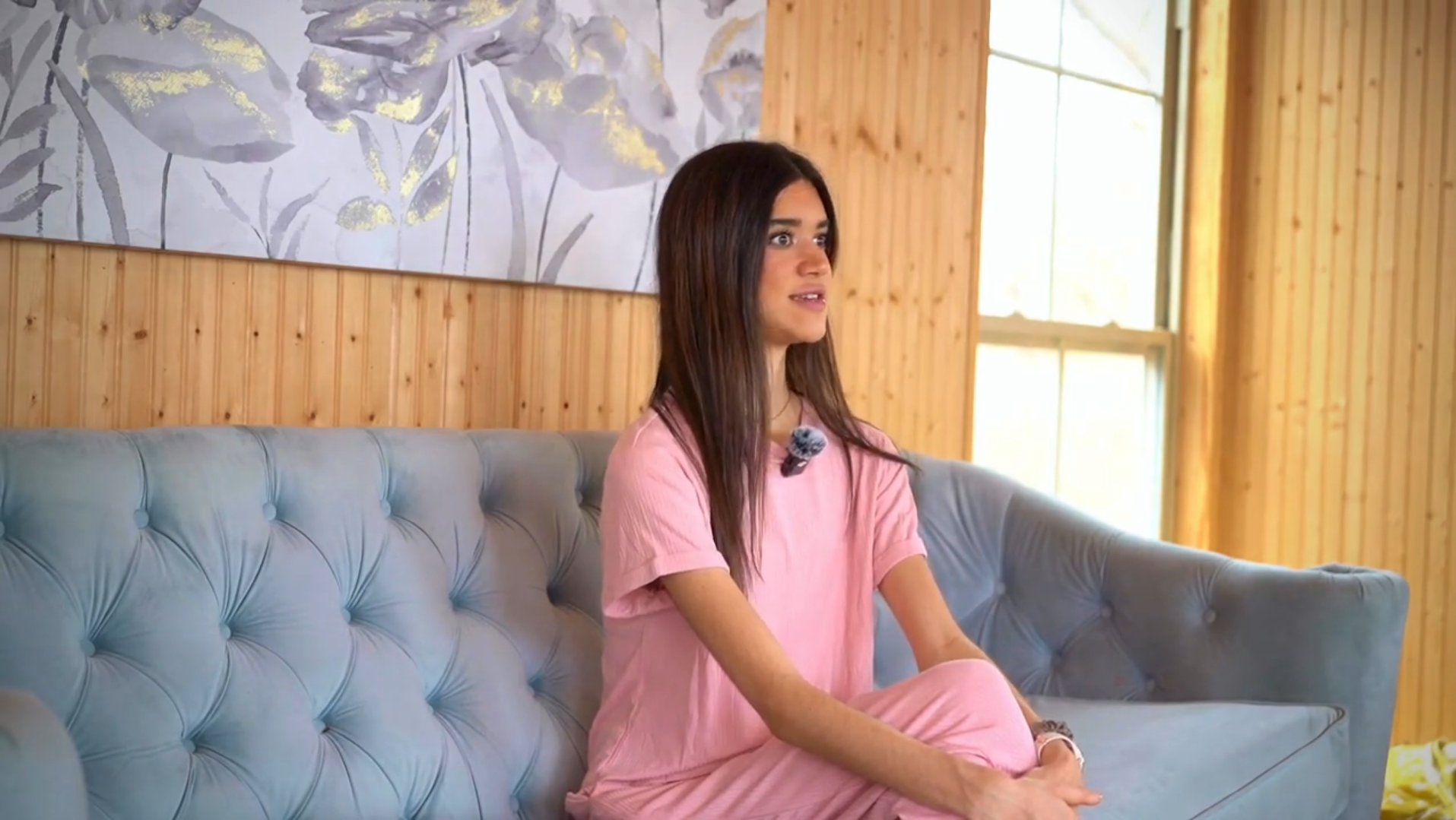
Maya had no idea she was struggling with disordered eating until her parents brought it up in 2024. At first, she didn’t think much of it—she truly believed her habits were normal. But once she started her recovery journey and learned more about herself, she realized she had actually been dealing with disordered eating since she was around 12 years old.
Growing up as a dancer, Maya was under immense pressure to perform, fit in, and maintain a certain image—though she didn’t fully recognize it at the time. The constant exposure to mirrors and the unspoken expectations of the dance world shaped how she saw herself.
“I’ve struggled with body dysmorphia for as long as I can remember. I started dancing at three years old, always looking at myself in the mirror, constantly analyzing. There’s this expectation for dancers to fit a certain mold, and it was really tough growing up in that environment.”
Over time, little habits started to add up, and by the time she got to college, things had really escalated. Her friends and family began to notice that she wasn’t just the “healthy” friend anymore—she was pushing herself too hard, believing she could handle more than most people.
“At first, I thought I was just making a lifestyle change. It started so innocently. I never meant to develop these severe symptoms or become addicted to over-exercising. I was working out for four hours a day and barely eating enough. I saw it as just toning up, just losing a little weight. Then, suddenly, I dropped a lot of weight really fast. I thought, ‘Oh, well, I’m just the gym girl in the friend group.’ But I didn’t realize how scary it got. When I finally tried recovery, things actually got worse at first—I wasn’t ready to let go of that part of me.
My eating disorder convinced me that I wasn’t sick, that I was fine, that I was just stronger than most people. My parents found this holistic healing center, knowing how much I love nature and how important that is for me. But I resisted. I wasn’t ready. I was scared to admit I needed help. Eventually, I realized I didn’t have much of a choice—so I gave in. And once I got here, I finally saw how much I truly needed this. I haven’t looked back since.”
Maya shared that as soon as she walked through the doors at Eating Disorder Solutions, she immediately felt safe and comforted.
“Everyone was so smiley, so welcoming. It was peaceful. What struck me most was that they wanted to know me—not my eating disorder. That was my biggest fear. But the staff made such an effort to get to know the real me. They asked about my dreams, my goals, and what motivates me. They cared about me as a person, not just as someone in recovery. Some of my recovery coaches and therapists feel like family. I’ve never felt so safe and supported.”
For Maya, taking time off from college felt like a huge hurdle. She struggled with the fear that it might mean falling behind or failing, especially since she had always been driven and focused on her future. That fear was a constant weight on her shoulders, making the decision even more challenging. It felt like stepping away from everything she had worked so hard for, but deep down, she knew it was the right step for her well-being.
“Now that I’ve been in recovery, I can say with full confidence—taking time off was the most loving thing I could have done for myself.”
Now, Maya is looking ahead with excitement. She’s transitioning to PHP (Partial Hospitalization Program) and preparing to return to college — this time with a fresh outlook and a deeper appreciation for herself. She’s gained tools to navigate challenges, confidence in her strength, and a sense of pride in how far she’s come. With a strong support system and a renewed sense of purpose, she’s ready to embrace what’s next.
“If I had to sum it up in one word, it would be life-changing. I know that sounds cliché, but Eating Disorder Solutions gave me a second chance. They believed in me. They still believe in me. They’ve shown me how to love myself, flaws and all. And I’ve never done that before. I never had self-compassion, kindness, or gratitude for my own life. But now I do.
If you’re struggling, please know—having an eating disorder is nothing to be ashamed of. It wasn’t your fault. You did nothing wrong. Your eating disorder lies to you. But you are enough, just as you are. You are loved. And you are more deserving of recovery than you’ll ever know.”
Video Testimonial Summary
Key Takeaways from Maya’s Story
•Eating Disorders Can Develop Innocently: Maya’s disorder began as a college fitness goal and escalated rapidly without her realizing it — illustrating how quickly disordered behaviors can become life-threatening.
•Family Intervention Can Be the Turning Point: Maya’s parents intervened together, toured EDS, and made the decision for her when she was too deep in her disorder to make it herself.
•EDS Gets to Know the Person First: Staff at EDS prioritized learning who Maya was as a person — her goals, her passions, her personality — before addressing her eating disorder, which made all the difference in her willingness to engage.
•Individualized Treatment Plans: EDS does not use a one-size-fits-all approach. Every patient’s treatment plan is unique, and staff meet each person where they are in their readiness to recover.
•The Step-Down Journey: Maya’s story illustrates the full continuum of care at EDS — from residential treatment to PHP — and how the team prepares patients for real-world reintegration at every step.
Video Testimonial Transcript
It Wasn’t My Choice to Come — and That’s Okay
Hi, I’m Maya. I’m at Eating Disorder Solutions and this is my recovery story. It wasn’t actually my choice. My eating disorder convinced me that I wasn’t sick and I wasn’t unhealthy in any way and that I was normal and that I was just some superhuman who could be doing the behaviors that I was doing prior.
And my parents sat me down and told me they found this place in Weatherford that’s really just a holistic place and it’s not in a hospital setting and it’s really unique and they know how much I loved spending time in nature and how healing it was for me. So them telling me that and kind of just telling me that this is where you’re going to go — and we think it’s going to be great for you — I was very, very against it. I wasn’t ready for that help. I wasn’t accepting yet that I am sick and I do need help in recovery.
I had started somewhat of an outpatient recovery but I was too scared to take that first step. I felt lost. I didn’t know what I was doing or really how to begin. And so I finally just released that, accepted that I didn’t have a choice at this point. And then once I got here, I realized that I do need this help and it’s going to get me started. And since then, I just haven’t looked back.
How Body Dysmorphia and Societal Pressure Built Over Years
I have grown up with having thoughts of body dysmorphia. I started dancing when I was 3 years old and I was constantly looking in the mirror. When you’re dancing, you’re kind of built with this expectation to fit a certain image and it was really hard for me growing up. So I always kind of had body dysmorphia thoughts.
Then it wasn’t until around summer of 2024 that I finally just did something. I thought it was just me making a lifestyle change in college and it started out so innocently. I didn’t mean to develop these severe symptoms and this addiction with over-exercising and not nourishing my body enough. I was working out for 4 hours a day, maybe not eating nearly enough, and I just saw it as losing a little weight. I’m a college student — when you go to college, you’re eating unhealthier things. So I just thought of it as me just kind of toning up. That was my goal.
And then I dropped a lot of weight very quickly. And just thought, oh, it’s because I’m working out so much. Like, I’m just this kind of superhuman who’s the gym girl in the friend group and the healthy one. But really, I didn’t see how scary it got that quickly. And once I decided to try recovering myself, it actually got worse because I wasn’t ready to let that part go of me.
The Roots: Divorced Parents, Fad Diets, Social Media, and the Drill Team
I think it was inevitable. It was going to happen — just with our society as it is, and also having divorced parents at both houses when both of your parents start the keto diet when you’re 8 years old and kind of learning that carbs are bad at such a young age and bread is evil. Hearing those phrases. And your mom, who you think is the most beautiful person in the world, saying, “I just need to lose 10 lbs.” Just growing up with that mindset. And then being on social media at such a young age. All of those negative factors. The Victoria’s Secret model ab workouts — I just remember my sister and I doing those in our movie room. And again, the dancing, the wanting to fit a certain image, being on my high school drill team, being kind of told, “You’re the face of our establishment. You represent this community.” So just all that pressure — I finally cracked.
I actually started the working out and eating healthy because I wanted to build muscle and be strong, but I just made myself weaker and weaker because I also wanted to shrink myself. And it’s kind of hard to grow muscle and shrink yourself at the same time. So I was just really confused. And I think it was just a big buildup of symptoms over time until I was on my own — not under my parents’ roof, not having them cook for me. And so it just kind of all happened and I didn’t even realize how abnormal it was.
The Intervention: Both Parents, Together
I was approached in a loving manner from both my mom and my dad, which — having divorced parents — you don’t get that as much. So the second I saw my dad pull up in the driveway, I was like, “Oh gosh, it’s happening.” But they just kind of were very realistic. Like, “You’re going to die.” And looking back on it, I’m lucky to have made it as far as I did. I’m lucky to still be alive. I’m lucky that EDS even took me.
They told me that this isn’t something that you are equipped to do, and this isn’t something that we’re equipped to do either. So they found EDS and they actually came out here and toured it. They asked if I wanted to go and I was still convinced that I would convince them that I don’t need to go to treatment, so I didn’t go on the tour. They came back and said it was really great, but we’ll wait until after the holidays to make a final decision. And then before Christmas they kind of told me, “You’re never going to get better because you don’t know — it’s an addiction.” They really made it clear that it was an addiction.
They researched a lot of places both in Texas and out of state — Utah, California, other places in the area. But something about EDS was the visitation and the ability to see my family, whether through virtual visits or in person. And just all of the holistic approach that they take really stood out to them. They wanted me to feel like I was at a home. They wanted me to have a sense of my own place still — like I was in a home where I’m cared for and nurtured.
Arriving at EDS: Terrified but Welcomed
I was terrified. I got here the day after Christmas, which was already hard in itself. And it was a cold, pouring, rainy day. The highways were flooded. I was like, “Is it really worth this to go?” And I didn’t know what to expect with treatment. I didn’t really research EDS. I found what I could on Instagram and Google, but you don’t know where you’re going until you tour, until you get there.
And I just remember walking in and feeling overwhelmed. And everybody — I immediately felt that sense of comfort. Everybody was just so smiley and welcoming, which automatically brings you that sense of peace and comfort. But they really just wanted to get to know me, not my eating disorder.
Getting to Know Maya — Not Her Eating Disorder
That was something I was so scared of. I thought before coming here, I just wanted to put it in the past behind me. And that was a big reason why I was opposed to treatment — I was just ready to start a new chapter. But when I got here, the staff made 110% of their efforts in getting to know who is Maya, not who is Maya the girl with the eating disorder. Who is Maya my client? They just wanted to know me. Before even talking about my eating disorder, they asked me what my goals were in life. They just wanted to know where I’m at, what motivates me. And they just really made me feel like I already had a family.
The recovery coaches — Mika, she feels like my mom. And when you’re in recovery, you just want a mother’s love. So when you feel like you have that in the staff at treatment, it just makes it 10 times easier. And it has really allowed me to express that vulnerability that I struggled to before. I feel safe and comfortable because I know that they care about me as an individual, not as a client. And they do that with everybody.
They know every little detail of my life and I can tell they care whenever I talk to them about it, which just makes me more willing and wanting to express my struggles or express my needs here. And when I do express those struggles or needs, they immediately act upon it because they want me to feel safe and comfortable here. It’s mind-blowing how whenever I do say I need something from a staff member for my recovery, it’s done pretty much 30 minutes later max if it’s feasible.
Putting Life on Pause for Recovery
I took this semester off from college, which was extremely difficult to come to terms with. I loved school. I loved my education. I loved my friends. I loved the college lifestyle. And my eating disorder — the fall semester took that away from me. I was still in school, but I was living at home with my parents because I couldn’t take care of myself. And a big reason I was opposed to coming to treatment was putting that part of my life on pause.
But the staff just kind of reaffirmed that my education will always be there, but I have to put myself first and my recovery first. And they made me feel okay about that decision. It’s hard, whether you’re in your 30s and working or in your 20s in college still. Putting your life on pause for recovery is extremely difficult. And the staff does an amazing job of reminding you why you’re here — it’s to get back to that life that you are longing for, but as a healthy version of yourself.
I wasn’t accepting that taking time off school was an option. I had pretty much that 5-year plan. This is going to happen in this order at this time and treatment and recovery was not a part of that 5-year plan. So I pushed through and I pushed through and I kept breaking myself down and I got 10 times worse and the addiction of my eating disorder grew 10 times stronger with that.
Being here, I’ve learned the importance of putting myself first in all aspects of my life. And that includes taking time off of school. I can’t get a degree if my brain is malnourished. I can’t get a degree if I’m killing my body slowly every day. Being here and getting that nourishment and that brain fuel — I’m going to go back to school 10 times healthier and make so many great memories with my friends that my eating disorder took away from me in the first place.
Connection Through Food and Looking Forward
A part of connection just in the social realm is through food. And I isolated myself from that connection with my friends because of the fear of the food. And now I’m looking forward to going back and enjoying those spontaneous ice cream trips with my girlfriends or dinners with my family and all of that. And just going back and being able to show them that I did it and I’m a brand new person and I’m proud of myself — that’s something I just absolutely cannot wait for.
We don’t all know everybody’s specific stories here, but we all know we’re here for the same reason. And something I’ve been saying a lot is I’ve started referring to EDS as home. And it’s not because I sleep here every night. It’s because of the people that make the place. It feels like home.
The staff every morning — they really get to know you on such a personal level. It’s not just “this is my job.” This is their livelihood. You can tell this is their purpose. Their care that they pour into their clients just fuels them. And it’s just so much more motivating when you know you’re surrounded by people who are cheering you on — and you know that if you do take a few steps backwards or if you are struggling, they’re there to help you and pick you right back up. There’s just constant love and motivation here and it keeps me going every day.
Individualized Treatment: No Two Plans Are the Same
Honestly, there are so many different types of eating disorders. Eating disorder recovery isn’t a one-size-fits-all solution. And the staff here really understand and they just pour immense detail into your treatment plan. Nobody’s treatment plan is the same. Everybody’s is unique.
And I think that’s so special because when you Google how to recover from an eating disorder, you get step-by-step instructions. And that’s kind of why it didn’t work for me the first time. Since being here, I can tell how much they care about me as an individual and how much they care in the group by really paying attention to what works best for everyone, which you don’t get at a lot of other places.
They also just meet you where you’re at. We all come in at different preparation levels of where we want to start in recovery and what we’re able to do. Some people are able to accelerate really fast while others need to take baby steps. And they really just affirm you that it’s okay — recovery is a journey. It’s not just “you’re here for however long you’re in residential and then you’re done.” It’s a lifelong process and they really just help you every step of the way.
The EDS Environment: Homey, Comfortable, and Alive
Everything just really feels so homey. It feels comfortable being here. All the couches upstairs, all the blankets — you don’t feel like you’re in a treatment facility. Being outside, being able to sit in the sunshine and read a book, or sometimes we do groups outside when it’s nice. Being able to look at the fields and the cows and petting all the dogs and Tuna the cat — it makes it feel like home.
I feel like I have my own space. I was kind of nervous about having a roommate, but it’s kind of special — it accelerates creating those bonds with other people. And the facility is just so well taken care of. They’re constantly asking for feedback if we need anything fixed. And Casey does an incredible job of getting those issues fixed pretty much the next day. They really care about making us feel like we’re at home and feeling like we do have a space here.
Vulnerability, Affirmation, and Feeling Less Alone
I think just the constant affirmation from both my friends here and the staff that I’m killing it — I’m doing great. And just people seeing that, because it’s kind of hard to see it in yourself. The eating disorder tries to lie to you and says, “You’re not doing enough. Are you accelerating at the right pace?” And it’s scary not knowing. But everybody just constantly telling me that I’m doing great.
And also just when I do open up and share my story, just people thanking me for being vulnerable — because I never allowed myself to be vulnerable. I didn’t think that I was allowed to. And in process group, just people saying, “Thank you for opening up and sharing that part.” And hearing how other people relate to my story here — it makes me feel so much less alone. Because I did feel alone before I came here. Nobody really understands unless they’re in it or they’ve seen it or they’ve lived it. And everybody here has lived a certain aspect.
A Physical and Emotional Transformation
I look healthy. There’s light back in my eyes. But prior to coming here, I had no emotions. People used to ask me, “When was the last time that you laughed genuinely?” And I couldn’t even remember. I went through every day feeling nothing, feeling numb, just feeling like I was going through the motions like a robot.
If you told me that I would wake up at 7:00 a.m. bouncing off the walls, saying good morning to everybody, being excited to be alive — I wouldn’t have believed you, because I didn’t think it was possible. So mentally, emotionally, spiritually, and physically, I feel almost reborn. Because my eating disorder took my life away from me. I’m not my old self, but I’m this brand new person. And I’m getting a new life back. This is a new Maya that everybody’s going to see once I complete this program and I’m so grateful for that.
Transitioning to PHP: Applying Recovery in the Real World
I’m going to start PHP this Sunday — Partial Hospitalization — and I’m very fortunate that I only live about 45 minutes to an hour away. So I’ll be commuting to and from EDS Monday through Friday from 8:00 to 4:00. I’m really excited to start applying what I’ve learned back at home and in real life, and learning how to use those coping skills that EDS educates us on when I do get triggered.
The staff — Lauren the dietitian and my therapists — have really been working with me on identifying how I’m going to take what I’ve learned here to support both my physical recovery with nourishment and my mental recovery when I do get triggered outside of here. They really prepare you for taking those real-world steps in that transition. And if I do get triggered or something, I can come back here to this safe space and talk to anyone about it and they’ll help me get back on the saddle.
Going to restaurant night every Thursday was something I hadn’t really experienced because my eating disorder took it away. So I’ve slowly been integrating into the real world, and now I’ll get more of that. And that’s something so great about the Partial Hospitalization Program that EDS has.
One Word: Life-Changing
In one word, it would be life-changing. And I know that can sound cliche, but EDS gave me a second chance at life. I didn’t realize how unhealthy I was at all. And I was actually so unhealthy that they were very hesitant about accepting me into their program as opposed to me being in a hospital for a few weeks prior. And I’m just so grateful that they believed in me, that they continue to believe in me, that they support me no matter what. I’m just so grateful that not only did they give me a chance, but they gave me a second chance at my life.
I didn’t think I could recover at all. I didn’t know how to. And something that they tell me all the time here is, “We’re just giving you the guidelines and the treatment plan, but you’re doing the work and you’re doing everything you need to.” They’ve shown me what it means to love myself and all my flaws. I’ve never loved myself. I’ve never had that self-compassion and kindness and gratitude for my life. And I’ve really learned that here.
A Message to Anyone Considering Treatment
I used to be in that position where I thought I didn’t need help. I thought I wasn’t sick enough, as they say. And there is no “sick enough.” There are no rules to who deserves recovery and who doesn’t. We all deserve to live a fulfilling life. There’s nothing wrong with needing the help of other people and professionals to achieve your goals.
To anybody who’s thinking about starting treatment or looking for a facility: be scared and do it anyway. You’ll never regret recovering from your eating disorder. I walked in the doors of EDS and I’m so thankful that I never looked back, because I am getting that life that I always dreamed of having. And that’s because I chose to recover for myself.
Putting yourself first is the most healing thing you can do for yourself. Closing one chapter of your book and opening another. Having an eating disorder is nothing to be ashamed about. It wasn’t your fault. You did nothing wrong. The eating disorder lies to you and tells you that you don’t deserve food, you don’t deserve to live, you don’t deserve a fulfilling life — when we are more than deserving. We don’t have to earn a fulfilling life. We don’t have to earn nourishment. Showing up as you are, you are enough and you are loved and you are more deserving of recovery than you’ll ever know.
Anorexia Nervosa Treatment
Our anorexia nervosa treatment focuses on restoring healthy eating habits and addressing underlying psychological issues. Individual therapy, nutritional counseling, and medical monitoring are integrated to support clients in achieving a balanced relationship with food and body image.

Bulimia Nervosa Treatment
Bulimia treatment aims to break the binge-purge cycle by addressing the emotional triggers and behaviors associated with bulimia. Therapy and nutritional support help clients develop healthier coping mechanisms and improve their relationship with food.

Binge Eating Disorder Treatment
Our binge eating disorder treatment program focuses on managing the emotional factors that lead to overeating. Clients receive therapy and nutritional guidance to develop healthier eating habits and gain control over their eating behaviors.

Body Dysmorphia Treatment
Body dysmorphia treatment helps clients challenge distorted perceptions of their body image. Through specialized therapy, clients learn to develop a more realistic and positive view of their appearance, reducing obsession and anxiety.
ARFID Treatment
Treatment for Avoidant/Restrictive Food Intake Disorder (ARFID) focuses on expanding dietary variety and reducing food avoidance behaviors. Our program uses therapeutic interventions tailored to the individual’s needs to promote nutritional health.

OSFED Treatment
Other Specified Feeding or Eating Disorders (OSFED) are treated with customized care plans that address their unique symptoms. Our program provides therapy and support to help clients develop a healthy relationship with food.

UFED Treatment
For Unspecified Feeding or Eating Disorders (UFED), we offer personalized therapy that meets each client’s specific needs, promoting recovery and overall well-being.

Orthorexia Treatment
Orthorexia treatment focuses on reducing the obsession with “perfect” eating. Our approach helps clients develop a balanced relationship with food, emphasizing health without rigid dietary rules.
Compulsive Overeating Treatment
Our treatment for compulsive overeating targets the emotional triggers that lead to overeating. Clients learn to manage these triggers through therapy and nutritional counseling and adopt healthier eating patterns.
Co-Occurring Disorder Treatment
We provide integrated care for clients with eating disorders and co-occurring mental health conditions. This comprehensive approach ensures that all aspects of a client’s well-being are addressed, supporting recovery and overall mental health.
We’re Here to Help
Eating Disorder Solutions offers personalized residential and outpatient eating disorder treatment in the Dallas, TX area. We provide treatment with integrity, promoting holistic approaches that heal the mind, body, and soul. If you’re ready to begin your recovery journey, call us now at 855-245-0961 or complete the form.
What Sets Us Apart
- Personalized Treatment
- Licensed Specialists
- Same-Day Intake
- Flexible Scheduling
- Evidence-Based Therapies
- Long-Term Recovery
Request A Call
Fill out the form below, and we’ll contact you shortly.
Residential Center
Outpatient Center

Adults of All Ages
We treat adults across all life stages, from young professionals to those in midlife or retirement. Some have battled OSFED since adolescence, while others develop symptoms later in life due to stress, health changes, or personal loss.

College Students
College life can increase OSFED risk, with pressures from academics, social comparison, and irregular eating patterns. We help students develop balanced routines, manage campus triggers, and build coping strategies for dining halls, parties, and late-night study sessions.

LGBTQ+ Individuals
We provide affirming, culturally sensitive care for LGBTQ+ clients, recognizing the unique impact of stigma, body image pressures, or gender dysphoria. Our team creates a safe space where clients can explore identity issues and learn healthier ways to cope without relying on disordered eating.

Athletes
Athletes may develop OSFED due to weight pressures, performance demands, or rigid training routines. Our sports-informed team helps clients balance proper nutrition with athletic goals while addressing perfectionism and identity tied to sport.

Working Professionals
High-pressure careers can fuel disordered eating patterns like skipping meals, nighttime overeating, or extreme dieting. We offer flexible in-person and virtual OSFED treatment options to fit around busy work schedules and professional demands.
Most Insurances Accepted





Real People, Real Results
Frequently Asked Questions
Can an eating disorder develop from a college fitness routine?
Yes. Maya’s story is a powerful example of how an eating disorder can begin as an innocent health goal — working out and eating better — and escalate rapidly into a life-threatening condition. The transition from structured home life to independent college living, combined with underlying body image pressures, created the conditions for her disorder to take hold. EDS treats patients whose disorders developed at any stage of life and in any context.
What is body dysmorphia and how does it relate to eating disorders?
Body dysmorphia is a mental health condition in which a person has a distorted perception of their physical appearance, often fixating on perceived flaws that others cannot see. Maya describes having body dysmorphia thoughts from childhood, shaped by dance, social media, and societal beauty standards. Body dysmorphia frequently co-occurs with eating disorders and is addressed directly in EDS’s individualized treatment plans.
How do childhood diet culture and family messaging contribute to eating disorders?
Maya describes growing up in a household where both divorced parents followed the keto diet, where carbs were labeled “bad,” and where comments about weight loss were normalized. These early messages — even when well-intentioned — can plant the seeds of disordered eating. EDS’s treatment approach addresses the root causes of each patient’s disorder, including family dynamics and internalized diet culture beliefs.
Can a family member intervene when someone with an eating disorder refuses to seek help?
Yes. Maya’s parents intervened when she was unable to recognize the severity of her illness herself. They researched facilities, toured EDS, and made the decision to enroll her when she was too deep in her disorder to do so on her own. EDS works closely with families throughout the admissions process and offers guidance to loved ones who are navigating this difficult situation.
Does EDS allow family visitation during residential treatment?
Yes. Maya’s parents intervened when she was unable to recognize the severity of her illness herself. They researched facilities, toured EDS, and made the decision to enroll her when she was too deep in her disorder to do so on her own. EDS works closely with families throughout the admissions process and offers guidance to loved ones who are navigating this difficult situation.
Does EDS treat patients who are severely medically compromised?
EDS evaluates each patient individually and, in some cases, may recommend medical stabilization before admission. Maya notes that EDS was initially hesitant to accept her given the severity of her condition. However, they believed in her and gave her the chance to begin her recovery — a decision she credits with saving her life.
What does "meeting patients where they are" mean in eating disorder treatment?
At EDS, “meeting patients where they are” means that treatment is paced according to each individual’s readiness, not a standardized timeline. Some patients move quickly through the recovery process while others need to take smaller steps. EDS staff continuously assess and adjust each patient’s plan, checking in after therapy sessions and meal plan changes to ensure the patient feels supported and not overwhelmed.