
















When we participate in ecotherapy, we can expect to feel rejuvenated, relaxed, and more confident just by spending time outside. Combining those things with human contact will make you less anxious, more mindful, and happier – while experiencing meditative brain waves and feeling satisfaction for giving back to the planet.
Ecotherapy for Eating Disorder Recovery in Texas
Nature-based therapy designed to support eating disorder recovery, provided at our Dallas treatment center. At Eating Disorder Solutions, ecotherapy is thoughtfully integrated into treatment to help individuals reconnect with themselves, reduce stress, and support emotional healing.
- Same-Day Admissions
- Free Insurance Verification
- Most Insurance Accepted
How Nature Therapy Helps Heal Eating Disorders
Eating disorder behaviors and thoughts are closely connected to body image and self-perception. Body dysmorphia, for instance, occurs when people with eating disorders incorrectly perceive their size or how much space they are taking up. Nature therapy promotes emotional well-being and reconnects individuals with the natural world, especially their bodies.
In nature therapy, our clients can take a step back from the busyness of everyday life. Simply walking outside in our calming scenery will allow our clients to reconnect with the world, have a better sense of space, and understand their bodies more objectively.
As a result, clients begin to feel re-embodied with the world, experiencing it through the sense of their feet. People with eating disorders often describe them as something “in their heads,” cutting off the connection between their minds and bodies. Many of our clients feel more connected to themselves and the world when they walk and focus on the sensation of their feet on the ground.
What Is Nature Therapy or Ecotherapy?
Nature therapy, or green therapy, is also referred to as ecotherapy. It is based on the belief that we are part of the web of life and that our psyches are interconnected with our surroundings and environment. Here at Eating Disorder Solutions, we incorporate aspects of ecotherapy into our eating disorder treatment, providing our clients with an opportunity to explore their relationship with nature.
A fundamental premise of nature and ecotherapy is that the well-being of humans is intimately bound to the planet’s well-being and that nurturing our relationship with nature is key to maintaining our mental well-being.
Those willing to connect with nature can discover wisdom and healing there.
Our Levels of Care
Every person's journey is unique. We offer personalized treatment programs designed to meet you where you are and support you every step of the way in Dallas, Texas.
Residential Treatment
24/7 inpatient eating disorder treatment providing structured, medically supported care in a safe, healing environment.
Outpatient Treatment
Daytime eating disorder treatment offering intensive support while allowing clients to live at home and maintain daily responsibilities.
Partial Hospitalization
High-level eating disorder treatment combining daily clinical care with increased flexibility outside of inpatient treatment.
Intensive Outpatient
High-level eating disorder treatment combining daily clinical care with increased flexibility outside of inpatient treatment.
Virtual Outpatient
Fully online eating disorder treatment delivering structured therapy and nutrition support from the comfort of home.
Aftercare
Ongoing eating disorder recovery support designed to maintain progress and reduce the risk of relapse after treatment.
Our Approach
Evidence-Based Care with Heart
We combine the latest research with compassionate, individualized care. Our multidisciplinary team works together to address the physical, emotional, and psychological aspects of eating disorders.
Cognitive Behavioral Therapy
Identify and change harmful thought patterns and behaviors.
Dialectical Behavior Therapy
Build skills for emotional regulation and distress tolerance.
Trauma-Informed Care
Address underlying trauma in a safe, supportive environment.
Does Ecotherapy Improve Mental Health?
It’s time to stop and smell the roses, according to science.
Research has shown that ecotherapy has profound benefits for well-being across the board. Observing nature directly or reflecting on it can have the following benefits.
What Areas of Improvement Can Ecotherapy Lead To?
- Memory
- Creative problem-solving
- Emotion regulation
- Levels of focus
- Positive mood
- Sense of revitalization and stillness
- Positive feelings and thoughts
- Sense of space and self
What Does Time Spend in Nature Reduce?
- Stress and anxiety
- Depressive symptoms
- Anger and impulsivity
- Levels of cortisol, heart rate, and blood pressure
Specialized Programs
We understand that different ages and situations require different approaches. Our specialized programs are tailored to meet specific needs.
Adult Program
Specialized eating disorder treatment designed to support adults balancing recovery with work, family, and daily responsibilities.

Athlete Program
Eating disorder treatment tailored for athletes, addressing performance pressures, fueling needs, and sport-related stressors.

LGBTQ+ Program
Inclusive eating disorder treatment providing affirming, holistic care for individuals in the LGBTQ+ community.

College Students Program
Eating disorder treatment designed to support college students navigating academic demands, independence, and social pressures.
How Does Time in Nature Affect Mental and Physical Health?
- The European Centre for Environment and Human Health at the University of Exeter conducted a study with 20,000 people. According to the study, people who spend two hours a week in green spaces — such as local parks or other natural environments, either all at once or over several visits — report having good health and psychological well-being much more frequently than those who don’t.
- Across different occupations, ethnic groups, rich and poor areas, and chronically ill and disabled people, the effects were robust.
- Over half of the world’s population lives in urban areas, which is expected to reach 70 percent within a few decades. In the same way that urbanization and disconnecting from nature have grown dramatically, mental disorders like depression have also risen.
- People living in cities are 20 percent more likely than those living in rural areas to develop anxiety and mood disorders.
There are several theories explaining why nature influences health. Humans, however, have only lived in cities for one percent of their existence and are therefore not “designed” to live in them. Human minds and bodies crave fresh air, sunlight, and large spaces to be rejuvenated.
How Does Nature Therapy Help Heal Eating Disorders?
Eating disorder behaviors and thoughts are closely connected to body image and self-perception. Body dysmorphia, for instance, occurs when people with eating disorders incorrectly perceive their size or how much space they are taking up. Nature therapy promotes emotional well-being and reconnects individuals with the natural world, especially their bodies.
In nature therapy, our clients can take a step back from the busyness of everyday life. Simply walking outside in our calming scenery will allow our clients to reconnect with the world, have a better sense of space, and understand their bodies more objectively.
As a result, clients begin to feel re-embodied with the world, experiencing it through the sense of their feet. People with eating disorders often describe them as something “in their heads,” cutting off the connection between their minds and bodies. Many of our clients feel more connected to themselves and the world when they walk and focus on the sensation of their feet on the ground.
Request A Call
Fill out the form below, and we’ll contact you shortly.
Conditions We Treat
We provide specialized care for all types of eating disorders in Dallas, Texas.
Anorexia Nervosa
A restrictive eating disorder marked by fear of weight gain and distorted body image, requiring comprehensive medical, nutritional, and therapeutic care.

Bulimia Nervosa
An eating disorder involving cycles of binge eating and compensatory behaviors, often driven by emotional distress and body image concerns.
Binge Eating Disorder
Characterized by repeated episodes of eating large amounts of food with a sense of loss of control, without compensatory behaviors.

Compulsive Overeating
Recurrent episodes of overeating driven by emotional distress rather than physical hunger. Treatment helps address emotional triggers, reduce shame, and develop healthier coping strategies.

Body Dysmorphia
Persistent distress about perceived flaws in appearance that impact daily life. Treatment focuses on improving body image and reducing obsessive thoughts through structured therapeutic support.

Orthorexia
An unhealthy fixation on eating “clean” or “healthy” foods that leads to rigid rules and anxiety around meals. Treatment promotes flexibility, balanced nutrition, and a more sustainable relationship with food.
Co-Occurring Disorders
An eating disorder occurring alongside conditions such as anxiety, depression, or trauma. Treatment addresses both concerns together to support lasting recovery and emotional stability.
ARFID & Other Disorders
Includes avoidant or restrictive eating patterns and other specified feeding or eating disorders that require individualized treatment approaches.

How Does Being in Nature Affect the Mind and Body?
When out in nature, the rhythm of the wind moving through the trees and the oxygen that the trees are giving off – there’s an energy in the forest, and our clients can feel the difference. It’s charged with energy and life force. When out in nature, it affects people at a cellular level and is able to bring healing to the mind and body.
It Improves body function and mood.
Sunlight provides vitamin D, which can improve mood, promote bone and dental health, and reduce risks such as cancer, heart disease, stroke, diabetes, and others. Furthermore, vitamin D reduces blood pressure by relaxing the blood vessels and improving blood flow.
Natural light normalizes sleep schedules.
Getting enough sunlight can also help clients feel refreshed and relaxed by regulating melatonin production in their bodies. In simple terms, melatonin controls a person’s sleep cycle. In the brain, the pineal gland (which produces melatonin) is directly affected by light—it is inactive during the day and becomes active at night. Melatonin contributes to a good night’s sleep, resulting in a refreshed feeling when waking up.
The power of breathing helps the body cope with stress.
It’s been proven that breathing techniques can reduce stress hormone production and train the body’s reaction to stressful situations. In the great outdoors, slow, deep breathing stimulates the parasympathetic nervous system, which helps clients relax.
Oxygen impacts well-being.
The oxygen level in the brain is related to the level of serotonin, the neurotransmitter that affects mood, appetite, memory, social behavior, and other functions. Nature’s negative ion-rich oxygen also promotes alpha brain waves and increases brain wave amplitude, which results in an overall calming and clear feeling.
It helps center the mind.
Technology also plays a role: people spend copious amounts of time staring at screens and isolating themselves. The technological world is so engulfing that people don’t recognize themselves or their bodies in the real world. Natural elements make our clients feel a greater sense of awareness of their place in the world, thereby dissolving this split between themselves and the world. Leaving devices behind and venturing out into nature can alleviate life’s stressors and instead help clients focus their minds on other things, allowing their brains to recharge.
What Are Our Ecotherapy Activities?
A wide range of interventions can be used as part of ecotherapy since it is an umbrella term for nature-based approaches to healing. Some activities are performed with the guidance of a therapist, while others are done individually or in a group setting.
The following are some of the more common ecotherapy activities:
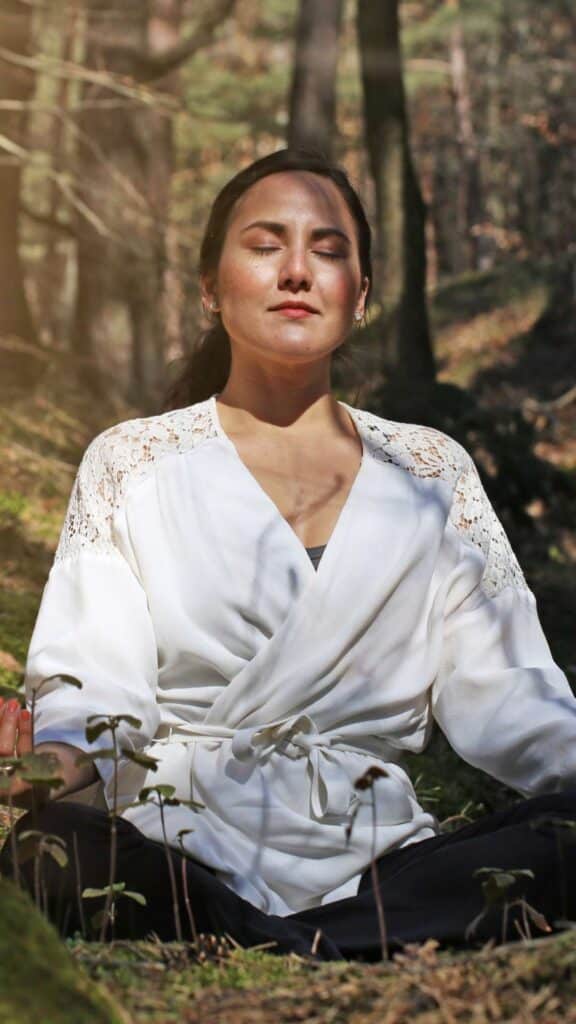
Nature meditation:
This type of meditation occurs in a natural setting, such as a park,
and can be done as group therapy. Clients can work on identifying something in nature that attracts them and then contemplating what they can learn from it and how it relates to them.
Horticultural therapy:
In this therapy, clients use plants and garden-related activities to promote well-being. They may dig soil, plant seedlings, weed beds, and trim leaves in the garden, and it has been proven to reduce stress, boost self-esteem, alleviate depression, and even help with insomnia.
Mindful movement:
These activities promote increased awareness of nature and reduce stress, anxiety, depression, and anger.
- ● A gratitude walk: Practicing gratitude while on a nature walk is another great way to appreciate nature. Clients can grow a sense of gratitude by noticing everything they’re thankful for – maybe something they find that makes them think of a cherished memory or loved one.
- ● Yoga: When learning to breathe deeply, stay present, and keep an open mind to possibilities instead of limitations, yoga shines a bright light on innate strengths and helps our clients take baby steps toward recovery. The results can be surprisingly empowering.
Arts and crafts in nature:
Art can be created using natural materials like leaves, wood, or soil or inspired by nature.
- ● Nature journaling: Our clients can learn to nourish their sense of curiosity in nature by taking a journal outdoors. Writing is already a very effective coping skill in recovery, but when combined with nature, clients can write about everything they perceive around them. Details aren’t important; it’s what connects with them that matters.
- ● By immersing themselves in nature, they can create art in green spaces, use the environment as inspiration, and incorporate natural materials into their crafts to create a sense of balance and grounding.
This list goes on and on, but the main takeaway is this: nature heals, and our clients can reap the benefits by connecting deeper to the Earth. Our clients can improve their moods, channel different, mind-opening perspectives, and excel in their healing journey when they mindfully reconnect with the world by spending time in nature. The power of holistic eating disorder treatment is undeniable, and nature therapy is an amazing therapeutic tool for mind and body treatment.
If you or a loved one is suffering from an eating disorder, take the first step today and talk to someone about recovery or start by learning about our eating disorder recovery programs.
The natural world embraces everyone just as they are. Several of our clients report that being in nature is a “break” from the judgment and critical self-perception that can overwhelm them when there are more people around. Additionally, they practiced mindfulness, existing in the present moment. They were just being: there was no ruminating on the past or worrying about the future.
Most Insurances Accepted
We work with most major insurance providers and offer flexible payment plans
Our admissions team will verify your insurance benefits at no cost and help you understand your coverage.
Real People, Real Results
Do You Offer Ecotherapy In Dallas, Texas?
Yes. Ecotherapy is offered as part of eating disorder treatment at our Dallas, TX facility. Nature-based therapy is thoughtfully incorporated into treatment plans when clinically appropriate and led by experienced clinicians.
Does Ecotherapy Involve Physical Activity Or Hiking?
Ecotherapy activities are adapted to each individual’s abilities, comfort level, and medical needs. Activities are gentle, guided, and focused on therapeutic outcomes rather than physical exertion.
Is Ecotherapy Covered By Insurance?
Ecotherapy is typically included as part of a comprehensive treatment program. Insurance coverage depends on the overall level of care and services provided. Our admissions team can verify insurance benefits and explain coverage details.
How Is Ecotherapy Different From Recreational Activities?
Ecotherapy is clinically guided and intentional. Activities are led by trained professionals and are designed to support therapeutic goals, emotional processing, and recovery rather than recreation alone.
Is Ecotherapy Helpful Even If I Don’t Consider Myself “Outdoorsy”?
Yes. Ecotherapy does not require a love of hiking or outdoor activities. Experiences are gentle, accessible, and adapted to comfort level.
Can Ecotherapy Help Reduce Anxiety or Overwhelm?
Yes. Being in nature can help calm the nervous system and reduce emotional intensity. This makes it easier to manage urges and distress.
Can Ecotherapy Help With Rigid Thinking or Control Issues?
Yes. Time in nature often encourages flexibility and presence. This can soften rigid patterns tied to eating disorder behaviors.
Do I Have to Sign Up Separately for Ecotherapy?
No. Ecotherapy is integrated into treatment programming when appropriate. Your care team helps determine how it fits into your plan.
Why Choose Eating Disorder Solutions in Dallas?
Eating Disorder Solutions in Dallas offers compassionate, evidence-based care in a peaceful, home-like setting designed to help clients feel safe, supported, and understood. Our multidisciplinary team provides individualized treatment across multiple levels of care, blending clinical excellence with real-world recovery skills that translate beyond treatment. With a strong focus on nutrition, therapy, and long-term healing, we help clients build a sustainable path to recovery, not just short-term progress.