
Key Takeaways
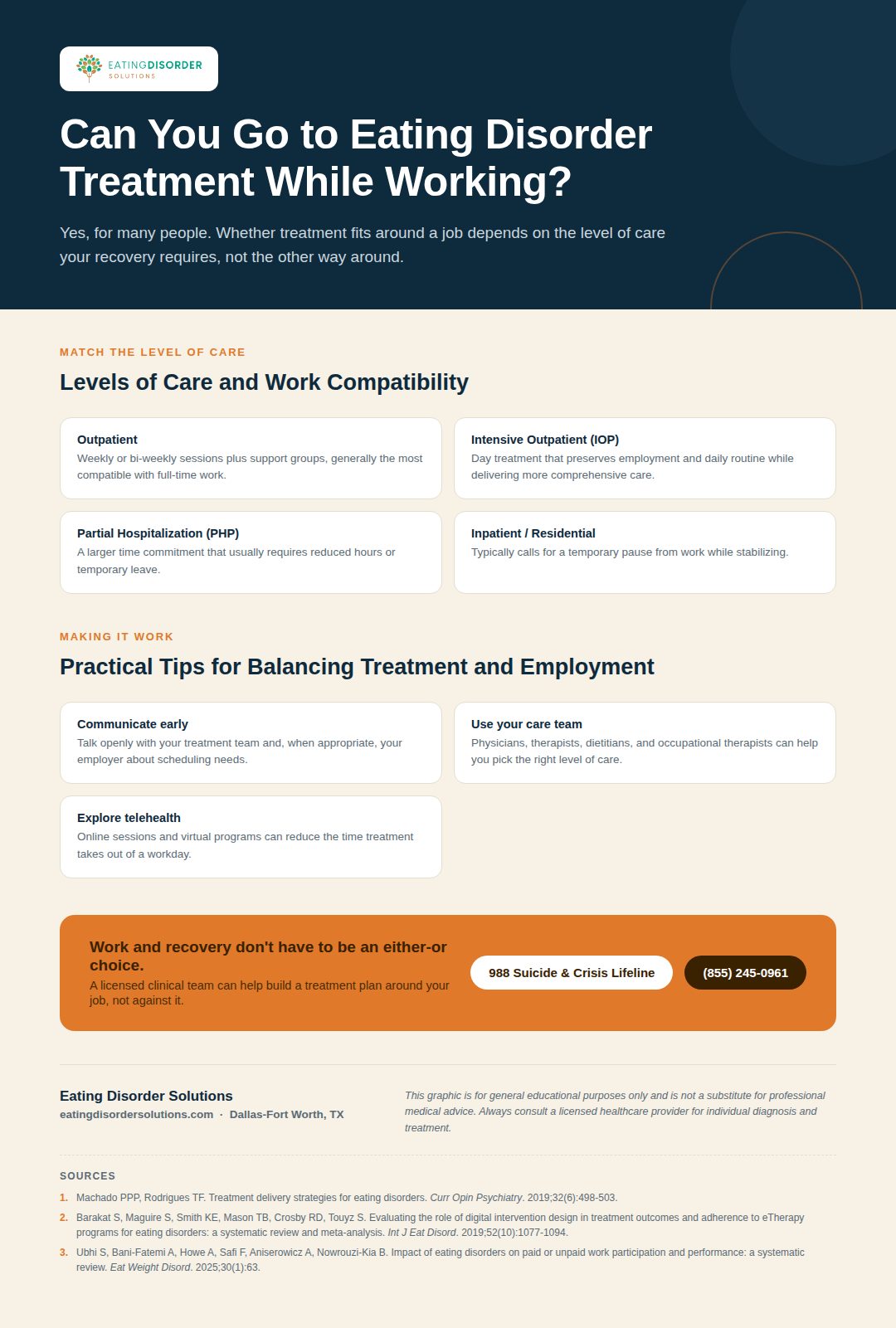
Yes, many people continue working while in eating disorder treatment, depending on the level of care their recovery requires. Outpatient and intensive outpatient programs are usually the most compatible with employment, while inpatient and residential care typically call for a temporary pause from work. Workplace protections and flexible scheduling can help you balance both.
- The level of care that fits your clinical needs, not your job, should guide treatment decisions.
- Outpatient and intensive outpatient programs often allow people to keep working part-time or full-time.
- Telehealth can make eating disorder care more compatible with a work schedule.
- FMLA and reasonable workplace accommodations can protect your job while you focus on recovery.
- Disclosure to an employer is a personal choice; you can request accommodations without sharing medical details.
Introduction
Balancing eating disorder treatment and work commitments is a common concern for many individuals with eating disorders seeking recovery. Often, people wonder, “can you go to eating disorder treatment while working?” The answer varies depending on the severity of the type of eating disorder and the appropriate level of care required. At Eating Disorder Solutions, a recognized treatment center, we understand that maintaining employment can be an important part of your life, and we aim to provide flexible treatment options tailored to your unique treatment goals and physical and mental health needs. Whether through outpatient eating disorder treatment, intensive outpatient programs, or more structured inpatient and residential treatment programs, with the guidance of a multidisciplinary treatment team and evidence-based treatment approaches, it’s possible to pursue healing and work towards recovery without compromising your job security.
Eating disorders such as anorexia nervosa, bulimia, binge eating, and other disordered eating behaviors can significantly impact an individual’s ability to engage in daily living and physical health. Seeking treatment for eating disorders is essential to manage symptoms and ensure full recovery, but the fear of disrupting your work life might delay seeking help. This article explores how different treatment programs and treatment approaches accommodate work schedules, what to expect from each level of care, and tips on communicating with your employer. Our compassionate approach to eating disorder treatment ensures you receive quality care that aligns with your life goals and recovery journey.
| Level of Care | Hours Per Week | Can You Work Full-Time? | Can You Work Part-Time? | Best For |
| Outpatient (OP) | 1-3 hours | Yes | Yes | Mild symptoms, stable recovery |
| Intensive Outpatient (IOP) | 9-15 hours | Often | Yes | Moderate symptoms, needs structure |
| Partial Hospitalization (PHP) | 20-30 hours | Rarely | Sometimes | Severe symptoms, step-down from inpatient |
| Residential | Full-time | No | No | Severe/life-threatening symptoms |
Understanding Levels of Care and Work Compatibility
Eating disorder treatment programs are designed to address varying degrees of symptom severity, from mild to severe, and each type of treatment requires a different intensity of care and time commitment. Outpatient treatment, including outpatient eating disorder treatment, is the most flexible and generally the most compatible treatment option for people with eating disorders who want to maintain full-time or part-time employment. This level of care typically involves weekly or bi-weekly therapy sessions, nutritional counseling from a dietitian, and support groups lasting 1-3 hours per week. Individuals with stable eating disorder symptoms, such as mild anorexia nervosa or controlled binge eating behaviors, often benefit from outpatient eating disorder treatment while continuing their jobs and managing their nutritional needs.
Intensive Outpatient Programs (IOP), also known as day treatment programs, are a step up in structure and usually require 9-15 hours of treatment per week. These intensive treatment options offer a balance between structured support and the flexibility to work, often allowing participants to maintain part-time or sometimes full-time employment. For many battling moderate eating disorder symptoms or those at risk of relapse, IOP eating disorder work integration can be a lifeline, delivering comprehensive care through a team of professionals, including therapists, dietitians, and occupational therapy practitioners, and preserving the benefits of employment and daily routine. Treatment teams collaborate on treatment plans incorporating family therapy, dialectical behavior therapy, and acceptance and commitment therapy to manage eating disorder behaviors and support recovery.
Inpatient and Residential Treatment: When Work Takes a Backseat
Inpatient and residential treatment programs provide full-time, intensive treatment for individuals with severe eating disorder symptoms, such as life-threatening anorexia nervosa, frequent purging behaviors in bulimia, or other critical eating disorder behaviors endangering physical and mental health. These levels of care require patients to remain at a treatment facility, such as a residential treatment center, for an extended period, which generally precludes the possibility of working during treatment. These treatment programs provide 24/7 monitoring and multidisciplinary treatment team support essential for managing medical complications and nutritional needs.
Residential treatment centers use an evidence-based treatment approach that includes family-based treatment, group therapy, occupational therapy interventions guided by the occupational therapy practice framework, and other supportive therapeutic modalities. Because the treatment hours are full-time and intensive, patients typically cannot maintain a job simultaneously. While taking time off work may seem daunting, prioritizing comprehensive inpatient treatment and residential treatment programs ensures a safer path to full recovery. Treatment team members work closely with individuals with eating disorders to create a post-discharge plan aimed at supporting reintegration into work and daily life once patients reach a stable recovery phase.
Balancing Treatment and Employment: Practical Tips
If you’re contemplating, “can you go to eating disorder treatment while working,” it is vital to communicate openly with your treatment team and, when appropriate, your employer. Your multidisciplinary treatment team, which may include physicians, therapists, dietitians, and occupational therapists, can help you select the right level of care that accommodates your job and recovery needs. They may also provide documentation to support workplace accommodations such as flexible hours, modified schedules, or medical leave under the Family and Medical Leave Act (FMLA).
For many individuals with eating disorders, the fear of stigma or misunderstanding can make conversations with employers difficult. However, disclosure is not mandatory. You have the right to request accommodations without detailing specific medical information. Many find that employers are supportive once they understand that these accommodations facilitate treatment and recovery, benefiting both employee and workplace. Scheduling outpatient treatment sessions before or after work hours or using telehealth options when available can help maintain job responsibilities during recovery. Utilizing coping skills learned through treatment approaches like dialectical behavior therapy can empower you to manage stress and work toward full recovery while balancing employment.
The Role of Telehealth and Online Eating Disorder Treatment
Research on internet- and mobile-delivered eating disorder care indicates it can be a viable option within a stepped-care model, helping improve access when attending in-person treatment is difficult (Machado & Rodrigues, 2019).
The rise of telehealth has revolutionized access to eating disorder treatment, particularly for those balancing work commitments while managing an eating disorder. Virtual outpatient eating disorder treatment and intensive outpatient (IOP) sessions make it easier to attend therapy, nutritional counseling, and support groups without the need for travel or significant time off work. This enhanced flexibility encourages consistent engagement with treatment approaches and supports recovery through convenient and private options.
Online treatment programs offer a treatment option with greater privacy and ease, reducing barriers that might otherwise prevent people with eating disorders from seeking help. While choosing an online program, it is important to ensure that it is legitimate and includes a multidisciplinary treatment team specializing in eating disorders to provide comprehensive care. Telehealth enhances patient autonomy and can be an excellent way to integrate eating disorder treatment with job responsibilities, meeting treatment goals effectively in the era of national eating disorders awareness.
Planning for Long-Term Recovery and Work Reentry
Returning to work after intensive eating disorder treatment can feel overwhelming but is a vital milestone on the recovery journey. Treatment teams at eating disorder treatment centers like Eating Disorder Solutions provide relapse prevention strategies, coping skills, and ongoing outpatient therapy that help individuals with eating disorders reintegrate smoothly into professional life. Treatment plans often include family-based therapy, occupational therapy to support work readiness, and group therapy focused on body image and healthy eating behaviors.
A gradual reentry to work through part-time hours or flexible scheduling can help ease the transition and reduce stress, supporting sustainable recovery. Continuing outpatient treatment after inpatient or residential discharge ensures ongoing symptom management and engagement with treatment and recovery efforts. Remember, living with an eating disorder is a complex challenge, but recovery is possible with patience, proper planning, and professional guidance from your treatment team.
Frequently Asked Questions
Can I keep my job while in eating disorder treatment?
Yes, many individuals can continue working while receiving eating disorder treatment depending on the level of care. Outpatient and Intensive Outpatient Programs (IOP) are designed to offer flexibility, allowing many to work full-time or part-time. However, more intensive levels of care, like inpatient or residential treatment, typically require a temporary leave from work to ensure safety and focus on recovery.
What level of care allows me to work while in treatment?
Outpatient treatment and Intensive Outpatient Programs (IOP) are the most compatible with maintaining employment. Outpatient treatment generally involves shorter weekly sessions, and IOP requires more hours but still often permits working part-time or full-time. Partial Hospitalization Programs (PHP) may occasionally allow some limited work hours, but inpatient and residential programs usually require full-time commitment to treatment.
Does FMLA cover eating disorder treatment?
The Family and Medical Leave Act (FMLA) can provide job-protected leave for individuals seeking eating disorder treatment if they meet eligibility requirements. Eating disorders are recognized as serious health conditions that may justify FMLA leave. This allows patients to take necessary time off for inpatient treatment or intensive outpatient programs without risking their job security.
How many hours per week is IOP for eating disorders?
Intensive Outpatient Programs (IOP) for eating disorders typically require 9-15 hours of treatment per week. These hours include therapy sessions, nutritional counseling, medical monitoring, and support groups arranged over several days. IOP is structured to provide substantial support while enabling participants to maintain work, school, or family responsibilities.
Can I do eating disorder treatment online while working?
Yes, many treatment programs now offer telehealth options for eating disorder treatment, including outpatient and IOP levels of care. Online treatment provides flexibility and convenience to attend therapy sessions and group meetings without disrupting work schedules. It is important to choose reputable programs with licensed clinicians and a comprehensive treatment team to ensure effective care.
What if my eating disorder is severe, can I still work?
Severe eating disorders usually require inpatient or residential treatment, which involves intensive, full-time care. During such programs, working is generally not feasible. Prioritizing safety and stabilization is essential. After completing inpatient treatment, there are outpatient options to facilitate gradual return to work while continuing recovery.
How do I tell my employer I need eating disorder treatment?
Disclosing your need for eating disorder treatment is a personal choice. If you decide to share, consider speaking with your HR department or supervisor confidentially. You can request accommodations or medical leave under FMLA without going into specific medical details. Your treatment team can also provide documentation to support your needs and help you plan discussions to protect your privacy and job security.
References
- Machado, P. P. P., & Rodrigues, T. F. (2019). Treatment delivery strategies for eating disorders. Current Opinion in Psychiatry, 32(6), 498-503. https://doi.org/10.1097/YCO.0000000000000542
- Barakat, S., Maguire, S., Smith, K. E., Mason, T. B., Crosby, R. D., & Touyz, S. (2019). Evaluating the role of digital intervention design in treatment outcomes and adherence to eTherapy programs for eating disorders: A systematic review and meta-analysis. International Journal of Eating Disorders, 52(10), 1077-1094. https://doi.org/10.1002/eat.23131
- Ubhi, S., Bani-Fatemi, A., Howe, A., Safi, F., Aniserowicz, A., & Nowrouzi-Kia, B. (2025). Impact of eating disorders on paid or unpaid work participation and performance: A systematic review. Eating and Weight Disorders, 30(1), 63. https://doi.org/10.1007/s40519-025-01783-8
Related Reading
Support and Crisis Resources
If you or someone you care about is struggling with an eating disorder, support is available:
If you or someone you love is struggling, support is available. The National Institute of Mental Health offers free, research-based information about eating disorders at nimh.nih.gov. If you are in crisis or need immediate help, call or text 988 to reach the 988 Suicide and Crisis Lifeline, a free, confidential service available 24/7.