
Safety Red Flags — When to Seek Emergency Help
In crisis right now?
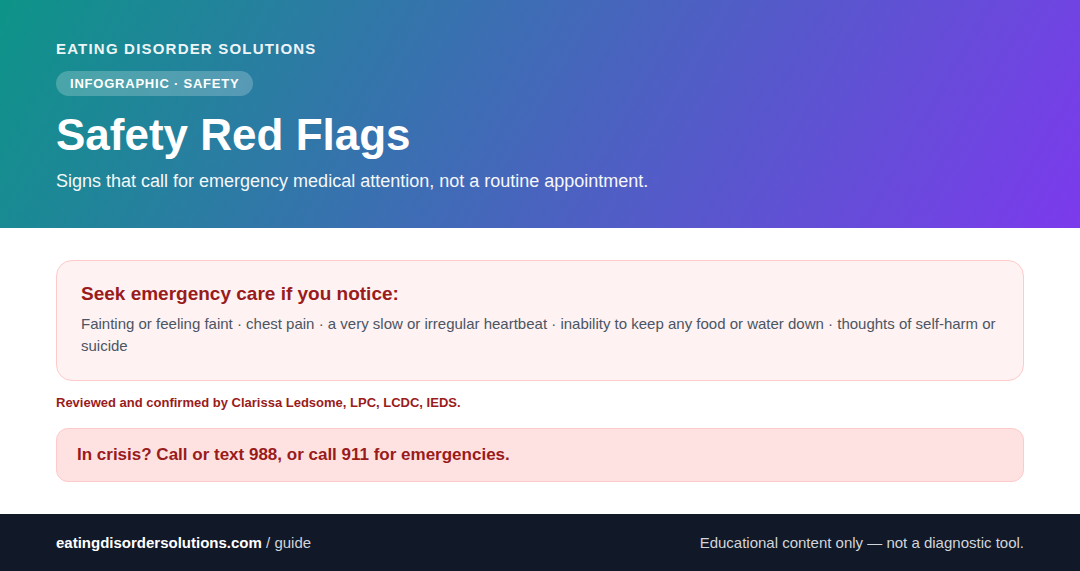
If you or someone you’re with is fainting, has chest pain, a very slow or irregular heartbeat, can’t keep any food or water down, or is having thoughts of self-harm or suicide, this is a medical emergency. Call or text 988, or call 911.
Why this list is short on purpose
This page is built to be read in seconds, not studied — if you or someone you’re with is showing any of the signs above, the right move is to act, not to keep reading. Everything else on this site is meant for understanding a pattern over time. This page is meant for right now.
What happens after you call
Calling 988 connects you to the Suicide & Crisis Lifeline, staffed by trained counselors, for anything involving thoughts of self-harm or suicide. Calling 911 or going to an emergency room is the right move for the physical emergency signs above. Emergency medical staff can stabilize the immediate physical risk; treatment planning for the underlying eating disorder is a separate, longer conversation that comes after the immediate danger has passed.
If you’re not sure whether it’s an emergency
When in doubt, it’s safer to call and be told it’s not urgent than to wait on something that turns out to be serious. If what you’re seeing feels concerning but doesn’t clearly match the list above, our Warning Signs page and Physical Warning Signs page can help you think through severity — but anything on this page’s list specifically should not wait for that research first.
What this covers
- Fainting or feeling faint, chest pain, a very slow or irregular heartbeat.
- Inability to keep any food or water down.
- Thoughts of self-harm or suicide.
- Any of these call for emergency medical attention, not a routine appointment.