Key Takeaways
If you are just beginning, start with taking the first step in bulimia treatment.
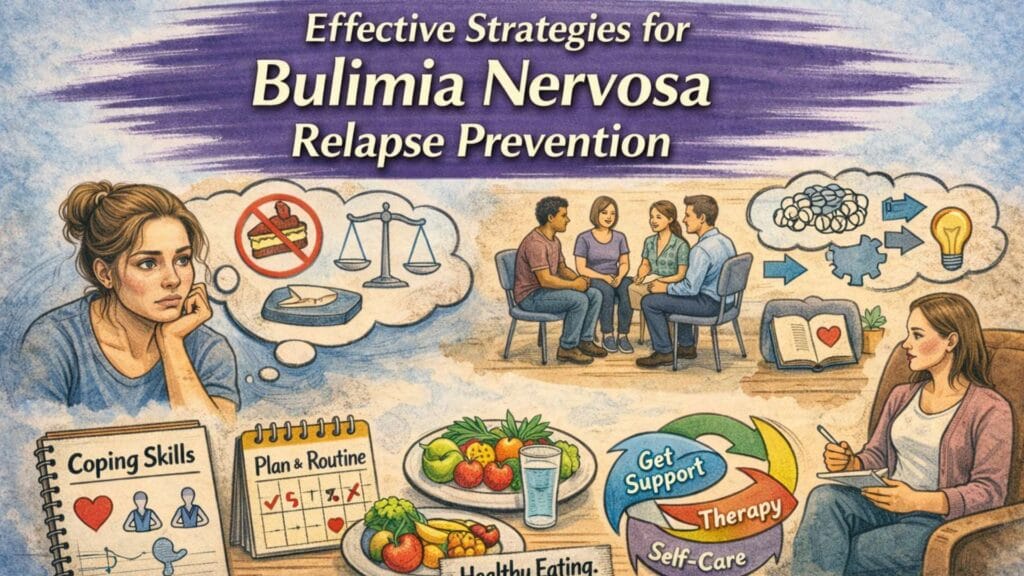
Relapse prevention means understanding the cycles of an eating disorder.
A relapse is a common and understandable part of bulimia recovery, not a sign of failure. Recognizing your personal triggers and early warning signs, and following a written relapse-prevention plan with coping skills and a support network, helps protect long-term recovery. If a slip happens, reaching out for support early makes it easier to get back on track.
- Relapse is common in bulimia recovery and is best treated as a setback to learn from, not a failure.
- Knowing your personal triggers and early warning signs lets you act before a slip becomes a full relapse.
- A written relapse-prevention plan, coping skills, and a strong support network are core protective tools.
- Therapies such as cognitive behavioral therapy help reframe the disordered thoughts that drive the binge-purge cycle.
- Reaching out to your care team or a support line early is a sign of strength, not shame.
Eating disorder recovery is a journey, not a destination. For those healing from bulimia nervosa, achieving long-term recovery involves learning to navigate life’s challenges without returning to disordered behaviors. A relapse is a return to engaging in eating disorder symptoms after a period of recovery. While setbacks can be a normal part of the process, a proactive relapse prevention plan is a critical tool for staying on the path to wellness. Understanding the warning signs of a bulimia relapse, identifying personal triggers, and developing healthy coping skills can make all the difference between a temporary slip and a full eating disorder relapse.
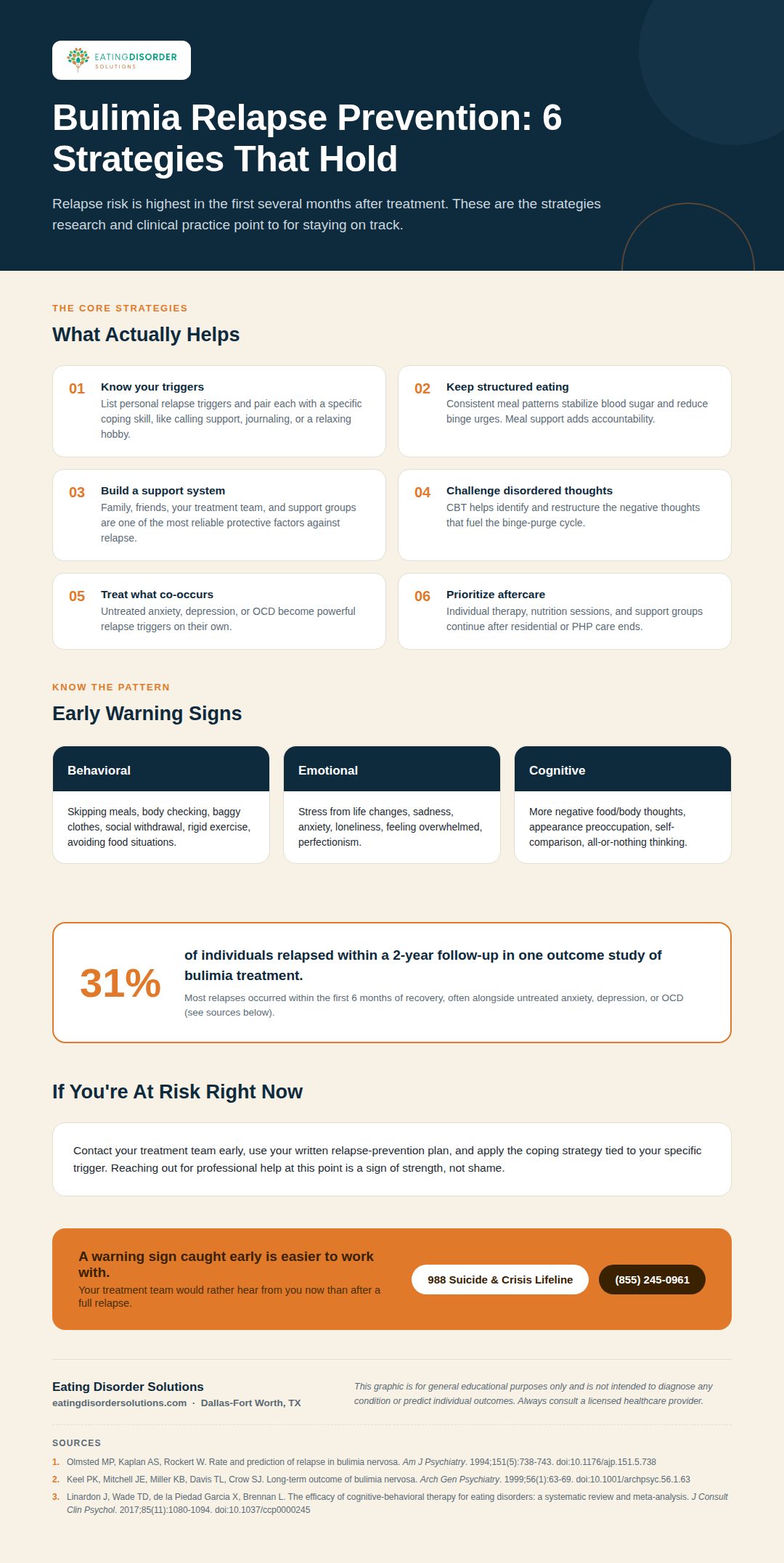
| Warning Sign Category | Examples to Watch For |
| Behavioral Signs | Skipping meals or snacks, increased body checking, wearing baggy clothes, withdrawing from friends and family, returning to rigid exercise routines, avoiding situations that involve food. |
| Emotional Triggers | Stressful life events (exams, job changes, relationship issues), feeling sad, anxious, lonely, or overwhelmed. A heightened need for control or perfectionism can be a significant trigger. Weight fluctuations can trigger emotional distress. |
| Cognitive Signs | An increase in negative thoughts about food, weight, or body image. Preoccupation with appearance, comparing oneself to others, and all-or-nothing thinking are common destructive thoughts that can precede a relapse. |
Understanding Bulimia Relapse
A relapse in bulimia nervosa is more than just a single slip-up; it is a return to the cycle of bingeing and purging that characterizes the eating disorder. Relapse rates for bulimia can be significant, with studies indicating that around one-third of individuals may experience a relapse within the first two years of recovery. This is why focusing on relapse prevention during and after eating disorder treatment is so crucial. A relapse does not mean failure; it is a sign that more support is needed. The goal of a relapse prevention plan is to catch these signs early and intervene before a full relapse occurs. Relapse in anorexia nervosa and bulimia nervosa is a recognized clinical challenge, and addressing it proactively is a core part of evidence-based care.
Research on relapse predictors shows that individuals who are likely to relapse often have co-occurring mental health conditions such as anxiety, depression, and obsessive-compulsive disorder that significantly increase the risk of relapse. Stressful life events, poor coping mechanisms, and a fragile support system are also key relapse predictors. Understanding these factors helps clinicians and individuals create more effective relapse prevention programs tailored to the person’s unique vulnerabilities.
Common Triggers and Warning Signs of Relapse
Recognizing warning signs early matters; our bulimia self-assessment can help you check in on your symptoms.
Recognizing the early warning signs of relapse is the first step in preventing relapse. These signs of relapse can be subtle changes in thoughts, feelings, and behaviors that indicate a return to disordered eating. It is also vital to identify your triggers, the specific situations, emotions, or events that increase the risk of relapse. Each person’s relapse triggers are unique, and a personalized relapse prevention plan should address them directly.
Building a Strong Relapse Prevention Plan
A comprehensive relapse prevention plan is developed with your treatment team and tailored to your unique needs. It is a roadmap that helps you navigate high-risk situations and manage urges before they escalate into a full eating disorder relapse. Here are the key strategies to include in your relapse prevention program.
1. Identify Your Triggers and Develop Coping Strategies
The foundation of any relapse prevention plan is learning to identify your triggers. Make a detailed list of your personal relapse triggers, the people, places, emotions, and situations that increase your risk of relapse. For each trigger, develop a healthy coping mechanism you can use instead of turning to disordered behaviors. Effective coping strategies include calling someone in your support system, journaling, practicing mindful eating, or engaging in a relaxing hobby. New coping mechanisms take time to build, but they are essential for long-term recovery.
2. Maintain Structured Eating and Meal Support
Consistency in eating patterns is a cornerstone of relapse prevention. Sticking to a regular pattern of meals and snacks helps stabilize blood sugar, reduce urges to binge, and maintain a healthy relationship with food. This structure is especially important during times of transition or stress. Meal support from a registered dietitian or a trusted family member can provide accountability and reduce anxiety around food. Without eating regularly, the body and mind become more vulnerable to the binge-purge cycle.
3. Build a Solid Support System
Surround yourself with supportive people, including family, friends, and your treatment team. Schedule regular check-ins and do not hesitate to reach out for help when you are struggling. Support groups can also be an invaluable resource for connecting with others who understand your experience. Parents and caregivers play an important role in recognizing early warning signs and providing encouragement. A strong support system is one of the most reliable protective factors against relapse.
4. Challenge Disordered Thoughts with Therapy
Cognitive Behavioral Therapy (CBT) is a well-established, effective treatment for bulimia nervosa (Linardon et al., 2017) because it teaches you to identify and challenge the negative thoughts that fuel the binge-purge cycle. Therapy sessions focused on thought restructuring help individuals develop self-compassion and challenge the belief that self-worth is tied to weight or shape. Destructive thoughts about food and body are not facts; they are symptoms of the eating disorder that can be addressed and changed through consistent therapeutic work.
5. Address Co-Occurring Mental Health Conditions
Co-occurring mental health conditions such as anxiety, depression, and obsessive-compulsive disorder significantly increase the risk of relapse. A comprehensive eating disorder treatment plan addresses these underlying conditions alongside the eating disorder itself. Untreated mental health issues can become powerful relapse triggers, making integrated care essential for sustained recovery.
6. Prioritize Aftercare and Ongoing Treatment
Recovery from an eating disorder does not end when you leave a residential or PHP program. Stepping down to an Intensive Outpatient Program (IOP) or continuing with individual therapy and nutrition sessions provides crucial ongoing support. A relapse prevention program built into your aftercare plan ensures that you have professional guidance during the most vulnerable time in recovery. Ongoing therapy sessions, dietitian check-ins, and support groups all contribute to reducing the risk of relapse and maintaining long-term recovery.
Hope and Healing at Eating Disorder Solutions
At Eating Disorder Solutions, we know that recovery is possible. Our comprehensive programs for bulimia nervosa are designed to equip you with the tools and coping skills you need for long-term recovery. We help you create a personalized relapse prevention plan and provide a robust continuum of care, from residential treatment through PHP and IOP, to support you every step of the way. Our expert treatment team is here to help you heal your relationship with food and build a life free from the constraints of an eating disorder. Preventing relapse is not about being perfect; it is about having the right support and strategies to help you when disordered behaviors or thoughts return.
A mental health professional on our team can guide you through the signs and symptoms of relapse and develop strategies to help you stay on track. Whether relapse involves a single episode or a return to full eating disorder behaviors, we are here to support your recovery journey. Caregivers play a vital role in recognizing when a loved one may indicate a relapse is occurring. Protecting your physical health and emotional well-being is our top priority. With self-acceptance, coping strategies, and the right support, recovery is possible from bulimia. Thoughts or behaviors that feel out of control are a signal to reach out, not a reason for shame.
If you or a loved one is concerned about a bulimia relapse or needs support in maintaining recovery, please call us today at 855-245-0961.
Frequently Asked Questions
What are the 5 rules of relapse prevention?
While there is no single universal framework, a strong relapse prevention plan generally includes: 1) Identifying personal relapse triggers, 2) Developing healthy coping strategies for each trigger, 3) Building and using a strong support system, 4) Maintaining structured eating and consistent self-care routines, and 5) Having a clear plan for what to do if a slip or warning sign occurs, including who to contact on your treatment team.
What triggers a bulimia relapse?
Common relapse triggers for bulimia include stress, anxiety, depression, loneliness, negative body image thoughts, restrictive dieting, and major life changes such as a new job, relationship difficulties, or loss. Stressful life events and co-occurring mental health conditions are among the most significant relapse predictors. Each person’s triggers are unique, which is why it is so important to identify your triggers as part of your eating disorder relapse prevention work.
How do you stop the bulimia cycle?
Stopping the binge-purge cycle involves breaking the connection between emotional distress and disordered eating behaviors. This is typically done through evidence-based therapies like CBT and DBT, which help individuals develop new coping mechanisms, regulate emotions, and challenge the thoughts that drive the cycle. Meal support, nutritional counseling, and a structured eating plan are also essential components of treatment and recovery.
What is the relapse rate for bulimia?
Relapse rates for bulimia nervosa vary across studies, but research suggests that a significant proportion of individuals, roughly 30-50%, may experience a relapse after treatment (Olmsted et al., 1994; Keel et al., 1999). However, having a solid relapse prevention plan and engaging in ongoing aftercare can significantly reduce the risk of relapse and support sustained, long-term recovery. Recovery is possible, and each step forward builds resilience against future setbacks.
If you or a loved one is struggling with bulimia nervosa or concerned about relapse, our team at Eating Disorder Solutions is here to help. Contact us today at 855-245-0961 or visit eatingdisordersolutions.com to learn more about our comprehensive bulimia treatment and relapse prevention programs.
References
Olmsted MP, Kaplan AS, Rockert W. Rate and prediction of relapse in bulimia nervosa. Am J Psychiatry. 1994;151(5):738-743.
Keel PK, Mitchell JE, Miller KB, Davis TL, Crow SJ. Long-term outcome of bulimia nervosa. Arch Gen Psychiatry. 1999;56(1):63-69.
Linardon J, Wade TD, de la Piedad Garcia X, Brennan L. The efficacy of cognitive-behavioral therapy for eating disorders: a systematic review and meta-analysis. J Consult Clin Psychol. 2017;85(11):1080-1094.
Support and Crisis Resources
If you or someone you love is struggling, support is available. If you are in crisis or need immediate help, call or text 988 to reach the 988 Suicide and Crisis Lifeline, a free, confidential service available 24/7.
Related Reading
- Bulimia and Your Teeth: The Hidden Costs of Purging
- Exercise Bulimia: How Compulsive Exercise Becomes an Eating Disorder
If you or someone you love is struggling with bulimia, our team can help. Learn more about our bulimia treatment program in Texas.
References
Eating Disorders: What You Need to Know (NIMH) (https://www.nimh.nih.gov/health/publications/eating-disorders)
ANAD — Free Eating Disorder Peer Support & Resources (https://anad.org/)