Key Takeaways
Part of a dietitian’s job early in care is watching for refeeding syndrome.
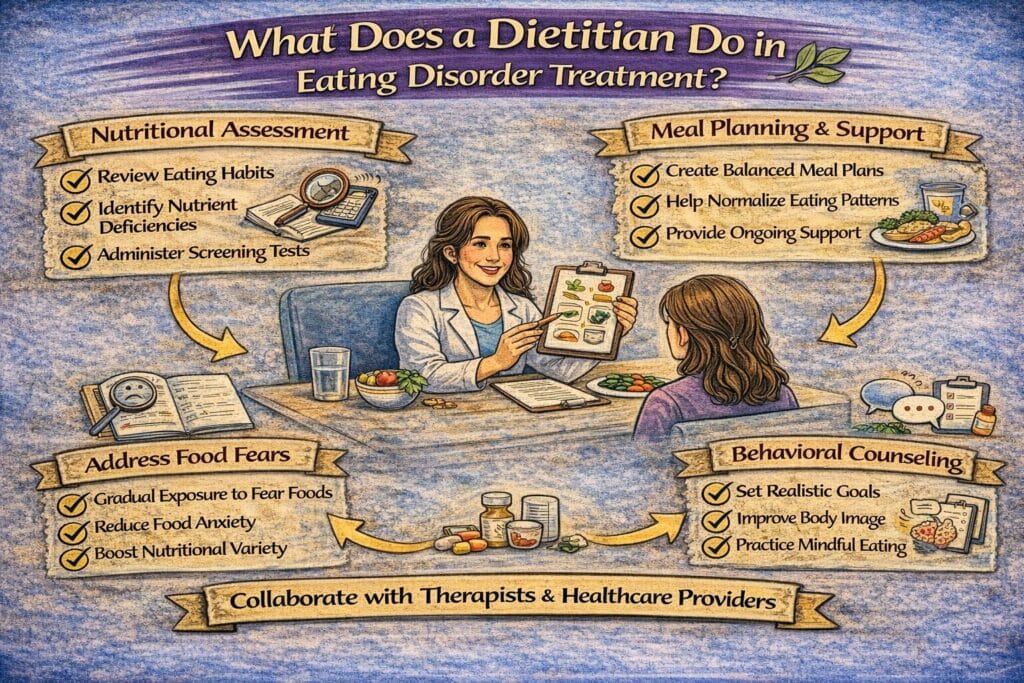
A registered dietitian is a core member of the eating disorder treatment team. They provide nutrition education, help build flexible meal plans, challenge food fears and rigid rules, and coordinate care with therapists and physicians. Their role is to support a healthier relationship with food, not to enforce dieting.
- Dietitians in eating disorder care are specially trained and work very differently from general weight-loss advice.
- They help normalize eating patterns and gently challenge food fears and rigid rules.
- Meal support and individualized nutrition planning are central to their role.
- They collaborate closely with therapists, physicians, and the wider treatment team.
- Their goal is sustainable recovery and food flexibility, using a weight-inclusive approach.
When entering eating disorder treatment, many individuals are introduced to a multidisciplinary team of professionals. While therapists and psychiatrists focus on the psychological and medical aspects of the illness, a registered dietitian plays a uniquely critical role. If you are wondering what does a dietitian do in eating disorder treatment, the answer goes far beyond simply telling someone what to eat.
A dietitian specializing in eating disorders provides essential nutrition therapy, helping individuals safely restore physical health while rebuilding a positive relationship with food. Their work is a cornerstone of lasting eating disorder recovery.
The Role of a Dietitian in Eating Disorder Recovery
Eating disorders, including anorexia nervosa, bulimia nervosa, and binge eating disorder, cause profound disruptions to the body’s nutritional state and metabolism. A dietitian can help reverse this damage by providing scientifically backed, compassionate guidance.
The primary goal of an eating disorder dietitian is to help patients normalize their eating behaviors and learn how to properly nourish their bodies. Unlike general nutritionists who might focus on weight loss or sports performance, a dietitian in this field focuses on medical stabilization, debunking diet culture myths, and reducing the fear associated with eating.
Nutrition Education and Meal Planning
One of the most tangible ways a dietitian helps patients is through the creation of a structured meal plan. In the early stages of recovery, hunger and fullness cues are often completely absent or highly distorted. A meal plan acts as a “cast for a broken bone,” providing a safe, predictable structure that ensures the body receives the energy it needs to heal.
Beyond planning, nutrition education is a vital component of the process. Dietitians teach patients how different macronutrients support brain function, organ health, and emotional stability. By understanding the science of nutrition, patients can begin to challenge the irrational food rules and fears that drive their disordered eating.
Addressing Disordered Eating Behaviors
Eating disorders thrive on secrecy, rules, and rigid eating patterns. A registered dietitian works collaboratively with the patient to identify and dismantle these behaviors. This might involve:
- Gradually reintroducing “fear foods” in a safe environment.
- Challenging beliefs about “good” and “bad” foods.
- Addressing compensatory behaviors, such as purging or over-exercising.
- Helping patients navigate grocery shopping, cooking, and dining out.
By actively working through these challenges, the dietitian helps the patient develop a more flexible, intuitive approach to eating, which is essential for long-term recovery.
Collaboration with the Treatment Team
A dietitian never works in isolation. In comprehensive eating disorder treatment, they are a vital part of the treatment team, which typically includes therapists, psychiatrists, and medical doctors. This collaboration ensures that all aspects of the patient’s health are addressed simultaneously.
For example, if a patient is struggling with severe body image distress that makes following their meal plan difficult, the dietitian will communicate this to the therapist so it can be addressed in psychotherapy. Similarly, the dietitian works closely with medical doctors to monitor lab results, vital signs, and any co-occurring health conditions caused by malnutrition.
Dietitian vs. Nutritionist: What’s the Difference?
It is common to confuse the terms dietitian and nutritionist, but there is a significant difference, especially when it comes to treating complex medical conditions like eating disorders.
| Credential | Education & Training | Role in Eating Disorder Treatment |
| Registered Dietitian (RD) or Registered Dietitian Nutritionist (RDN) | Requires a bachelor’s or master’s degree, a supervised clinical internship, and passing a national board exam. | Qualified to provide medical nutrition therapy, design clinical meal plans, and treat the physical complications of eating disorders. |
| Nutritionist | The term is largely unregulated in many states; training can range from a brief online certificate to a college degree. | May provide general wellness advice but is typically not qualified or legally permitted to treat eating disorders medically. |
When seeking help with eating disorders, it is crucial to work with a credentialed professional who has specific training in this field. Specialized, team-based care is widely recognized as the standard for eating disorder treatment (National Institute of Mental Health, 2024), and registered dietitians are uniquely trained and credentialed to provide medical nutrition therapy as part of that team (Academy of Nutrition and Dietetics).
Nutritional Support at Eating Disorder Solutions
At Eating Disorder Solutions, our clinical team includes experienced registered dietitians who specialize in eating disorder recovery. We understand that repairing your relationship with food is one of the most challenging and rewarding parts of the healing journey.
Our dietitians work with you to create a personalized nutrition plan that respects your unique medical needs, preferences, and recovery goals. We don’t just treat the symptoms; we empower you with the knowledge and skills needed to sustain a healthy, balanced life.
If you or a loved one needs professional support to overcome an eating disorder, contact Eating Disorder Solutions today at (855) 245-0961 to learn more about our comprehensive treatment programs.
Frequently Asked Questions
How does a dietitian help with eating disorders?
A dietitian helps by providing medical nutrition therapy, creating structured meal plans to restore physical health, offering nutrition education to debunk diet myths, and guiding patients through the process of challenging food fears and normalizing eating behaviors.
What is the difference between a dietitian and a nutritionist in this context?
A registered dietitian has extensive, board-certified medical training and is qualified to treat the severe physical and metabolic complications of eating disorders. A nutritionist may not have formal medical training and is generally not qualified to provide the clinical care required to treat eating disorders safely.
Will an eating disorder dietitian make me gain weight?
If a patient is medically underweight or malnourished, weight restoration is often a necessary and life-saving part of treatment. However, a dietitian’s primary goal is not simply weight gain, but overall health restoration, metabolic stabilization, and helping the patient develop a peaceful relationship with food.
How often do you see a dietitian in eating disorder treatment?
The frequency depends on the level of care. In residential or partial hospitalization programs, patients may see a dietitian several times a week and have daily meal support. In outpatient care, sessions typically occur once a week or biweekly, depending on the individual’s progress and medical stability.
References
- National Institute of Mental Health. Eating Disorders. 2024. nimh.nih.gov/health/topics/eating-disorders
- Academy of Nutrition and Dietetics. About RDNs and NDTRs. eatright.org/about-rdns-and-ndtrs
Resources and Support
If you or someone you love is struggling, support is available. If you are in crisis or need immediate help, call or text 988 to reach the 988 Suicide and Crisis Lifeline, a free, confidential service available 24/7.
Related Reading
- What Is Cognitive Behavioral Therapy (CBT) for Eating Disorders?
- What Is Dialectical Behavior Therapy (DBT) for Eating Disorders?
Learn more about our full range of therapy approaches on our Eating Disorder Therapy page.
References
National Alliance for Eating Disorders (https://www.allianceforeatingdisorders.com/)
ANAD — Free Eating Disorder Peer Support & Resources (https://anad.org/)