Key Takeaways
Eating disorders can affect breastfeeding through nutritional, hormonal, and emotional pathways that may influence milk supply and the feeding experience. With coordinated support from medical, nutritional, and mental health providers, many parents in recovery are able to breastfeed and care for their infants.
- Eating disorders can affect milk supply and lactation through nutritional and hormonal changes.
- Common nutrient gaps (such as calcium, iron, and vitamin D) can affect both parent and milk quality.
- Postpartum anxiety, depression, and body-image distress can complicate the breastfeeding experience.
- A coordinated care team (dietitian, lactation consultant, obstetric and mental health providers) supports healthier outcomes.
- Recovery-informed support helps parents make feeding choices that protect their own health and their baby’s.
Understanding the Connection Between Eating Disorders and Breastfeeding
Eating disorders and breastfeeding intersect in complex ways that affect many mothers with a history of an eating disorder. Women with eating disorders, including anorexia nervosa, bulimia nervosa, binge eating disorder, and purging disorder, often face unique challenges when they choose to breastfeed their baby. The impact of maternal eating disorders on breastfeeding practices is a critical area of concern highlighted in the international journal of eating disorders and other publications. Breastfeeding and eating disorders are linked by biological, psychological, and behavioral pathways, making this a sensitive period for both mother and baby.
Eating disorders may disrupt nutritional intake, leading to inadequate calories and body mass index changes, which directly affect milk supply and lactation hormones. Mothers with eating disorders often struggle with body image and the relationship with food, which can complicate breastfeeding intention and duration. Early postpartum anxiety, depression or anxiety, and negative experiences and emotional problems are common, further challenging breastfeeding women. However, with proper support from healthcare providers, including dietitians, midwives, and mental health professionals, many breastfeeding women affected by eating disorders can successfully breastfeed. Understanding the dynamics of eating disorders on breastfeeding is essential for improving maternal and infant outcomes and supporting recovery from an eating disorder during this important breastfeeding journey. A systematic review by Kaß and colleagues (2021) found that parents with eating disorders more often reported negative experiences and emotional difficulty during breastfeeding, underscoring the value of coordinated support (Kaß et al., 2021).
Physical Effects of Eating Disorders on Breastfeeding
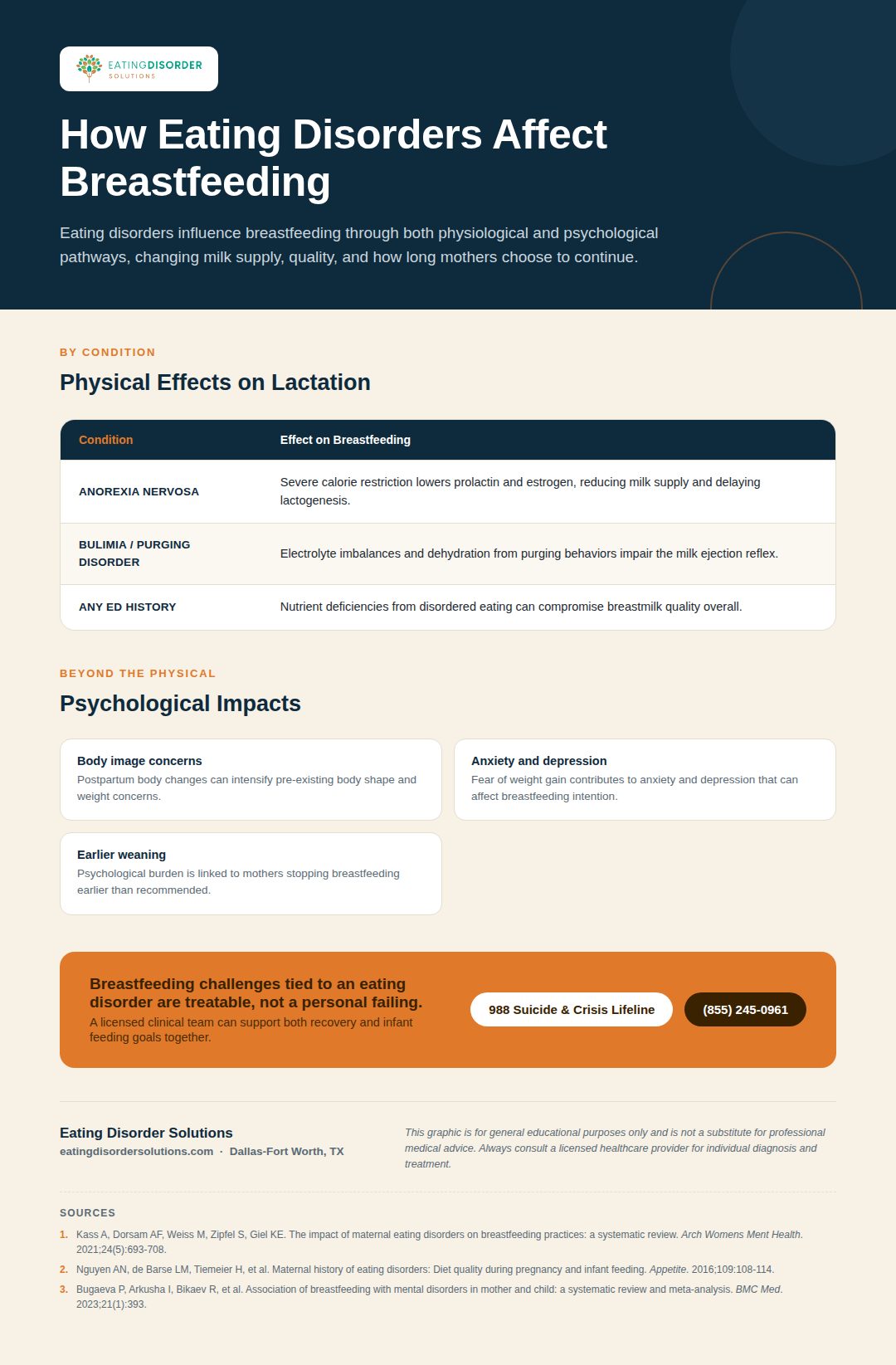
Eating disorders affect breastfeeding through a variety of physiological and nutritional factors that influence lactation and milk production. Women with anorexia nervosa often experience severe calorie restriction, which can lower prolactin and estrogen levels, hormones vital to lactation, leading to reduced milk supply and delayed lactogenesis. These hormonal disruptions caused by maternal eating disorders on breastfeeding practices may result in statistically significant differences in breastfeeding duration compared to women without eating disorders.
Bulimia nervosa and purging disorder can cause electrolyte imbalances and dehydration due to laxative, diuretic, or purging behaviors such as vomiting, which adversely affect the milk ejection reflex. Nutrient deficiencies linked to disordered eating, including vitamins and minerals, also compromise breastmilk quality and maternal health. Women with a history of eating disorders are at risk of experiencing delayed lactogenesis II, which can impact exclusive breastfeeding, especially within the first 6 months after birth. Close coordination with healthcare providers, including nutritionists and lactation consultants, is necessary to monitor feeding behaviors, support healthy eating, and ensure the feeding environment optimizes infant nutrition for mothers affected by eating disorders.
| Aspect | Anorexia Breastfeeding | Bulimia Breastfeeding |
| Nutritional Status | Severe calorie and nutrient restriction | Cycles of bingeing and purging affecting nutrition |
| Milk Supply | Often reduced due to energy deficiency | Variable; dehydration may impair milk ejection |
| Hormonal Impact | Low estrogen and prolactin affecting lactation | Electrolyte imbalance disrupting hormone levels |
| Psychological Challenges | Fear of weight gain, body dissatisfaction | Anxiety, guilt related to purging behaviors |
| Risk to Infant | Potential inadequate milk and nutrient delivery | Possible electrolyte exposure via breastmilk |
| Recommended Support | Nutritional rehabilitation, lactation counseling | Hydration, electrolyte balance, psychological therapy |
Psychological Impacts and Breastfeeding Eating Disorder Challenges
The psychological effects of eating disorders can strongly influence breastfeeding experiences and outcomes. Postpartum women with a history of anorexia nervosa or other eating disorders may face heightened body image concerns related to body shape and weight, which are often exacerbated by changes after childbirth. These negative experiences and emotional problems can lead to anxiety, depression, and fear of weight gain, all of which may contribute to women being more likely to stop breastfeeding earlier than recommended.
Eating disorders and breastfeeding interplay with mental health disorders such as anxiety and depression, which are common among mothers with disordered eating behavior. Fear of losing control or relapse of past disordered eating behavior can affect breastfeeding intention and breastfeeding duration. These psychological burdens, combined with the challenges of the breastfeeding journey, may reduce maternal confidence in their ability to breastfeed successfully. Support from mental health providers, peer groups, and lactation counselors is crucial in addressing these challenges and promoting positive breastfeeding experiences. This holistic approach can help women with and without eating disorders overcome psychological barriers associated with breastfeeding and support their overall eating disorder recovery.
Frequently Asked Questions
How do eating disorders affect milk supply during breastfeeding?
Eating disorders can disrupt hormonal balances, such as reduced prolactin and estrogen levels, and cause nutritional deficiencies that lead to decreased milk supply and delayed lactation.
Can women with a history of eating disorders successfully breastfeed their babies?
Yes, with appropriate medical support including nutritional counseling, mental health care, and lactation consulting, many women with a history of eating disorders can breastfeed successfully.
What are common psychological challenges faced by breastfeeding mothers with eating disorders?
Mothers may experience postpartum anxiety, depression, body image issues, and emotional distress, all of which can complicate breastfeeding intentions and duration.
Why is it important for healthcare providers to be involved in breastfeeding support for mothers with eating disorders?
Healthcare providers can help address nutritional, hormonal, and psychological barriers to breastfeeding, offer tailored guidance, and improve outcomes for both mother and infant.
What nutritional deficiencies are common in breastfeeding women with eating disorders?
Deficiencies in essential vitamins and minerals such as calcium, iron, and vitamin D are common and can affect both maternal health and breast milk quality.
How can eating disorders delay lactogenesis II in new mothers?
Eating disorders often cause insufficient calorie intake and hormonal imbalances that can postpone the onset of copious milk production, impacting exclusive breastfeeding in the first six months.
What types of professional support are recommended for breastfeeding mothers recovering from eating disorders?
Support from dietitians, lactation consultants, obstetricians, and mental health professionals is recommended to address the complex needs related to nutrition, breastfeeding techniques, and emotional well-being.
References
- Kaß A, Dörsam AF, Weiß M, Zipfel S, Giel KE. The impact of maternal eating disorders on breastfeeding practices: a systematic review. Arch Womens Ment Health. 2021;24(5):693-708. https://doi.org/10.1007/s00737-021-01103-w
- Nguyen AN, de Barse LM, Tiemeier H, Jaddoe VWV, Franco OH, Jansen PW, Voortman T. Maternal history of eating disorders: Diet quality during pregnancy and infant feeding. Appetite. 2016;109:108-114. https://doi.org/10.1016/j.appet.2016.11.030
- Bugaeva P, Arkusha I, Bikaev R, et al. Association of breastfeeding with mental disorders in mother and child: a systematic review and meta-analysis. BMC Med. 2023;21(1):393. https://doi.org/10.1186/s12916-023-03071-7
Support and Crisis Resources
If you or someone you care about is struggling with an eating disorder, support is available:
If you or someone you love is struggling, support is available. The National Institute of Mental Health offers free, research-based information about eating disorders at nimh.nih.gov. If you are in crisis or need immediate help, call or text 988 to reach the 988 Suicide and Crisis Lifeline, a free, confidential service available 24/7.
Related Reading
- Eating Disorders in Women Over 40: Signs, Treatment & Support
- How Eating Disorders Affect the Brain and Cognitive Function
- Eating Disorders and Sleep Disorders: The Bidirectional Relationship
- How Eating Disorders Affect Fertility and Reproductive Health