Key Takeaways
Disrupted sleep and eating can intertwine in night eating syndrome.
Eating disorders and sleep problems are closely linked and tend to fuel each other. Malnutrition, bingeing, purging, and stress hormones can all disrupt sleep, while poor sleep can worsen disordered eating. Treating both together, often with a structured daily routine and professional care, supports steadier sleep and lasting recovery.
- The link between eating disorders and sleep problems is bidirectional, so each can worsen the other.
- Malnutrition, bingeing, and elevated nighttime stress hormones (cortisol) can all interfere with sleep.
- Night eating syndrome is a distinct, sleep-related eating disorder tied to disrupted circadian rhythms.
- Poor sleep can increase hunger-related hormones and drive cravings, making recovery harder.
- A consistent daily schedule and treating both conditions together can help reset healthy sleep and eating patterns.
The Vicious Cycle of Eating Disorders and Sleep Problems
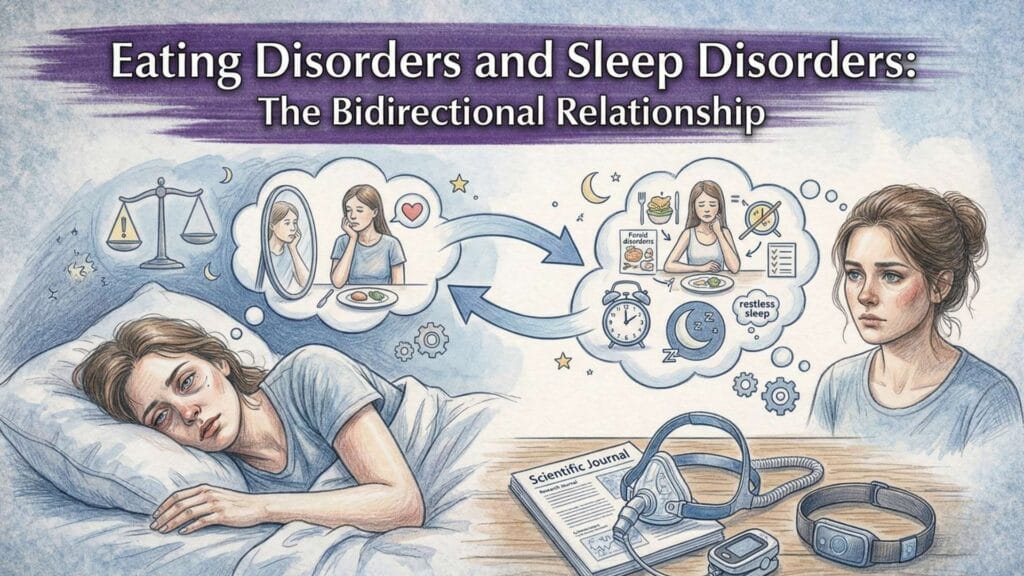
Eating disorders and sleep disorders are deeply intertwined, creating a vicious cycle that can be difficult to escape. Sleep problems are a common complaint among individuals with eating disorders, and conversely, sleep deprivation can trigger or worsen disordered eating behaviors. The relationship is bidirectional, meaning that each condition can exacerbate the other (Allison et al., 2016). Understanding this connection is a critical first step toward effective treatment and recovery.
How Do Eating Disorders Disrupt Sleep?
The physiological and psychological effects of an eating disorder can wreak havoc on sleep patterns. Malnutrition, a hallmark of anorexia nervosa, can lead to insomnia and frequent awakenings. The body, starved for energy, may signal the brain to stay awake in search of food. Binge eating, characteristic of bulimia nervosa and binge eating disorder, can cause gastrointestinal discomfort that makes it difficult to fall asleep or stay asleep. The guilt and shame that often follow a binge can also contribute to anxiety and rumination, further disrupting sleep. Implementing effective strategies for bulimia nervosa recovery can significantly improve both psychological well-being and sleep quality. Techniques such as cognitive behavioral therapy, mindfulness practices, and structured meal plans are proven to address the underlying issues of the disorder. By focusing on holistic healing, individuals can pave the way for more restorative sleep and a healthier relationship with food.
Cortisol Disruption and Sleep
Cortisol, the body’s primary stress hormone, plays a crucial role in regulating the sleep-wake cycle. In healthy individuals, cortisol levels are highest in the morning and gradually decrease throughout the day, reaching their lowest point at night. In individuals with eating disorders, this rhythm is often disrupted. Chronic stress and malnutrition can lead to elevated cortisol levels at night, making it difficult to fall asleep and stay asleep. This cortisol disruption can also contribute to the development of anxiety and depression, which are common co-occurring conditions with eating disorders.
Night Eating Syndrome: A Unique Sleep-Related Eating Disorder
Night eating syndrome (NES) is a distinct eating disorder characterized by a delayed pattern of food intake, with at least a quarter of daily food intake consumed after the evening meal (Allison et al., 2010). Individuals with NES often experience insomnia and may wake up multiple times during the night to eat. NES is often accompanied by a depressed mood, particularly in the evening. The condition is thought to be related to a dysregulation of the circadian rhythms that govern sleep and appetite. Treatment for NES often involves a combination of therapy, nutritional counseling, and sometimes medication to help regulate sleep and mood.
How a Structured Daily Schedule Can Improve Sleep and Eating Habits
At Eating Disorder Solutions, we understand the importance of a structured daily schedule in helping clients regulate their sleep and eating habits. Our residential treatment program provides a consistent and predictable environment that helps to reset the body’s internal clock. Clients participate in regular meals and snacks, therapy sessions, and recreational activities at the same time each day. This structured routine helps to stabilize blood sugar levels, reduce anxiety, and promote a more regular sleep-wake cycle. By addressing both the eating disorder and the sleep disorder simultaneously, we help our clients build a foundation for lasting recovery.
Frequently Asked Questions
Can sleep deprivation cause you to eat more?
Yes, sleep deprivation can increase levels of ghrelin, the hunger hormone, and decrease levels of leptin, the satiety hormone. This can lead to increased appetite and cravings for energy-dense foods.
What is the difference between night eating syndrome and sleep-related eating disorder?
In night eating syndrome, the individual is fully awake and aware that they are eating. In sleep-related eating disorder, the individual is in a sleep-like state and may have no memory of eating.
How can I improve my sleep hygiene?
Establish a regular sleep schedule, create a relaxing bedtime routine, avoid caffeine and alcohol before bed, and make sure your bedroom is dark, quiet, and cool. If you continue to have sleep problems, it is important to speak with a medical professional.
If you are struggling with an eating disorder and sleep problems, you are not alone. The team at Eating Disorder Solutions can help you break the cycle and find your way to a healthier, more restful life. Call us at 855-245-0961 to learn more about our programs.
References
Allison KC, Lundgren JD, O’Reardon JP, et al. Proposed diagnostic criteria for night eating syndrome. Int J Eat Disord. 2010;43(3):241-247.
Allison KC, Spaeth A, Hopkins CM. Sleep and eating disorders. Curr Psychiatry Rep. 2016;18(10):92.
Linnaranta O, Bourguignon C, Crescenzi O, et al. Late and instable sleep phasing is associated with irregular eating patterns in eating disorders. Ann Behav Med. 2020;54(9):680-690. doi:10.1093/abm/kaaa012
Support and Crisis Resources
If you or someone you love is struggling, support is available. If you are in crisis or need immediate help, call or text 988 to reach the 988 Suicide and Crisis Lifeline, a free, confidential service available 24/7.
Related Reading
- Social Anxiety and Eating Disorders: How They Reinforce Each Other
- Perfectionism and Eating Disorders: The Hidden Link
References
National Alliance for Eating Disorders (https://www.allianceforeatingdisorders.com/)
ANAD — Free Eating Disorder Peer Support & Resources (https://anad.org/)