Key Takeaways
New motherhood can reactivate or intensify an eating disorder for some parents, as body changes, sleep loss, and emotional stress collide. Postpartum relapse is common and treatable, and early support from a coordinated care team helps protect both parent and baby.
- Pregnancy and the postpartum period can trigger relapse or new onset of an eating disorder.
- Body changes, sleep deprivation, and identity shifts all raise emotional vulnerability after birth.
- Disordered eating persists for a meaningful share of parents who had an eating disorder before pregnancy.
- Warning signs include preoccupation with food or body, withdrawal, and changes in eating or mood.
- Specialized, recovery-informed care that includes medical, nutritional, and mental health support improves outcomes.
Introduction
The postpartum period following childbirth is widely recognized as a crucial time of transition involving joy and adjustment. However, for many postpartum women, this phase can also bring significant challenges including relapse of eating disorders or the emergence of new disordered eating behaviors. Postpartum eating disorders affect women with a history of eating disorders as well as postpartum women who develop symptoms related to body image, anxiety, and control in the pregnancy and postpartum period. Eating disorders in pregnancy and disorders in pregnancy and postpartum often contribute to complex postnatal health issues that require specialized care. Eating Disorder Solutions (EDS), an adult eating disorder treatment center in Texas, understands the unique experiences of mothers with eating disorders in the postpartum period. EDS is committed to providing compassionate and evidence-based treatment addressing eating disorder symptoms, postpartum depression, sleep deprivation, and changes in postpartum body image. In this article, we explore postpartum eating disorders, their impact on the postnatal period, common triggers such as postpartum body changes and fatigue, and the comprehensive support EDS offers to assist new mothers in their journey toward eating disorder recovery.
Understanding Postpartum Eating Disorders and Their Triggers
Eating disorders after baby, including relapse of anorexia nervosa, bulimia nervosa, and binge eating disorder, frequently manifest in the postpartum period, impacting new mothers’ mental and physical health. The pregnancy and postpartum phases involve intense alterations in body weight, hormones, and psychological wellbeing that can heighten vulnerability to eating disorder behaviors. Women of reproductive age who have a history of an eating disorder or past disordered eating are particularly susceptible to relapse of eating disorders during pregnancy and the postpartum. However, eating disorders in the postpartum period may also emerge in women without previous diagnoses due to stressors such as postpartum anxiety, postpartum depression, and fatigue from disturbed sleep patterns.
Postpartum anorexia commonly presents as restrictive eating behaviors and extreme fear of weight gain, especially driven by distorted postpartum body image and societal expectations about postnatal weight loss. Bulimia nervosa, marked by cycles of binge eating followed by purging, and binge eating disorder characterized by frequent overeating without purging, are additional postpartum eating disorder subtypes experienced by some new mothers. These disorders are often complicated by breastfeeding demands, irregular eating schedules, and postpartum mood disturbances, affecting eating behaviors and the relationship with food.
Disorders in pregnancy and postpartum extend beyond physical changes; they include psychological components such as anxiety and depression, all of which contribute to the risk of developing postpartum depression and eating disorder relapse. Recognizing these symptoms and triggers early in the pregnancy and postpartum period is vital for timely intervention and effective treatment that addresses not only eating disorder symptoms but also comorbid psychiatric conditions common in postpartum women.
The Impact of Postpartum Body Changes and Sleep Deprivation
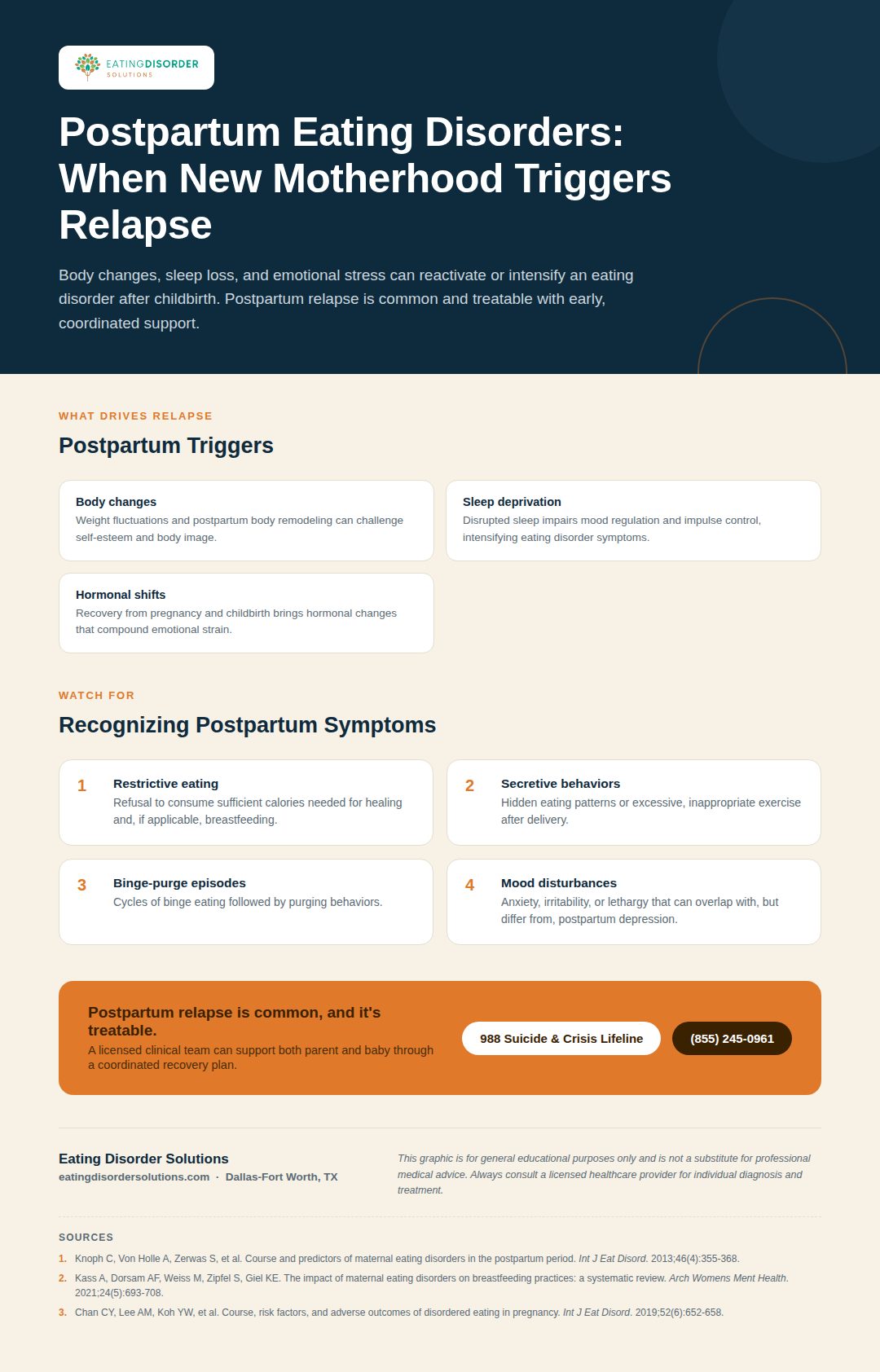
During the postpartum period, women experience ongoing bodily changes including weight fluctuations, postpartum body remodeling, hormonal shifts, and recovery from pregnancy and childbirth. These postpartum body changes can challenge a woman’s self-esteem and body image, both of which are significant predictors of eating disorder relapse and new onset postpartum eating disorders. For many postpartum women, dissatisfaction with the postpartum body can exacerbate disordered eating behaviors and contribute to symptoms associated with eating disorder not otherwise specified.
Sleep deprivation is almost ubiquitous among postpartum mothers and plays a critical role as a risk factor in eating disorders during pregnancy and the postpartum. Disrupted sleep patterns impair mood regulation, impulse control, and cognitive decision-making, which can intensify eating disorder symptoms in the postpartum period. Sleep deprivation also negatively impacts the body’s stress response, increasing susceptibility to disordered eating behaviors as a maladaptive coping mechanism.
Research from the National Institute of Mental Health (NIMH) and findings from the Norwegian Mother and Child Cohort Study emphasize the interplay of sleep disturbances and hormonal fluctuations in increasing the severity of postnatal depression and associated eating disorder symptoms. A comprehensive approach to postpartum care must therefore address sleep hygiene, nutrition, and mental health concurrently to effectively support eating disorder recovery in postpartum women.
Relapse Risk and the Importance of Support for Mothers with Eating Disorders
The risk of eating disorder relapse during the postpartum period is a significant concern for mothers with a history of eating disorders and those newly diagnosed postpartum. The converging pressures of managing body image, fatigue from sleep deprivation, postpartum depression, anxiety, and the demands of caring for an infant can overwhelm coping strategies, triggering recurrence of harmful eating disorder behaviors.
Disorders in pregnancy and postpartum require specialized interventions that prioritize both maternal and infant health. The mother and child cohort study underlines that untreated eating disorders in the postpartum not only jeopardize a mother’s physical recovery and mental well-being but can also negatively affect neonatal outcomes in women, breastfeeding success, and the infant’s developmental trajectory.
Eating Disorder Solutions (EDS) offers postpartum women tailored, evidence-based treatment programs that holistically address eating disorders during pregnancy and the postpartum period. By combining nutritional rehabilitation, cognitive behavioral therapy (CBT), and family support, the center helps women with eating disorders rebuild healthy eating behaviors, improve postpartum body image, and reduce the risk of relapse. EDS also integrates treatment for psychiatric comorbidities such as postpartum depression, postpartum anxiety, and sleep-related difficulties, realizing that a multidisciplinary approach is essential for sustainable recovery. In a large population-based study, Knoph and colleagues (2013) found that disordered eating persisted in a substantial share of parents who had an eating disorder before pregnancy, which is why ongoing monitoring after birth matters (Knoph et al., 2013).
Recognizing Symptoms of Postpartum Eating Disorders
Early recognition of postpartum eating disorder symptoms is critical for prompt intervention and treatment of women with eating disorders in the postnatal period. Common symptoms include restrictive eating patterns, excessive or inappropriate exercise, secretive eating, episodes of binge eating followed by purging, persistent worry about weight gain, and body dissatisfaction despite recent childbirth and associated postpartum body changes.
Postpartum anorexia nervosa specifically may present as an intense fear of weight gain following delivery and refusal to consume sufficient calories required for both breastfeeding and healing. Additionally, affected postpartum women may exhibit mood disturbances such as anxiety, irritability, lethargy, or symptoms overlapping with postpartum depression but which require distinct treatment approaches.
Increasing awareness of symptoms during pregnancy and postpartum depression in postpartum women, as well as educating families and support groups about eating disorder behaviors and symptoms in pregnancy and the postpartum, can substantially improve early detection. Timely identification and intervention help reduce the risk of serious complications and improve outcomes for both mother and infant.
Treatment Approaches at Eating Disorder Solutions (EDS)
Eating Disorder Solutions (EDS) offers comprehensive, individualized treatment for postpartum women struggling with eating disorders during pregnancy and the postpartum period. EDS’s treatment modalities include cognitive behavioral therapy (CBT), nutritional counseling tailored to postpartum dietary needs, psychotherapy, and careful medical monitoring of disorder symptoms in pregnancy as well as the postnatal period.
The multidisciplinary team at EDS is highly experienced in managing the complex interplay of eating disorder behaviors, postpartum body changes, sleep deprivation, postpartum depression, and anxiety and depression comorbidities that postpartum women often face. Recognizing the importance of the mother-infant relationship, treatments are designed with sensitivity to breastfeeding status and physical recovery, aiming to restore balanced eating behaviors and a positive postpartum body image.
Family therapy and support groups are integral components of the recovery process at EDS, helping loved ones engage effectively in the mother’s healing journey. Drawing upon best practices recommended by national eating disorders organizations and informed by prospective studies such as the Norwegian Pregnancy Cohort, EDS emphasizes principles and treatment that foster long-term resilience against eating disorder relapse in the postpartum population.
Long-Term Recovery and Hope for Postpartum Mothers
Although eating disorders in the postpartum period present complex challenges, the prevalence of eating disorders among postpartum women is met with growing understanding and increasingly effective treatment options. Recovery from postpartum eating disorders is achievable with appropriate support addressing the multifaceted nature of depression and eating disorders, anxiety and depression, and other psychiatric comorbidities in women of reproductive age.
EDS encourages postpartum women, mothers with eating disorders, their families, and healthcare professionals to get help early by recognizing symptoms in pregnancy or during the postnatal period. Comprehensive postnatal care integrating mental health with physical well-being creates a foundation for healthier mother-child relationships and better neonatal outcomes.
Remember, you are not alone, many women experience the impact of pregnancy and postpartum on eating attitudes and eating disorder behaviors. Expert help is available to guide postpartum women through eating disorder recovery, fostering rediscovery of a positive body image, intuitive eating practices, and renewed self-esteem in the sensitive postpartum period.
| Eating Disorder Type | Common Postpartum Symptoms | Treatment Focus |
| Postpartum Anorexia | Restrictive eating, extreme fear of weight gain, body image distortion | Nutritional rehabilitation, psychotherapy, monitoring medical health |
| Postpartum Bulimia Nervosa | Binge eating episodes with purging, guilt, mood instability | CBT, nutritional support, emotional regulation strategies |
| Postpartum Binge Eating Disorder | Frequent overeating without purging, shame, weight fluctuation | Behavioral therapy, nutritional education, emotional support |
Frequently Asked Questions
What are postpartum eating disorders?
Postpartum eating disorders refer to the relapse or new onset of eating disorders such as anorexia, bulimia, or binge eating during the postpartum period, triggered by hormonal changes, body image concerns, and psychological stress after childbirth.
Who is at risk for developing postpartum eating disorders?
Women with a history of eating disorders are at higher risk for relapse during the postpartum period, but even those without prior diagnoses may develop postpartum eating disorders due to postpartum anxiety, depression, and fatigue.
What are the common signs of postpartum anorexia?
Postpartum anorexia often includes restrictive eating, extreme fear of weight gain, and distorted body image, particularly concerns about regaining pre-pregnancy weight quickly.
How do postpartum eating disorders affect breastfeeding?
Eating disorders can disrupt regular nutrition and energy levels, complicate breastfeeding due to irregular eating patterns, and increase stress and fatigue, all of which may negatively impact milk supply and infant feeding.
Can postpartum eating disorders be treated effectively?
Yes, postpartum eating disorders can be treated successfully with specialized, compassionate care that addresses eating disorder behaviors alongside postpartum depression, sleep deprivation, and body image challenges.
Why is the postpartum period a vulnerable time for eating disorder relapse?
The postpartum period involves rapid physical changes, hormonal fluctuations, sleep deprivation, and psychological stress, all of which can trigger body dissatisfaction and unhealthy coping behaviors leading to eating disorder relapse.
What support is available for new mothers struggling with postpartum eating disorders?
Specialized eating disorder treatment centers like Eating Disorder Solutions offer comprehensive programs including medical monitoring, therapy, nutritional counseling, and support for postpartum mood disorders to aid recovery.
References
- Knoph C, Von Holle A, Zerwas S, Torgersen L, Tambs K, Stoltenberg C, Bulik CM, Reichborn-Kjennerud T. Course and predictors of maternal eating disorders in the postpartum period. Int J Eat Disord. 2013;46(4):355-368. https://doi.org/10.1002/eat.22088
- Kaß A, Dörsam AF, Weiß M, Zipfel S, Giel KE. The impact of maternal eating disorders on breastfeeding practices: a systematic review. Arch Womens Ment Health. 2021;24(5):693-708. https://doi.org/10.1007/s00737-021-01103-w
- Chan CY, Lee AM, Koh YW, et al. Course, risk factors, and adverse outcomes of disordered eating in pregnancy. Int J Eat Disord. 2019;52(6):652-658. https://doi.org/10.1002/eat.23065
Support and Crisis Resources
If you or someone you care about is struggling with an eating disorder, support is available:
If you or someone you love is struggling, support is available. If you are in crisis or need immediate help, call or text 988 to reach the 988 Suicide and Crisis Lifeline, a free, confidential service available 24/7.
Related Reading
- What Triggers a Binge Eating Episode? 7 Common Triggers
- Eating Disorders and Sleep Disorders: The Bidirectional Relationship
- Diabulimia: When Eating Disorders and Type 1 Diabetes Collide
- Identifying and Handling Relapse Triggers In Eating Disorder Treatment