Key Takeaways
Seizures are an uncommon but recognized complication of anorexia nervosa. They are usually connected to severe malnutrition, low blood sugar, or electrolyte imbalances, and they often improve once nutrition and electrolyte balance are restored under medical care.
- Seizures in anorexia are typically driven by malnutrition and electrolyte disturbances, not the eating disorder alone.
- Refeeding after prolonged undernutrition can shift electrolytes and should be medically supervised.
- Neurological problems linked to anorexia are often reversible with proper treatment.
- Any seizure or neurological symptom warrants prompt medical evaluation.
- Recovery is supported by coordinated medical and psychological care.
Introduction
Anorexia nervosa is a severe eating disorder characterized by extreme malnutrition, an intense fear of weight gain, and a deeply disturbed relationship with food intake. The medical complications of anorexia nervosa are myriad but seizures are one of those direct complications that can have life-threatening consequences. At Eating Disorder Solutions (EDS), a treatment center focused on adult recovery from eating disorders, we recognize the significant neurological risks involved, including the potential for seizure development. This article delves into whether anorexia cause seizures and explores the etiologies of seizures in people suffering from anorexia. We also highlight the importance of medical monitoring in an epilepsy clinic and discuss treatment options that address both the eating disorder and its neurological complications.
Understanding Anorexia and Seizures
An eating disorder like anorexia nervosa disrupts normal physiological functions and can lead to seizures due to multiple factors. Seizures are sudden, uncontrolled electrical disturbances in the brain causing abnormal behavior, movements, or loss of consciousness. While epilepsy is a primary seizure disorder often responsible for seizures in the general population, seizures in this eating disorder cohort frequently arise as secondary complications of malnutrition and other medical complications of anorexia nervosa. It is also critical to note the high prevalence of psychogenic nonepileptic seizures (PNES or pnes) in people with eating disorders, especially anorexia. Pnes mimic epileptic seizures but are psychological in origin and require a different approach to diagnosis and management. An evaluation at an epilepsy clinic is hence essential to distinguish epilepsy, pnes, or seizures due to metabolic complications. The complex interplay between epilepsy and eating disorder neurologic effects requires input from healthcare providers knowledgeable in both fields.
| Cause | Mechanism | Risk in Anorexia |
| Electrolyte Imbalance | Disrupted neuronal signaling due to low sodium, potassium, calcium, magnesium | High |
| Hypoglycemia | Lack of glucose deprives brain energy supply | Moderate to High |
| Refeeding Syndrome | Rapid electrolyte shifts during nutritional replenishment | High during treatment |
| Structural Brain Changes | Atrophy and neurotransmitter dysfunction | Long-term risk |
How Can Anorexia Cause Seizures? The Underlying Causes
The development of seizures in individuals suffering from anorexia arises from diverse physiological disturbances and medial complications of eds, particularly malnutrition and electrolyte imbalances. Causes of seizures in this ed cohort include several etiologies of seizures are reported in the international journal of eating disorders and other descriptive studies of seizure etiology. Key causes of seizures in people with anorexia include:
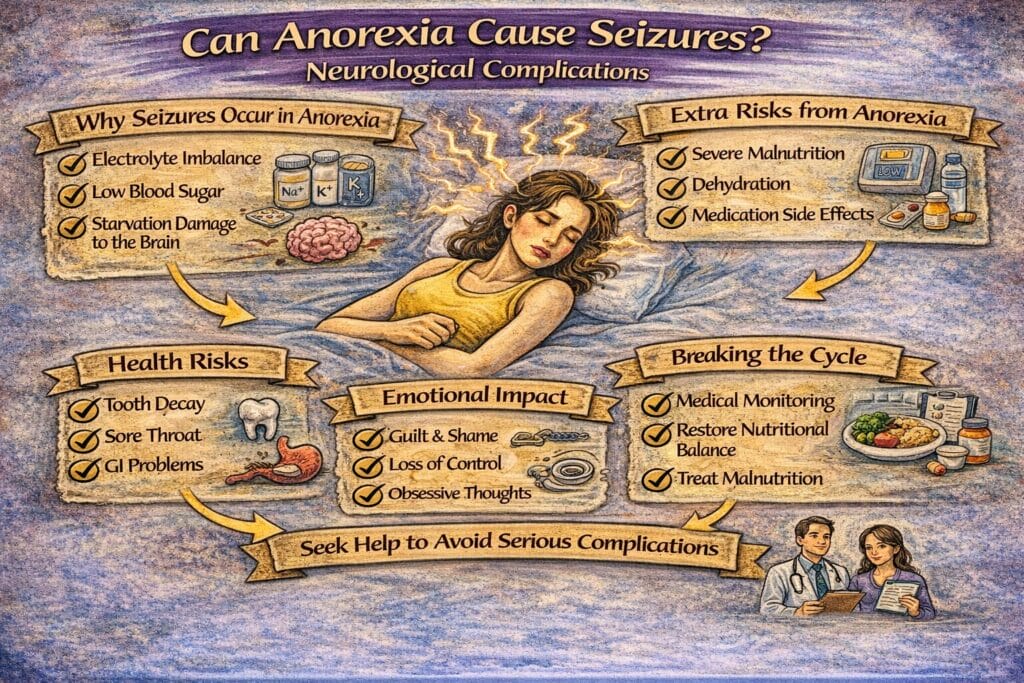
1. Electrolyte Imbalance: Restricting food intake and malnutrition result in low blood levels of vital electrolytes such as sodium, potassium, calcium, and magnesium (hypomagnesemia). Electrolytes play a crucial role in neuronal signaling, and their disruption can lead to seizures due to the unstable electrical activity in the brain. This cause of seizures is especially high risk in people with the complication of anorexia.
2. Hypoglycemia (Low blood sugar): Severe cases of anorexia involve starvation states leading to extremely low blood sugar, depriving brain cells of essential energy and increasing susceptibility toward seizure development.
3. Refeeding Syndrome: During nutritional rehabilitation, rapid shifts in phosphate and other electrolytes may provoke seizures. This complication of eating disorder treatment requires close medical supervision in specialized settings to mitigate risks.
4. Structural Brain Changes: Chronic malnutrition can cause brain atrophy and neurotransmitter dysfunction such as wernicke encephalopathy, making patients prone to epilepsy and seizures over the longer term.
Thus, medical complications of anorexia nervosa are myriad but seizures and related neurological risks represent a serious concern requiring prompt recognition and treatment.
Anorexia Neurological Complications and Medical Monitoring
The neurological complications of anorexia nervosa extend well beyond seizures and include cognitive impairment, peripheral neuropathy, and in severe weight loss cases, irreversible brain damage. Clinicians emphasize the importance of early detection and multidisciplinary care in reducing the medical complications of eating disorders. Because seizures due to electrolyte imbalances and malnutrition can have severe consequences, adults suffering from anorexia presenting with seizure activity should undergo continuous evaluation at an epilepsy clinic or seizure-specialized center.
Diagnostic tools such as EEGs help healthcare providers differentiate epileptic seizures from psychogenic nonepileptic seizures (PNES), tailoring treatment options accordingly. Blood tests are vital to detect and correct electrolyte disturbances such as hyponatremia, hypokalemia, and hypomagnesemia, as well as low blood glucose to prevent further seizures. Treatment plans from EDS and other expert centers integrate nutritional rehabilitation with neurological care to address eating disorder seizures effectively while minimizing side effects of anorexia treatment and anti-seizure medications.
Treatment Options for Anorexia-Related Seizures
Successful management of seizures associated with anorexia nervosa relies heavily on addressing the root cause, severe malnutrition and electrolyte imbalance. Treatment options include:
– Nutritional Rehabilitation: Gradual, medically supervised refeeding to restore adequate food intake, taking care to avoid refeeding syndrome and its associated seizure risk.
– Electrolyte Replacement Therapy: Careful monitoring and correction of electrolyte deficiencies, often through intravenous or oral supplementation.
– Medical Supervision: Regular neurological assessments, including EEGs, and consultation with epilepsy and eating disorder specialists to evaluate seizure etiology and tailor treatment.
– Pharmacological Interventions: Anti-epileptic drugs may be prescribed cautiously in cases of persistent seizures, balancing therapeutic benefits against potential side effects of anorexia medications.
EDS supports an integrated treatment approach combining psychiatric care, nutritional support, and medical monitoring to optimize recovery for a large population of eating disorder patients suffering from seizures and other neurological complications.
Research and Prevalence
Seizures are an uncommon but recognized neurological complication of anorexia nervosa. In a review of 100 patients with anorexia nervosa, neurological complications were found in nearly half, with seizures documented in a small subset; in most cases these problems resolved after nutritional deficiencies and fluid and electrolyte imbalances were corrected (Patchell et al., 1994). Seizure risk is generally tied to severe malnutrition and electrolyte disturbances rather than to the eating disorder itself.
Early identification of the medical complications of anorexia nervosa is widely emphasized as a way to prevent long-term harm. Additionally, seizures are reported in related eating disorders such as bulimia nervosa; here binge eating and purging behaviors cause electrolyte abnormalities also contributing to seizure risk.
Medical Complications and Seizure Risk in Anorexia
The complex relationship between eating disorder pathophysiology, especially anorexia nervosa, and seizure risk is well established in medical literature. Complications of anorexia such as hypotension, low blood pressure, electrolyte imbalances including hyponatremia, hypokalemia, and hypomagnesemia lead to seizures due to dysfunctional neuronal activity. The complication of anorexia causing seizures is a serious concern that requires prompt medical evaluation at an epilepsy clinic.
Seizures in this ed cohort may arise from several etiologies of seizures including both primary seizure disorder (epilepsy) and secondary causes related to malnutrition. Psychogenic nonepileptic seizures (PNES) are also frequently observed, necessitating comprehensive diagnostic workups. Eating disorders such as bulimia and bulimia nervosa contribute further to seizure prevalence through similar electrolyte imbalances. The medical literature documents these complications extensively, underscoring the crucial need for continuous medical monitoring and intervention in severe cases.
Frequently Asked Questions
Can anorexia cause seizures?
Seizures are an uncommon but documented complication of anorexia nervosa. They are usually linked to severe malnutrition, low blood sugar, or electrolyte disturbances rather than to the eating disorder by itself. In one review, neurological complications were common in people with anorexia and generally improved once nutritional and electrolyte imbalances were corrected (Patchell et al., 1994).
Why can refeeding raise seizure risk?
When someone who is severely undernourished begins eating again, rapid shifts in electrolytes such as phosphate can occur, a process known as refeeding syndrome. These shifts can, in some cases, trigger neurological symptoms including seizures, which is why early refeeding is done under medical supervision (Mehanna et al., 2008).
Are anorexia-related seizures reversible?
In many cases, neurological problems associated with anorexia improve once nutrition is restored and fluid and electrolyte balance is corrected. Ongoing medical monitoring is important, so anyone experiencing seizures or other neurological symptoms should be evaluated by a clinician.
References
- Patchell RA, Fellows HA, Humphries LL. Neurologic complications of anorexia nervosa. Acta Neurol Scand. 1994;89(2):111-116. https://doi.org/10.1111/j.1600-0404.1994.tb01645.x
- Mehanna HM, Moledina J, Travis J. Refeeding syndrome: what it is, and how to prevent and treat it. BMJ. 2008;336(7659):1495-1498. https://doi.org/10.1136/bmj.a301
- Stokke A, Julsrud J, Fosse A, Nielsen EW. [A young woman with anorexia, hypokalemia and convulsion]. Tidsskr Nor Laegeforen. 2011;131(4):358-360. https://doi.org/10.4045/tidsskr.09.0049
Support and Crisis Resources
If you or someone you care about is struggling with an eating disorder, support is available:
If you or someone you love is struggling, support is available. The National Institute of Mental Health offers free, research-based information about eating disorders at nimh.nih.gov. If you are in crisis or need immediate help, call or text 988 to reach the 988 Suicide and Crisis Lifeline, a free, confidential service available 24/7.
Related Reading
- What Does Bulimia Do to Your Stomach? GI Effects Explained
- Refeeding Syndrome: A Guide for Eating Disorder Recovery