Key Takeaways
Rapid nutritional restoration has to be monitored carefully because of refeeding syndrome.
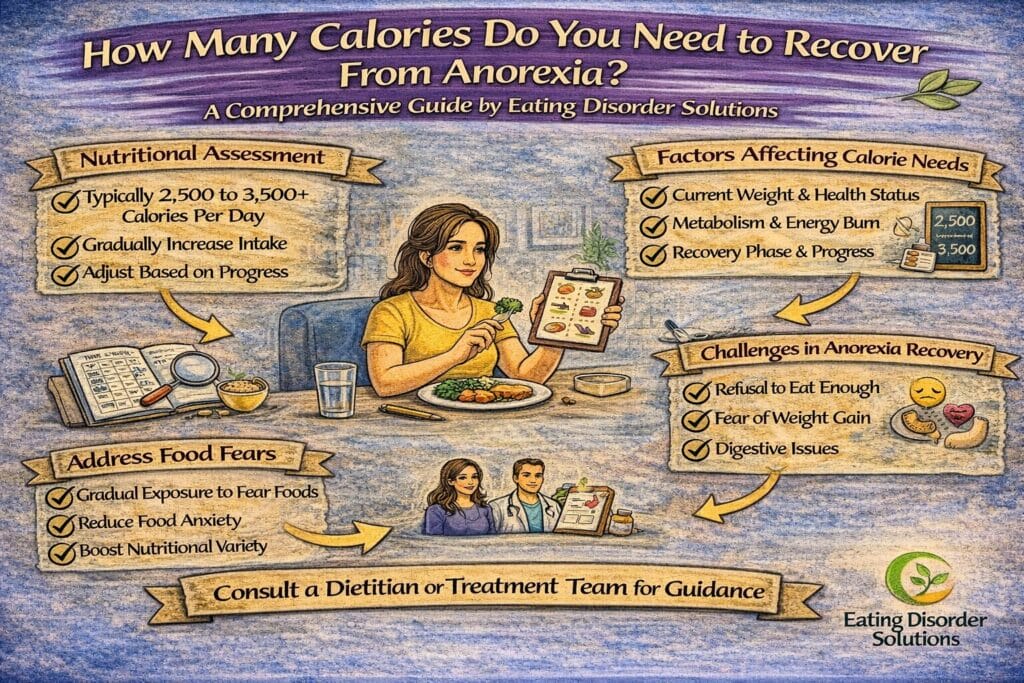
There is no single safe calorie number for recovering from anorexia. Energy needs are highly individual and often rise significantly during refeeding, so they must be set and adjusted by a medical team. Recovery is about restoring health under professional supervision, not reaching a specific number on your own.
- Calorie needs in anorexia recovery vary widely from person to person and change over time.
- Refeeding should be medically supervised to monitor for refeeding syndrome and other risks.
- Energy requirements frequently increase during weight restoration, sometimes substantially.
- A registered dietitian and treatment team set and adjust the plan, not a generic formula.
- The goal is a sustainable, healthy relationship with food, beyond numbers.
Introduction
Recovering from anorexia nervosa involves far more than reaching a healthy weight. Many people search for how many calories they need to recover, hoping for a single number to follow. The honest answer is that there is no safe one-size-fits-all figure, and publishing a specific target can do more harm than good. Energy needs in recovery are highly individual, they usually rise as the body heals, and they should be set and adjusted by a medical and nutrition team. For adults with anorexia nervosa, treatment centers like Eating Disorder Solutions (EDS) in Texas use individualized, supervised refeeding plans to safely restore nourishment and rebuild a steadier relationship with food.
Why There Is No Single Calorie Number
Energy requirements during recovery depend on many factors, including a person’s current health, the length and severity of restriction, age, body size, activity level, and how the body responds to renewed nourishment. Because of this, a plan that is appropriate for one person can be unsafe for another. A review of the research on nutritional rehabilitation in anorexia nervosa found that energy needs vary widely between individuals and tend to escalate over the course of weight restoration, which is why intake is calculated and adjusted by clinicians rather than fixed in advance (Marzola et al., 2013). Sharing a specific number online removes that individualized medical judgment and can become a figure a struggling person fixates on, so a registered dietitian builds and revises the plan as recovery progresses.
Refeeding and Weight Restoration: Safety First
Reintroducing nourishment after a period of restriction has to be done carefully. The most serious early risk is refeeding syndrome, a potentially dangerous shift in fluids and electrolytes that can occur when nutrition is resumed too quickly without medical monitoring (Marzola et al., 2013). Clinical teams monitor electrolytes such as phosphate, potassium, and magnesium, along with vital signs, and increase nourishment gradually under supervision. Eating Disorder Solutions (EDS) uses structured refeeding protocols and meal plans created by registered dietitians experienced in treating adults, so that nourishment is restored steadily while medical risks are managed.
Why Energy Needs Often Rise During Recovery
One of the surprising parts of recovery is that the body often becomes less energy efficient as it heals. After a period of starvation the body lowers its metabolic rate to conserve energy, but during weight restoration many people experience a temporary increase in metabolism, sometimes called hypermetabolism, which means they need more nourishment than expected to keep making progress (Marzola et al., 2013). Recovery plans are designed to be flexible for exactly this reason, with the care team adjusting nourishment as the body’s needs change rather than holding to a fixed amount.
Metabolism and the Role of Movement
Gentle, supervised movement can support mental health and physical strength, but unmonitored or excessive exercise can work against weight restoration and pull someone back toward restrictive patterns. Because activity changes how much nourishment the body needs, treatment teams at Eating Disorder Solutions (EDS) carefully balance any movement with the individual’s nutrition plan to protect recovery and avoid setbacks.
The Importance of Professional Supervision During Refeeding
Recovery from anorexia nervosa is best supported by a multidisciplinary team that may include physicians, dietitians, therapists, and nurses experienced in eating disorder treatment. Regular monitoring of weight, vital signs, and lab values lets the team make timely, individualized adjustments and respond to medical or behavioral concerns as they arise. Outpatient programs let adults practice real-world eating with ongoing medical and psychological support, including family involvement when appropriate, while inpatient care provides closer monitoring for more severe situations that need intensive medical supervision.
Building a Healthy Relationship With Food Beyond Numbers
For an honest look at what recovery can involve, read Audrey’s eating disorder recovery story.
While restoring nourishment is foundational, addressing the emotional relationship with food matters just as much. Many adults in recovery carry fear and anxiety around eating that can persist even after physical health improves. Practicing mindfulness around meals, moving toward intuitive eating, and setting realistic expectations all support lasting recovery. Eating Disorder Solutions (EDS) pairs evidence-based therapy with nutritional support to help people regain confidence in feeding their bodies and build a more peaceful, flexible relationship with food, without counting or fixating on numbers.
Frequently Asked Questions
Is there a set number of calories needed to recover from anorexia?
No. There is no single safe number, and a figure that helps one person can be unsafe for another. Recovery nourishment is individualized and is set and adjusted by a medical and nutrition team based on your health, history, and progress, not by a fixed target.
Why do energy needs often increase during recovery?
As the body heals, many people go through a period of increased metabolism and become less energy efficient, so they need more nourishment than expected to keep recovering. Treatment teams plan for this and adjust the plan over time (Marzola et al., 2013).
Why is medical supervision so important during refeeding?
Reintroducing nourishment too quickly without monitoring can trigger refeeding syndrome, a potentially dangerous shift in fluids and electrolytes. Supervised refeeding allows clinicians to monitor lab values and vital signs and adjust the plan safely.
Can I plan my own recovery from advice I find online?
Recovery from anorexia nervosa needs individualized clinical guidance. General advice from online forums cannot account for your medical situation and can be risky. Working with licensed dietitians and a medical team experienced in eating disorders is the safest path.
References
- Marzola E, Nasser JA, Hashim SA, Shih PA, Kaye WH. Nutritional rehabilitation in anorexia nervosa: review of the literature and implications for treatment. BMC Psychiatry. 2013;13:290. doi:10.1186/1471-244X-13-290
Resources and Support
If you or someone you love is struggling, support is available. If you are in crisis or need immediate help, call or text 988 to reach the 988 Suicide and Crisis Lifeline, a free, confidential service available 24/7.
If you or a loved one is struggling with anorexia nervosa and preparing to begin recovery, contact Eating Disorder Solutions (EDS) in Texas at (855) 245-0961. Our team provides supervised refeeding, personalized nutrition support, and comprehensive eating disorder treatment to support your journey toward health and a steadier relationship with food.
Related Reading
- Anorexia in Adults Over 30: Signs and Treatment Options
- Can You Recover from Anorexia Without Gaining Weight?
If you or someone you love is struggling with anorexia, our team can help. Learn more about our anorexia treatment program in Texas.
References
Eating Disorders: What You Need to Know (NIMH) (https://www.nimh.nih.gov/health/publications/eating-disorders)
Eating Disorders (NIMH) (https://www.nimh.nih.gov/health/topics/eating-disorders)