
Key Takeaways
Anorexia nervosa can affect bone health over time, increasing the risk of low bone density and fractures. Recovery, including restoring nutrition and weight, is the most important step for protecting and rebuilding bone strength.
- Sustained undernutrition and hormonal changes in anorexia can weaken bones.
- Bone density loss may not cause symptoms until a fracture occurs, so screening matters.
- DEXA scans help clinicians assess and monitor bone mineral density.
- Weight restoration and nutritional rehabilitation support bone recovery.
- Care that addresses both the eating disorder and bone health gives the best support.
Introduction
Anorexia nervosa is a serious eating disorder characterized by self-imposed starvation and sustained undernutrition, which affects multiple organ systems, including the skeletal system. One of the most concerning complications for adults recovering from anorexia is the development of osteoporosis, a condition marked by low bone mineral density and increased fracture risk. Understanding the connection between anorexia and osteoporosis, as well as the mechanisms behind bone loss and bone density reduction in patients with anorexia nervosa, is crucial for effective treatment and recovery. This article explores the complex effects of anorexia on bone health, factors influencing bone loss, diagnostic tools like DEXA scans, and how recovery can promote restoration of bone mass.
What is Osteoporosis and How Does It Relate to Anorexia Nervosa?
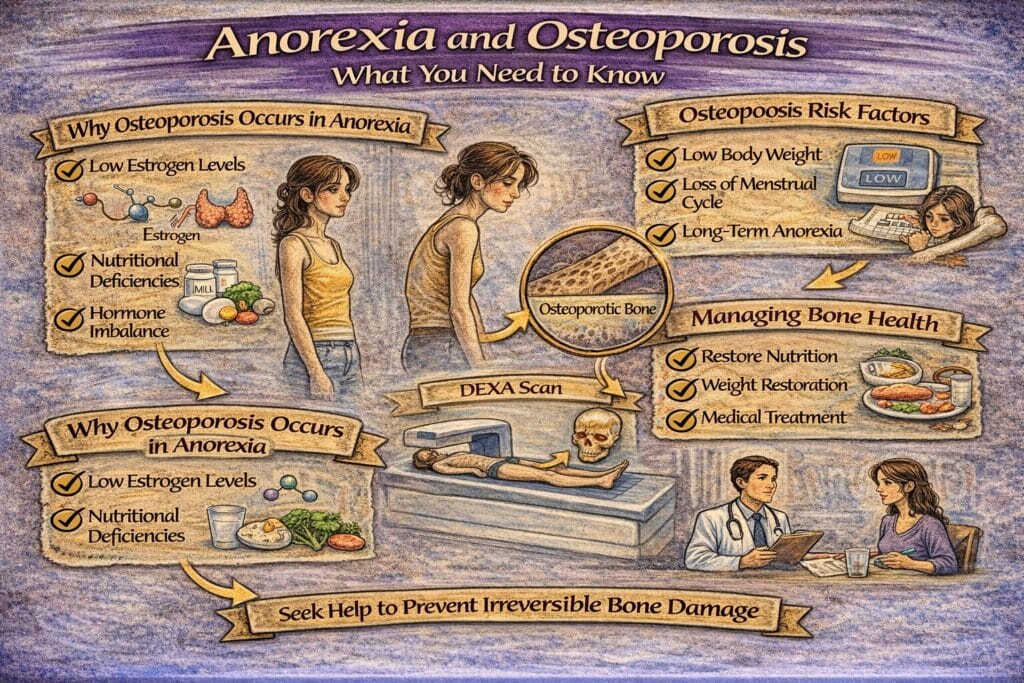
Osteoporosis is a disorder where decreased bone mineral density (BMD) leads to fragile bones prone to fractures. In the context of eating disorders, particularly anorexia nervosa, osteoporosis eating disorder connections are significant because of severe nutritional deficiencies and hormonal imbalances that disrupt normal bone metabolism. Women with anorexia often experience severe bone loss due to reduced peak bone mass acquisition and ongoing degradation of existing bone structure. In patients with anorexia nervosa, prolonged periods of restrictive eating cause estrogen deficiency, impairing bone growth and accelerating bone resorption. This results in osteopenia, which can progress to osteoporosis without appropriate intervention.
Understanding Bone Loss and Bone Density in Eating Disorders
Bone loss in anorexia nervosa is multifactorial. Low bone density and decreased bone mass are driven by inadequate nutrition, hormonal alterations, especially estrogen deficiency, and increased levels of cortisol, a stress hormone that negatively impacts bone metabolism. Young women with anorexia often fail to achieve peak bone mass, a critical factor in lifelong bone health. Factors influencing bone loss include prolonged low body weight, reduced calcium and Vitamin D intake, and amenorrhea. Estrogen plays a pivotal role in maintaining bone mineral density; its deficiency in patients with anorexia nervosa leads to decreased bone formation and increased bone resorption, which culminates in severe bone loss and heightened fracture risk.
The Role of Hormones and Nutrition in Bone Health
Estrogen deficiency is a primary hormonal factor affecting bone health in patients with anorexia nervosa. Low estrogen levels disrupt the balance between bone resorption and formation, favoring breakdown. Cortisol, often elevated in eating disorders due to chronic stress and malnutrition, further impairs bone metabolism by inhibiting osteoblast function (cells responsible for bone formation). Adequate calcium and Vitamin D are essential for bone mineralization. Unfortunately, patients with anorexia often have deficiencies in these nutrients, compounding the impact on bone density. Optimizing hormone levels and nutrition is integral to managing anorexia bone loss and improving osteopenia outcomes.
Diagnostic Tools: The Importance of DEXA Scans
Dual-energy X-ray absorptiometry (DEXA) scans are a standard tool for assessing bone mineral density. They provide precise measurements that help determine the presence of osteopenia or osteoporosis in patients with anorexia. Regular monitoring with DEXA scans enables clinicians to evaluate the severity of bone loss and the effectiveness of treatment. For adults recovering from anorexia, repeated DEXA evaluations can track improvements in bone density as nutrition and hormone status are restored. Understanding one’s bone health is a vital step in managing the long-term risks associated with anorexia and osteoporosis.
The Potential for Bone Density Recovery After Anorexia
One of the encouraging aspects of treating patients with anorexia nervosa is that some bone loss is reversible with sustained recovery. Restoration of normal weight, hormonal balance, particularly estrogen replenishment, and proper supplementation with calcium and Vitamin D can increase bone mineral density over time. However, the degree of reversibility depends on the duration and severity of the illness, age at recovery, and individual factors influencing bone metabolism. Although full restoration of peak bone mass may not always be achievable, improvements in bone strength can reduce fracture risk. Early intervention and continued medical support at centers like Eating Disorder Solutions (EDS) are critical to optimizing bone health outcomes.
Managing Anorexia and Osteoporosis: Treatment Strategies at Eating Disorder Solutions (EDS)
At Eating Disorder Solutions in Texas, the multidisciplinary approach to treating anorexia nervosa includes addressing osteoporosis and bone health. Treatment plans incorporate nutritional rehabilitation focused on adequate calcium and Vitamin D intake, medical management of hormonal deficiencies, and regular bone density monitoring via DEXA. Additionally, psychological support helps sustain long-term recovery, reducing relapse risk. Patients with anorexia bone loss require individualized care to restore bone metabolism and reduce the risk of fractures. EDS provides comprehensive resources and expert guidance to empower adults on their recovery journey to regain both physical health and quality of life.
| Bone Health Factor | Effect in Anorexia Nervosa | Impact on Osteoporosis Risk |
| Estrogen Deficiency | Decreased estrogen due to amenorrhea | Increases bone resorption, lowers bone density |
| Calcium & Vitamin D Deficiency | Nutritional insufficiency common in eating disorders | Reduces bone mineralization, weakens bone mass |
| Cortisol Levels | Elevated due to stress and malnutrition | Inhibits bone formation, accelerates bone loss |
| Weight and Body Fat | Low weight impairs peak bone mass acquisition | Leads to severe bone loss, increased fracture risk |
Frequently Asked Questions
What are some key statistics about anorexia and osteoporosis?
People with anorexia nervosa are at increased risk for low bone mineral density, and reduced bone strength can raise the risk of fractures. According to PubMed-indexed endocrinology research, individuals with anorexia can develop bone density loss comparable to the patterns seen in postmenopausal osteoporosis (Misra and Klibanski, 2014).
Should people with anorexia get screened for osteoporosis?
Yes, it is highly recommended that adults with a history of anorexia nervosa undergo periodic screening for osteoporosis using DEXA scans. Early detection of decreased bone density allows for timely intervention, which can prevent fractures and improve long-term bone health.
References
- Misra M, Klibanski A. Anorexia nervosa and bone. J Endocrinol. 2014;221(3):R163-R176. https://doi.org/10.1530/JOE-14-0039
- Misra M, Klibanski A. Bone health in anorexia nervosa. Curr Opin Endocrinol Diabetes Obes. 2011;18(6):376-382. https://doi.org/10.1097/MED.0b013e32834b4bdc
- Steinman J, Shibli-Rahhal A. Anorexia nervosa and osteoporosis: pathophysiology and treatment. J Bone Metab. 2019;26(3):133-143. https://doi.org/10.11005/jbm.2019.26.3.133
Support and Crisis Resources
If you or someone you care about is struggling with an eating disorder, support is available:
If you or someone you love is struggling, support is available. The National Institute of Mental Health offers free, research-based information about eating disorders at nimh.nih.gov. If you are in crisis or need immediate help, call or text 988 to reach the 988 Suicide and Crisis Lifeline, a free, confidential service available 24/7.
Related Reading
- What Is Lanugo and Why Does It Grow in Anorexia?
- Can Anorexia Cause Seizures? Neurological Complications