Key Takeaways
Veganism is an ethical and dietary choice, while orthorexia is an unhealthy obsession with eating only “pure” or “perfect” foods. A vegan diet does not cause an eating disorder, but for some people it can become a way to hide rigid, harmful food rules. The concern is not the diet itself, but when food control starts to harm health and daily life.
- Veganism and orthorexia are not the same; most vegans do not have an eating disorder.
- Orthorexia centers on fear of “impure” food and rigid rules, not ethics or sustainability.
- For some people, a vegan label can mask increasingly restrictive, distressing eating.
- Warning signs include anxiety about food purity, shrinking food variety, and distress when routines are disrupted.
- Treatment supports a flexible, balanced relationship with food and can respect a person’s values, including staying vegan.
Introduction
Veganism and plant-based eating have gained popularity for their health and ethical reasons, with many adults choosing to follow a vegan diet driven by concerns for animal welfare, environmental sustainability, and personal health. For individuals adopting a plant-based diet or choosing a vegetarian or vegan diet, the focus often centers on healthy eating patterns that exclude animal products. However, the prevalence of orthorexia nervosa, an obsessive focus on healthy eating, has made it clear that when following a vegan diet becomes rigid and restrictive, it can mask disordered eating or exacerbate eating disorder symptoms.
This article explores the association between orthorexia and veganism, including how to recognize disruptive eating behaviors and distinguish ethical reasons for a vegan diet from unhealthy orthorexic eating behavior. Understanding the relationship with food and the role of restrictive eating within vegan and vegetarian diets is vital for adults at risk of or experiencing disordered eating while following a vegan diet.
What Is Orthorexia Nervosa?
Orthorexia nervosa describes an unhealthy preoccupation with eating only foods seen as “pure” or “healthy.” A review by Dunn and Bratman (2016) outlines the concept and proposed criteria, and a review of risk factors by McComb and Mills (2019) notes that the relationship between vegetarian or vegan eating and orthorexia is mixed, so diet alone does not define the condition.
Orthorexia nervosa is a disordered eating pattern marked by an obsessive focus on healthy eating and food purity, frequently resulting in restrictive eating and a compromised relationship with food. Unlike anorexia or other traditional eating disorders which concentrate on food quantity or body image, orthorexia centers on the quality of food intake and adherence to strict health-oriented eating patterns.
Orthorexia in people following a vegan diet or vegetarian or vegan diet is increasingly identified among individuals due to the socially acceptable nature of plant-based diets and the cultural emphasis on mindful eating and self-compassion. However, orthorexic eating behavior imposes rigid rules that threaten nutritional balance, mental health, and social engagement and may hide an eating disorder in those who follow a vegan or vegetarian diet for ethical reasons.
Veganism vs. Orthorexia: Understanding the Differences
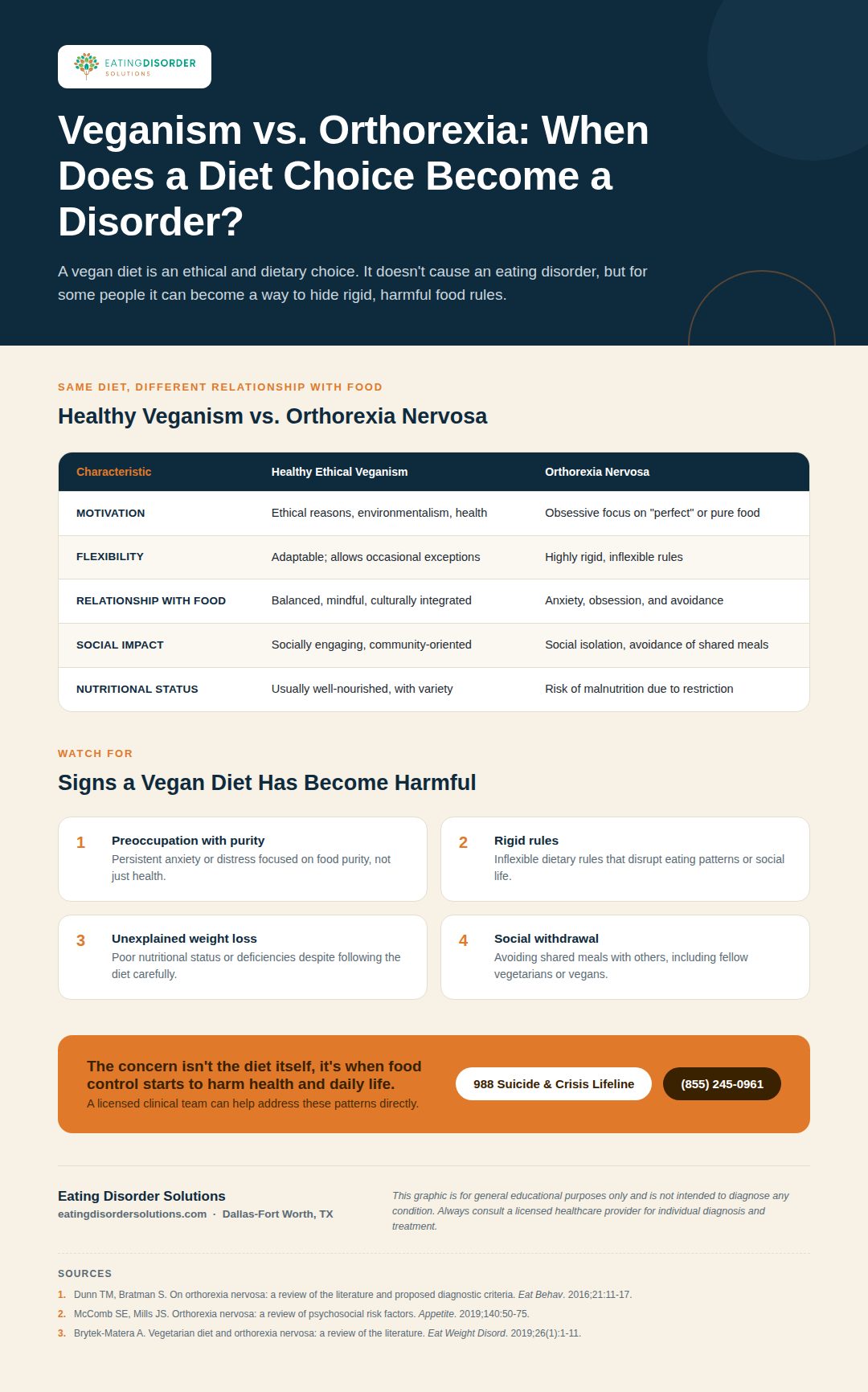
| Characteristic | Healthy Ethical Veganism | Orthorexia Nervosa |
| Motivation | Ethical reasons, environmentalism, health | Obsessive focus on “perfect” or pure food |
| Flexibility | Adaptable, allows occasional exceptions | Highly rigid, inflexible rules |
| Relationship with Food | Balanced, mindful, culturally integrated | Anxiety, obsession, and avoidance |
| Social Impact | Socially engaging, community-oriented | Social isolation, avoidance of shared meals |
| Nutritional Status | Usually well-nourished with variety | Risk of malnutrition due to restriction |
| Emotional Response | Positive, fulfilling values | Guilt, fear, and distress related to food |
Following a vegan diet is a conscious lifestyle choice rooted in ethical reasons, environmental concerns, and health benefits associated with plant-based diets and vegetarian diets. Individuals following a vegetarian or vegan diet typically adopt diverse dietary patterns and promote healthy eating and balanced food intake without restrictive eating. Veganism and vegetarian diets are socially acceptable and promote community among vegetarians and vegans.
Orthorexia nervosa, by contrast, involves an obsessive focus on healthy eating that surpasses the normative dietary choices of veganism. It is exemplified by orthorexic and restrained eating behavior, including rigid, inflexible restrictions extending beyond ethical reasons and an unhealthy relationship with food. The following comparison table highlights key differences:
How Orthorexia Develops in the Context of Veganism
Although veganism itself is not a disordered eating behavior, adopting a vegetarian or vegan diet can sometimes mask the onset of orthorexia among individuals predisposed to strict health-oriented eating patterns or perfectionism. The association between orthorexia and vegan diets may emerge as individuals rigidly avoid foods perceived as toxins or impurities, such as animal products, pesticide-treated produce, or processed ingredients.
Orthorexic eating behavior develops gradually in people following a vegan diet, with escalating restrictive eating beyond the norms of vegetarian or vegan diets. Those with orthorexia nervosa may spend excessive time researching food sourcing, express anxiety or distress over accidental consumption of prohibited foods, and prioritize dietary rules over social activities, increasing risk of social isolation and deterioration in nutritional status, body mass index, and overall mental health.
Nutritional and Health Risks Associated with Orthorexia and Veganism
The strict dietary patterns and restrictive eating behaviors seen with orthorexia among individuals following a vegan diet can raise the risk of nutritional deficiencies. Essential nutrients, such as vitamin B12, iron, calcium, omega-3 fatty acids, and protein, may be consumed in inadequate amounts if dietary diversity is compromised by orthorexic and restrained eating behavior.
Malnutrition due to restrictive food intake exacerbates symptoms of orthorexia nervosa, including fatigue, cognitive impairment, and weakened immune function, and may coexist with other eating disorder symptoms such as those seen in anorexia and body image disturbance. The prevalence of orthorexia nervosa among adults following vegetarian and vegan diets necessitates awareness around dietary patterns and eating behaviors and orthorexia to mitigate health risks.
Signs You May Need Help: When Following a Vegan Diet Becomes Harmful
- Persistent preoccupation with healthy eating and food purity causing anxiety or distress
- Rigid and inflexible dietary rules that disturb your eating pattern or social life
- Feelings of fear or guilt after consuming foods not considered “clean” within your diet
- Unexplained weight loss, poor body mass index, or nutritional deficiencies despite following a vegan diet
- Withdrawal from social activities, especially shared meals with vegetarians, vegans, or omnivores
- Obsessive research about food sourcing, increasing time spent on orthorexic eating behavior
- Physical symptoms such as fatigue, dizziness, or gastrointestinal distress linked to restrictive eating
If you or someone you know displays these symptoms of orthorexia nervosa while following a vegan or vegetarian diet, seeking professional help can address these disordered eating behaviors and improve your relationship with food.
Treatment Approaches for Orthorexia in Adults
Effective treatment for orthorexia nervosa involves a multidisciplinary plan addressing the psychological and nutritional aspects of disordered eating patterns common in individuals following a vegan diet. Cognitive-behavioral therapy (CBT) is especially useful in helping patients challenge obsessive focus on healthy eating and rigid dietary rules.
Registered dietitians specialized in eating disorders can guide patients in creating balanced, flexible meal plans inclusive of vegetarian or vegan diet preferences, helping restore nutritional adequacy and ease restrictive eating behaviors. Medical monitoring ensures body mass index and nutrient levels remain stable during recovery.
Early intervention is critical to preventing long-term health consequences associated with orthorexic and restrained eating behavior and supports adults balancing ethical reasons for veganism with physical and mental wellbeing. The role of mindful eating and self-compassion on eating behaviors can significantly enhance sustainable recovery outcomes for those affected.
Frequently Asked Questions
1. How can I tell the difference between ethical veganism and orthorexia?
Ethical veganism is a balanced and conscious lifestyle choice motivated by values about animal welfare and the environment. It permits flexibility and enjoyment of a varied plant-based diet. Orthorexia is marked by obsessive control, anxiety around food purity, rigid restrictions beyond ethical reasons, and often results in physical or social impairment.
2. What nutritional risks exist when orthorexia occurs in vegan adults?
Orthorexia can cause inadequate intake of essential nutrients such as vitamin B12, iron, calcium, omega-3s, and protein, leading to potential malnutrition. The restrictive eating pattern may also impact energy balance and immune health.
3. Is it possible to recover from orthorexia without giving up a vegan diet?
Yes. Treatment focuses on developing a healthy relationship with food, incorporating flexibility, and ensuring balanced nutrition. Many individuals maintain their ethical beliefs while recovering from orthorexia with professional guidance.
4. How do treatment providers address the overlap between veganism and orthorexia?
Providers respect a patient’s ethical reasons for following a vegan diet while helping them challenge rigid rules and anxiety related to food. The goal is to restore a positive and balanced eating pattern without compromising core values.
Taking the Next Step Toward Recovery
If you are struggling with orthorexia or disordered eating related to veganism and restrictive food intake, know that professional help is available. At Eating Disorder Solutions (EDS), we provide compassionate, individualized treatment to improve your relationship with food and support your recovery journey.
Reach out today to speak with a caring specialist and take the first step toward healing. Call EDS at Eating Disorder Solutions to learn more about treatment options tailored to adults facing orthorexia nervosa and other eating disorders.
References
- Dunn TM, Bratman S. On orthorexia nervosa: a review of the literature and proposed diagnostic criteria. Eat Behav. 2016;21:11-17. https://doi.org/10.1016/j.eatbeh.2015.12.006
- McComb SE, Mills JS. Orthorexia nervosa: a review of psychosocial risk factors. Appetite. 2019;140:50-75. https://doi.org/10.1016/j.appet.2019.05.005
- Brytek-Matera A. Vegetarian diet and orthorexia nervosa: a review of the literature. Eat Weight Disord. 2019;26(1):1-11. https://doi.org/10.1007/s40519-019-00816-3
Support and Crisis Resources
If you or someone you care about is struggling with an eating disorder, support is available:
If you or someone you love is struggling, support is available. The National Institute of Mental Health offers free, research-based information about eating disorders at nimh.nih.gov. If you are in crisis or need immediate help, call or text 988 to reach the 988 Suicide and Crisis Lifeline, a free, confidential service available 24/7.
Related Reading
- Orthorexia: When “Healthy Eating” Becomes an Obsession
- Orthorexia in Fitness Culture: When Clean Eating Goes Too Far
- The Fine Line Between Dieting and Disordered Eating: Recognizing When Healthy Habits Become Harmful
- Postpartum Eating Disorders: When New Motherhood Triggers Relapse