Key Takeaways
Gymnasts face a higher risk for eating disorders because the sport rewards leanness, low body weight, and a particular body shape. Pressure from training, scoring, and aesthetics can lead to restriction, overexercise, and other disordered eating patterns. With specialized treatment, gymnasts can recover while protecting their long-term health.
- Aesthetic and leanness-focused sports like gymnastics carry an elevated risk for disordered eating.
- Warning signs include food restriction, compulsive exercise, and preoccupation with body shape.
- Eating disorders can harm bone health, energy, and performance, not just appearance.
- Coaches, families, and sports medicine staff play a key role in early detection and support.
- Treatment blends medical care, nutrition, and therapy tailored to athletes.
Introduction
Eating disorders in the sport of gymnastics represent a serious issue affecting athletes from adolescence through adulthood and collegiate levels. Among elite gymnasts, the intersection of body shape ideals, pressure to maintain a low body weight, and performance demands create a perfect storm for development of anorexia nervosa and other eating disorders. This high-risk context within artistic sports often promotes restrictive eating and disordered eating behaviors that compromise both mental health and athletic potential.
Understanding the prevalence and risk factors contributing to eating disorders in gymnasts is vital for systematic screening and timely intervention. This article provides an overview of how the unique demands and culture of gymnastics increase risk for eating disorders, examines the complex impact on adult and NCAA athletes, and reviews best practice treatment approaches informed by evidence from the national eating disorder organizations and the American Psychiatric Association (DSM-5 criteria).
Why Gymnastics Creates Risk for Eating Disorders
Elite gymnastics is distinguished not only by incredible athletic performance but also by a rigorous emphasis on aesthetic ideals, including thinness, leanness, and precise body shape, that heighten risk for anorexia nervosa and other eating disorders. The sport fosters a culture where body weight and image are intricately linked to success at the highest levels. Several systematic factors contribute to this increased risk for eating disorders among gymnasts:
- Body Image Pressure: Coaches and judges emphasize body shape and lean physiques as critical to attaining elite status, driving high rates of body dissatisfaction and low self-esteem.
- Weight Monitoring: Frequent weigh-ins and focus on meeting strict weight control standards normalize disordered eating behaviors and restrictive dieting.
- Performance Correlation: The pervasive belief that lower body weight enhances strength-to-weight ratio and flexibility leads many gymnasts to adopt unhealthy eating behaviors as coping strategies.
- Sport Culture: Within the world of gymnastics and other aesthetic sports as high-risk contexts, dieting and weight-control behaviors are often accepted or overlooked, masking the symptoms of anorexia and related disorders.
- Control and Stress: The intense training and competitive pressures encountered in elite-level gymnastics can exacerbate stress and reinforce disordered eating as an unhealthy means of control, heightening serious health risks like female athlete triad and amenorrhea.
These interrelated factors explain why gymnasts have a higher incidence of eating disorders compared to other sports, with research suggestsing elevated prevalence particularly among young female elite athletes participating at NCAA and Olympic levels.
Understanding Gymnastics Anorexia and Other Eating Disorders Among Gymnasts
Gymnastics anorexia refers specifically to anorexia nervosa manifesting within the elite gymnastics context, driven by sport-specific triggers such as the premium placed on thinness and maintaining a certain body weight to optimize performance. Apart from anorexia, gymnasts also present with bulimia, binge eating, and atypical disordered eating patterns documented in screening tools like the eating attitudes test (EAT-26) and disordered eating behavior questionnaires.
Disordered eating symptoms vary widely from subclinical restrictive behaviors to full DSM-5 diagnosed eating disorders, often going undetected due to stigma and a culture minimizing mental health concerns in elite athletes. Adult gymnasts managing athletic commitments alongside academic or occupational roles face compounding stressors increasing both mental health burden and risk for progression of eating disorders.
A systematic review of athletes found higher rates of disordered eating in sports that emphasize leanness and aesthetics, including gymnastics (Mancine and colleagues, 2020), underscoring the need for specialized, athlete-centered psychological and medical care.
How Eating Disorders Impact Adult and Collegiate Gymnasts
Eating disorders in adult and collegiate gymnasts cause serious health consequences that go beyond immediate athletic performance, leading to long-term damage to both physical and mental health. Common impacts documented among elite gymnasts include:
- Malnutrition and decreased bone mass resulting in elevated fracture risk, often related to the female athlete triad and menstrual dysfunction such as amenorrhea.
- Cardiovascular complications triggered by electrolyte imbalances and insufficient caloric intake.
- Decreased athletic performance coupled with increased injury susceptibility due to energy deficits and compromised recovery.
- Co-occurring mental health challenges including anxiety, depression, obsessive-compulsive behaviors, and increased self-harm risk.
- Difficulties maintaining consistent training schedules and social balance amidst severe disordered eating behaviors.
Effective management requires a systematic and integrated treatment approach coordinated between sports medicine practitioners, athletic trainers, nutritionists, and specialized therapists with expertise in eating disorders in sport and elite athletic populations.
Role of Coaches and Sports Medicine Professionals in Prevention and Early Detection
Coaches, trainers, and sports medicine professionals serve as critical gatekeepers in detecting and preventing eating disorders among gymnasts. Their role includes fostering environments that promote healthy eating, self-esteem, and open communication around mental health and body image, a step strongly recommended in guidelines from the American College of Sports Medicine and IOC Medical Commission.
Systematic use of screening tools such as the eating attitudes test (EAT-26) and disordered eating questionnaires at key phases of athletic development can improve validity in early identification of high-risk athletes. Education provided by coaches and sports staff should emphasize the dangers of excessive focus on weight loss and the importance of maintaining adequate body weight for health and performance.
By prioritizing holistic athlete well-being rather than weight-centric measures or restrictive behaviors, coaching staff can reduce stigma, encourage early intervention, and support sustained mental health for gymnasts across all competitive levels.
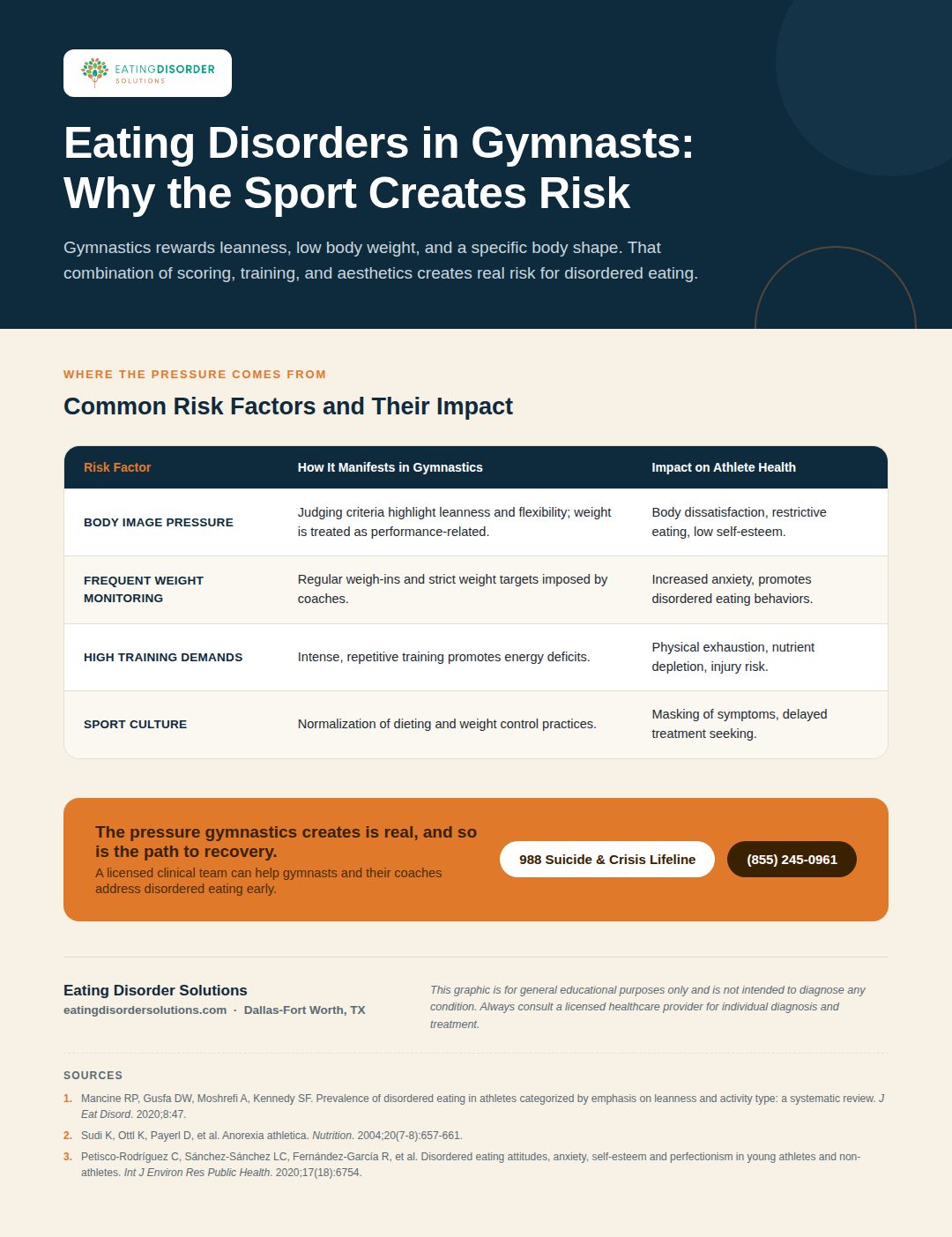
Comparison of Common Risk Factors and Their Impact on Gymnasts
| Risk Factor | How It Manifests in Gymnastics | Impact on Athlete Health |
| Body Image Pressure | Judging criteria highlight leanness and flexibility; weight seen as performance-related | Leads to body dissatisfaction, restrictive eating, low self-esteem |
| Frequent Weight Monitoring | Regular weigh-ins, strict weight targets imposed by coaches | Increases anxiety, promotes disordered eating behaviors |
| High Training Demands | Intense, repetitive training promotes energy deficits | Physical exhaustion, nutrient depletion, injury risk |
| Competitive Pressure | Desire to outperform peers, maintain elite status | Stress and control issues leading to unhealthy coping |
| Sport Culture | Normalization of dieting and weight control practices | Masking of symptoms, delayed treatment seeking |
Treatment Approaches for Eating Disorders in Gymnasts
Treatment for eating disorders in gymnasts involves a multidisciplinary, athlete-specific approach to simultaneously address physical health, mental health, and performance goals. Medical monitoring by sports medicine physicians ensures that critical health markers like bone mass, menstrual status, and cardiovascular function are stabilized during recovery.
Nutritional counseling focuses on reversing weight loss through sustainable, healthy eating strategies tailored to the energy demands of gymnastics training and competition, as outlined in position stands from the American College of Sports Medicine.
Psychotherapies such as cognitive-behavioral therapy (CBT) are implemented to target distorted body image, restrictive eating patterns, and co-morbid mental health symptoms including anxiety and depression. Engagement of strong athletic support networks, including empathetic coaches, trainers, and teammates, fosters a positive sport environment that reduces stigma and encourages treatment adherence.
Long-term recovery prioritizes not only symptom resolution and normalized eating behaviors but also restoration of healthy menstruation and self-esteem, aligning with consensus statements from the IOC Medical Commission and national eating disorder organizations’ best-practice guidance for managing eating disorders in sport.
Eating Disorder Solutions (EDS) – Supporting Athletes’ Recovery
If you or a loved one is struggling with an eating disorder related to gymnastics or any athletic pursuit, specialized help is available. Eating Disorder Solutions (EDS) offers expert, compassionate treatment and essential eating disorder support designed to address the unique challenges faced by adult and collegiate athletes. Take the first step toward recovery by calling EDS at Eating Disorder Solutions. Our team understands the demands of elite sport and is dedicated to helping athletes heal their
References
- Mancine RP, Gusfa DW, Moshrefi A, Kennedy SF. Prevalence of disordered eating in athletes categorized by emphasis on leanness and activity type: a systematic review. J Eat Disord. 2020;8:47. https://doi.org/10.1186/s40337-020-00323-2
- Sudi K, Ottl K, Payerl D, et al. Anorexia athletica. Nutrition. 2004;20(7-8):657-661. https://doi.org/10.1016/j.nut.2004.04.019
- Petisco-Rodríguez C, Sánchez-Sánchez LC, Fernández-García R, et al. Disordered eating attitudes, anxiety, self-esteem and perfectionism in young athletes and non-athletes. Int J Environ Res Public Health. 2020;17(18):6754. https://doi.org/10.3390/ijerph17186754
Support and Crisis Resources
If you or someone you care about is struggling with an eating disorder, support is available:
If you or someone you love is struggling, support is available. The National Institute of Mental Health offers free, research-based information about eating disorders at nimh.nih.gov. If you are in crisis or need immediate help, call or text 988 to reach the 988 Suicide and Crisis Lifeline, a free, confidential service available 24/7.