Key Takeaways
For adolescents and teens, one of the most evidence-based approaches is family-based treatment (FBT).
Knowing the structure helps too — here is what a treatment plan actually involves.
Timelines vary from person to person, so it helps to know what to expect from anorexia treatment before you begin.
There is no single timeline for anorexia recovery. How long treatment takes depends on how long the illness has been present, its medical severity, the level of care needed, and each person’s circumstances. Many people work through treatment over months to a few years, and lasting recovery is built in stages rather than on a fixed schedule.
- Recovery time varies widely and is shaped by how long the illness has lasted, medical severity, co-occurring conditions, and the support available.
- Care is delivered in stepped levels, from inpatient and residential to day programs and outpatient, and people move between them as they stabilize.
- Recovery generally unfolds in stages, beginning with medical stabilization and nutritional restoration, then deeper psychological work and relapse prevention.
- Progress is rarely linear, so setbacks are a normal part of the process rather than a sign of failure.
- Earlier, comprehensive treatment tends to support better long-term outcomes, which is why reaching out sooner matters.
How Long Does It Take to Recover from Anorexia Nervosa?
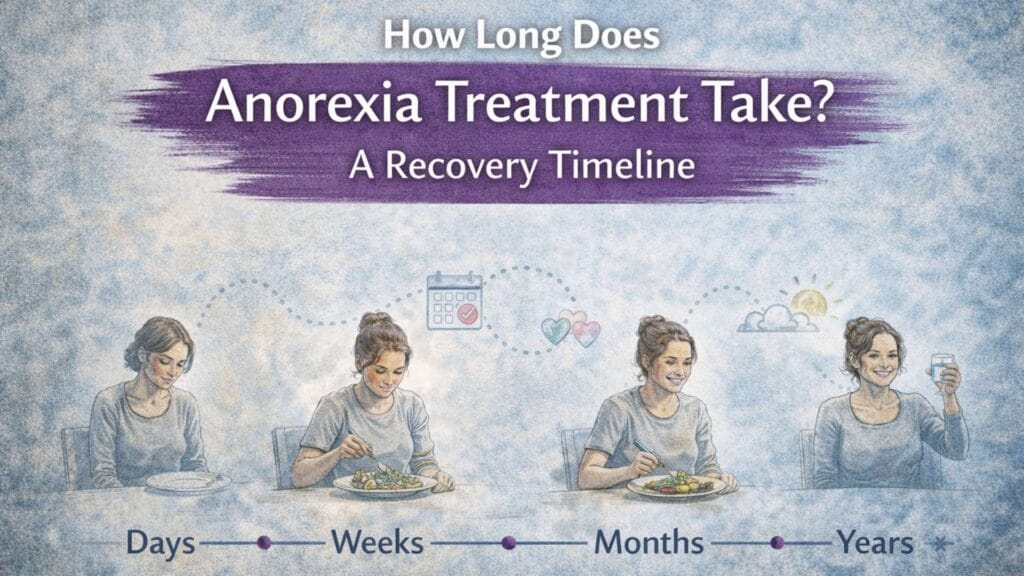
There is no single answer to how long does eating disorder recovery take. Recovery from anorexia nervosa is a long-term process that unfolds over months and years, not days or weeks. Research suggests that the average duration of treatment for anorexia nervosa spans several years when accounting for all levels of care, from residential treatment through outpatient follow-up. The recovery journey is rarely linear. Many people with anorexia experience periods of progress followed by setbacks, and relapse is a recognized part of the recovery process, not a sign of failure. Full recovery from anorexia nervosa is achievable, and the recovery takes time and consistent support.
Factors That Influence the Duration of Anorexia Treatment
Several key factors play a significant role in determining how long anorexia treatment takes:
• Severity and Duration of Illness: The duration of illness and the level of symptoms at the time of admission directly influence how long treatment will take. Individuals who have struggled with anorexia for a longer period or who are experiencing severe medical complications, including severe malnutrition, may require a more extended course of treatment.
• Co-Occurring Mental Health Conditions: The presence of other mental health conditions, such as depression, anxiety, or trauma, can complicate treatment and extend the recovery timeline. A serious mental health disorder like anorexia often requires integrated treatment for all co-occurring conditions.
• Level of Care: The starting level of care (residential, PHP, IOP, outpatient) and the patient’s ability to step down through the continuum of care directly impacts the overall duration of eating disorder treatment.
• Individual Progress: Each person’s response to treatment is different. Progress in eating disorder recovery is often non-linear, with periods of significant advancement and potential relapse.
• Support System: A strong support system of family and friends can significantly enhance the recovery process and may influence the transition to lower levels of care.
| Level of Care | Setting | Hours/Day | Duration | Best For |
| Residential (RTC) | 24/7 facility | 24 hours | 30–90 days | Severe medical/psychiatric needs |
| Partial Hospitalization (PHP) | Day program | 6–8 hours | 4–8 weeks | Medical stability, step-down from RTC |
| Intensive Outpatient (IOP) | Clinic/outpatient | 3–5 hours | 8–12 weeks | Moderate symptoms, reintegration |
| Standard Outpatient | Therapist/dietitian office | 1–2 hours | Months to years | Maintenance and relapse prevention |
| Telehealth Outpatient | Remote/home | 1–2 hours | Ongoing | Rural access, mild-moderate symptoms |
| Inpatient Medical | Hospital | 24 hours | Days to weeks | Acute medical crisis/stabilization |
Typical Anorexia Treatment Duration by Level of Care
Eating disorder treatment is structured across a continuum of care. The following outlines typical treatment timelines at each level, though individual timelines vary considerably:
• Residential Treatment (RTC): The highest level of care, providing 24/7 medical and therapeutic support. The average length of stay in a residential treatment program for anorexia ranges from 30 to 90 days. Some individuals require a longer stay to achieve medical stability and interrupt severe eating disorder behaviors.
• Partial Hospitalization Program (PHP): A step-down from residential, PHP offers structured day treatment programming for several hours a day, 5–7 days a week. Patients typically participate in PHP for 4 to 8 weeks.
• Intensive Outpatient Program (IOP): IOP provides a lower level of support, with programming for a few hours a day, several days a week. The duration of IOP can range from 8 to 12 weeks or longer.
• Outpatient Eating Disorder Treatment: Ongoing outpatient care involves regular therapy sessions with a therapist, dietitian, and other providers. Outpatient eating disorder treatment can last for several months to years, providing long-term support to prevent relapse and solidify a healthy relationship with food and body image.
The Stages of Recovery from Anorexia Nervosa
Recovery timelines vary, but progress is real — you can read Audrey’s eating disorder recovery story to see what the process looked like for one client.
Recovery from anorexia nervosa unfolds in recognizable stages:
1. Medical Stabilization and Weight Restoration: The first and most critical stage addresses the physical consequences of anorexia. Nutritional rehabilitation restores a healthy body weight, corrects electrolyte imbalances, and manages medical complications. The treatment team monitors vital signs closely during this phase.
2. Interrupting Eating Disorder Behaviors: Once medically stable, the focus shifts to interrupting ingrained patterns of restriction, purging, or excessive exercise. Intensive therapy, supported meals, and developing new coping strategies are central to this stage.
3. Psychological Healing: This stage involves addressing the underlying emotional and psychological drivers of the eating disorder. Patients work to heal their relationship with food and body, address co-occurring conditions, and build a stronger sense of self. Cognitive behavioral therapy (CBT) and dialectical behavior therapy (DBT) are commonly used approaches. Family-based treatment is especially effective for younger patients.
4. Relapse Prevention and Maintenance: As patients transition to lower levels of care, the focus shifts to maintaining progress and navigating the challenges of life in recovery. This stage involves creating a strong relapse prevention plan and building a life outside of the eating disorder.
Why Lasting Recovery from Anorexia Takes Time
It is crucial to understand that there is no quick fix for anorexia nervosa. It is a complex mental illness with deep psychological roots and severe physical consequences. Rushing through treatment or leaving a program prematurely is a primary risk factor for relapse. Lasting recovery requires time to physically heal the body and brain, rewire neural pathways, develop new coping strategies, and build a life worth living in recovery from anorexia.
The goal of treatment is not just to restore body weight, but to empower individuals with the tools and resilience for a full and lasting recovery. Recovery is possible, and investing the necessary time in comprehensive eating disorder treatment is one of the most important steps toward achieving it (Guarda, 2008). With the right support and a sustained commitment to the process, recovery from anorexia is achievable for most people who stay engaged in care (Eddy et al., 2017).
To effectively treat anorexia nervosa, a multidisciplinary team addresses both the physical and psychological recovery aspects of the illness. Treatment for eating disorders requires a coordinated approach that addresses the severe mental health, nutritional, and medical dimensions of the condition simultaneously. Symptoms of an eating disorder, including those related to food and body, distorted body image, and restrictive behaviors, must all be addressed for full recovery. Many individuals experience anxiety, depression, or OCD as an eating disorder as well, making integrated mental health care essential.
References
- Guarda AS. Treatment of anorexia nervosa: insights and obstacles. Physiol Behav. 2008;94(1):113-120. https://doi.org/10.1016/j.physbeh.2007.11.020
- Eddy KT, Tabri N, Thomas JJ, et al. Recovery From Anorexia Nervosa and Bulimia Nervosa at 22-Year Follow-Up. J Clin Psychiatry. 2017;78(2):184-189. https://doi.org/10.4088/JCP.15m10393
- National Institute of Mental Health. Eating Disorders. https://www.nimh.nih.gov/health/topics/eating-disorders
Support and Crisis Resources
If you or someone you love is struggling, support is available. If you are in crisis or need immediate help, call or text 988 to reach the 988 Suicide and Crisis Lifeline, a free, confidential service available 24/7.
Related Reading
- Restrictive Eating vs. Anorexia: What Is the Clinical Difference?
- Anorexia and Heart Problems: Understanding the Cardiovascular Risks
If you or someone you love is struggling with anorexia, our team can help. Learn more about our anorexia treatment program in Texas.
References
Eating Disorders: What You Need to Know (NIMH) (https://www.nimh.nih.gov/health/publications/eating-disorders)
Eating Disorders (NIMH) (https://www.nimh.nih.gov/health/topics/eating-disorders)