Key Takeaways
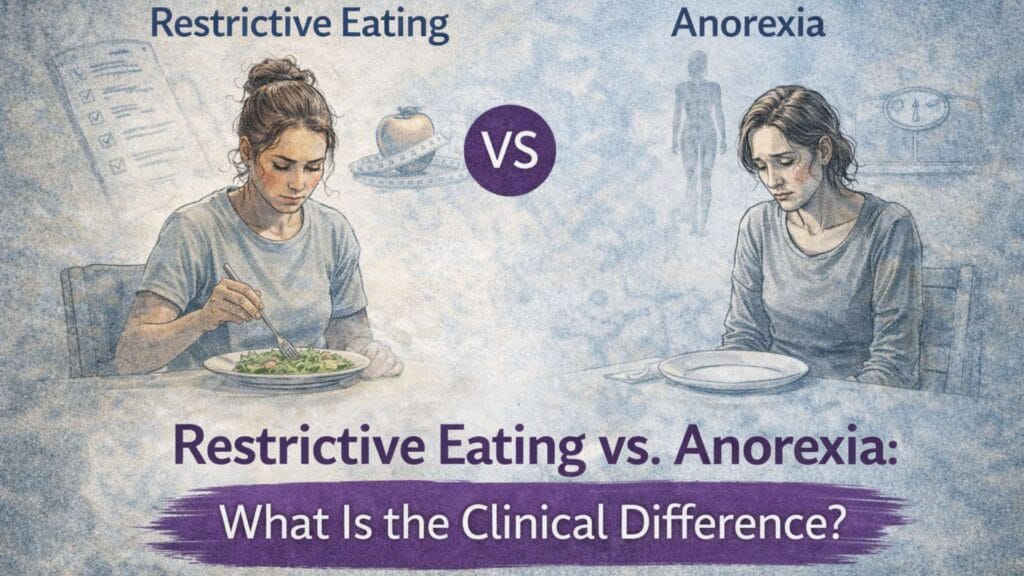
Restrictive eating means limiting food or whole food groups, which can have many causes, while anorexia nervosa is a diagnosable mental illness defined by an intense fear of weight gain and a distorted body image alongside that restriction. The clearest difference is the psychology behind the behavior, not simply how little someone eats.
- Restrictive eating describes a behavior, while anorexia nervosa is a serious psychiatric illness with specific diagnostic criteria.
- The defining feature of anorexia is the underlying fear of weight gain and distorted body image, not only the degree of food restriction.
- Anorexia carries severe medical risks and one of the highest mortality rates of any mental health condition, so it needs specialized treatment.
- Restrictive eating can escalate into an eating disorder over time, which is why early changes are worth paying attention to.
- If restriction is driven by fear, guilt, or body image concerns, it is worth talking with a professional, regardless of body size.
In a culture saturated with diet trends and “clean eating” challenges, it can be difficult to distinguish between a conscious effort to eat healthily and a serious eating disorder. Many people engage in restrictive eating by cutting out certain foods or limiting calories to lose weight. However, when does this behavior cross the line into anorexia nervosa, a life-threatening mental illness? The difference lies not just in the severity of the restriction, but in the underlying psychological drivers: an intense fear of weight gain and a distorted body image. social anxiety’s impact on eating habits can further complicate these dynamics, as individuals may avoid social situations to escape scrutiny over their food choices. This aversion can lead to more drastic measures in their eating behaviors, as the pressure to conform to social norms about body image and health escalates. Ultimately, understanding the interplay between mental health challenges and dietary practices is crucial for promoting healthy relationships with food.
What Is Restrictive Eating?
Restrictive eating refers to any attempt to limit food intake. This can range from casual dieting to more rigid patterns of restriction. It is a behavior, not a formal diagnosis. People may restrict their eating for various reasons, including weight loss or weight management, health concerns or allergies, religious or ethical beliefs, and athletic performance goals.
While not inherently pathological, restrictive eating can become a gateway to a clinical eating disorder. When the focus on restriction becomes obsessive and is driven by a fear of gaining weight, it moves from a simple behavior into the realm of disordered eating.
What Is Anorexia Nervosa?
Anorexia nervosa is a serious, complex eating disorder characterized by self-starvation and an intense fear of gaining weight. It is not simply a diet that has gone “too far”; it is a severe mental health condition with profound physical and psychological consequences. According to the DSM-5, a diagnosis of anorexia nervosa requires three key features:
- Restriction of energy intake relative to requirements, leading to a significantly low body weight.
- Intense fear of gaining weight or becoming fat, or persistent behavior that interferes with weight gain, even though at a significantly low weight.
- Disturbance in the way one’s body weight or shape is experienced, undue influence of body weight on self-evaluation, or a persistent lack of recognition of the seriousness of the current low body weight.
There are two subtypes: the restricting type, where weight loss is achieved primarily through dieting, fasting, or excessive exercise, and the binge-eating/purging type, where individuals also engage in recurrent episodes of binge eating or purging behaviors.
The Key Clinical Difference: Psychology
The fundamental difference between restrictive eating and anorexia nervosa is the psychological motivation behind the behavior. A person engaging in a diet may be unhappy with their weight but typically has a realistic perception of their body size. In contrast, a person with anorexia has a distorted body image and an intense, irrational fear of weight gain that drives their restrictive behaviors, regardless of their actual weight.
| Feature | Restrictive Eating (Dieting) | Anorexia Nervosa |
| Primary Goal | Usually weight loss or health improvement | Attaining an unrealistic and often dangerously low body weight |
| Body Image | Generally realistic, though may involve dissatisfaction | Distorted; sees self as “fat” even when severely underweight |
| Fear of Weight Gain | Varies; may be present but is not all-consuming | Intense and overriding; a central feature of the illness |
| Self-Worth | Typically based on multiple life domains | Heavily or exclusively tied to body weight and shape |
| Flexibility | Can often be flexible for social occasions | Extremely rigid; rules are rarely broken without intense anxiety |
| Health Perspective | Acknowledges the need for adequate nutrition | Denies the seriousness of malnutrition and low body weight |
Why the Distinction Matters
Understanding the difference is crucial because anorexia nervosa requires specialized, intensive treatment. It is not a lifestyle choice or a matter of willpower. The distorted thinking and intense fear associated with anorexia do not resolve on their own and often worsen without intervention. The medical consequences of anorexia are severe and can be fatal, including heart failure, bone density loss, and organ damage (Arcelus et al., 2011).
Furthermore, what may start as simple restrictive eating can escalate into anorexia, especially in individuals with underlying risk factors such as perfectionism, anxiety, or a history of trauma.
When Does Restrictive Eating Become a Problem?
It’s time to be concerned when eating behaviors start to negatively impact your physical or emotional well-being. Warning signs that restrictive eating may be progressing toward an eating disorder include:
- Obsessive thoughts about food, calories, and weight that dominate your day.
- Intense anxiety about eating certain “bad” foods.
- Social withdrawal to avoid situations involving food.
- Feeling compelled to exercise to “earn” your food.
- Feeling guilty or ashamed after eating.
- Physical symptoms like dizziness, fatigue, feeling cold, or hair loss.
If you recognize these signs in yourself or a loved one, it is essential to seek a professional assessment from an eating disorder specialist.
Who Is Most at Risk for Developing Anorexia?
While anorexia nervosa can affect anyone regardless of age, gender, or background, certain risk factors increase vulnerability. Understanding these factors can help identify those who may need early intervention.
- Genetics: Individuals with a first-degree relative who has had an eating disorder are significantly more likely to develop one themselves.
- Perfectionism and anxiety: A perfectionist personality type, combined with high levels of anxiety, is one of the strongest psychological predictors of anorexia.
- Trauma and adverse childhood experiences: Experiences of abuse, neglect, or bullying can contribute to the development of disordered eating as a coping mechanism.
- Cultural and social pressure: Exposure to diet culture, social media, and industries that prize thinness can trigger and reinforce restrictive behaviors.
- Transitions and life stress: Major life changes such as starting college, a breakup, or a loss can trigger the onset of anorexia in vulnerable individuals.
Recognizing these risk factors does not mean that anorexia is inevitable. Early intervention, strong social support, and professional guidance can significantly reduce the risk of a full eating disorder developing.
Getting Help at Eating Disorder Solutions
At Eating Disorder Solutions, we understand that the line between dieting and a serious eating disorder can be blurry. Our expert team is trained to recognize the subtle but critical signs that distinguish restrictive eating from anorexia nervosa. We provide a safe, non-judgmental space for you to explore your relationship with food and your body.
Our treatment approach is comprehensive and individualized, addressing both the physical and psychological aspects of the disorder. Through medical stabilization, nutritional rehabilitation, and evidence-based therapies like CBT and DBT, we help you heal your body and challenge the distorted thoughts that drive the disorder. You don’t have to wait until you are at a crisis point to seek help.
Frequently Asked Questions
Can you have anorexia if you are not underweight?
Yes. This is called Atypical Anorexia Nervosa. A person with atypical anorexia meets all the psychological criteria for anorexia but has a body weight that is within or above the “normal” range, despite significant weight loss. It is just as medically and psychologically serious as anorexia nervosa.
Is it possible to just have a “little bit” of anorexia?
No. Anorexia nervosa is a serious diagnosis. However, you can have subclinical disordered eating behaviors that cause significant distress without meeting the full criteria for anorexia. These conditions, often diagnosed as OSFED, still require professional treatment.
What is the first step to getting help?
The first step is reaching out for an assessment. A confidential conversation with an eating disorder specialist can help you understand your symptoms and determine the appropriate level of care.
How is anorexia different from just being a picky eater?
Picky eating is typically driven by sensory preferences or texture aversions and is not associated with a fear of weight gain or a distorted body image. Anorexia nervosa is driven by intense psychological fear and distorted thinking about weight and shape, and it causes serious physical harm.
If you are concerned that your or a loved one’s restrictive eating has crossed the line into an eating disorder, don’t wait. Contact Eating Disorder Solutions today at 855-245-0961 or visit eatingdisordersolutions.com to learn more about our programs and start the journey to recovery.
References
- National Institute of Mental Health. Eating Disorders. https://www.nimh.nih.gov/health/topics/eating-disorders
- Arcelus J, Mitchell AJ, Wales J, Nielsen S. Mortality rates in patients with anorexia nervosa and other eating disorders: a meta-analysis of 36 studies. Arch Gen Psychiatry. 2011;68(7):724-731. https://doi.org/10.1001/archgenpsychiatry.2011.74
Support and Crisis Resources
If you or someone you love is struggling, support is available. If you are in crisis or need immediate help, call or text 988 to reach the 988 Suicide and Crisis Lifeline, a free, confidential service available 24/7.
Related Reading
- Anorexia and Heart Problems: Understanding the Cardiovascular Risks
- Anorexia & Your Hormones: The Menstrual Cycle Connection
- Is Intermittent Fasting an Eating Disorder?
- Atypical Anorexia Treatment
If you or someone you love is struggling with anorexia, our team can help. Learn more about our anorexia treatment program in Texas.
References
Eating Disorders: What You Need to Know (NIMH) (https://www.nimh.nih.gov/health/publications/eating-disorders)
Eating Disorders (NIMH) (https://www.nimh.nih.gov/health/topics/eating-disorders)