Key Takeaways
Anorexia can affect kidney health through dehydration, electrolyte imbalances, and reduced blood flow to the kidneys. With early medical care and steady nutritional rehabilitation, kidney function often improves, which is why ongoing medical monitoring is an important part of recovery.
- Dehydration and low potassium are among the most common drivers of kidney strain in anorexia.
- Kidney changes are often reversible when caught early, but lasting damage is possible if untreated.
- Regular lab work and medical monitoring help catch renal complications before they progress.
- Care for the kidneys is part of whole-person eating disorder treatment, not a separate fix.
Introduction
Anorexia nervosa is a severe eating disorder characterized by restrictive eating, self-imposed starvation, and an intense fear of gaining weight. While much focus is often placed on the psychiatric disorders and psychological effects of anorexia nervosa, the medical complications of eating disorders, including renal complications, require greater attention due to their severity. Patients with anorexia nervosa tend to have a significantly higher risk of impaired kidney function and kidney damage. The kidneys, essential organs maintaining renal function, filter waste, balance electrolytes such as potassium and sodium, and regulate fluid volume in the body. Dehydration, chronic hypokalemia, and reduced body mass index commonly seen in patients with anorexia nervosa contribute to acute kidney injury and can lead to chronic kidney disease (CKD), renal dysfunction, or even irreversible kidney damage. This article explores the incidence of impaired kidney function among patients hospitalized with anorexia nervosa, the mechanisms of eating disorder kidney damage, and how specialized medical monitoring at Eating Disorder Solutions (EDS) supports holistic treatment and renal health.
Understanding Kidney Function and Its Importance
The role of the kidneys in maintaining health is critical, as they perform the essential task of filtering blood to remove waste products through urine. Kidney function is assessed clinically using several key parameters, including glomerular filtration rate (GFR) and estimated glomerular filtration rate (eGFR), which are formulas to estimate renal function based on serum creatinine levels, age, sex, and body size. Proper renal function prevents the buildup of toxins, regulates blood pressure, supports red blood cell production, and maintains electrolyte balance, particularly potassium, sodium, and chloride. In patients with an eating disorder such as anorexia nervosa, malnutrition on the kidney, dehydration due to chronic volume depletion, and electrolyte abnormalities are common medical complications that severely impair renal function. This renal dysfunction in patients manifests as decreased GFR, elevated serum creatinine, and abnormalities in urine composition. Without adequate kidney function, patients with anorexia nervosa and other eating disorders face serious health consequences including acute renal failure, chronic renal failure, and potentially end-stage kidney disease.
How Anorexia Nervosa Leads to Kidney Damage
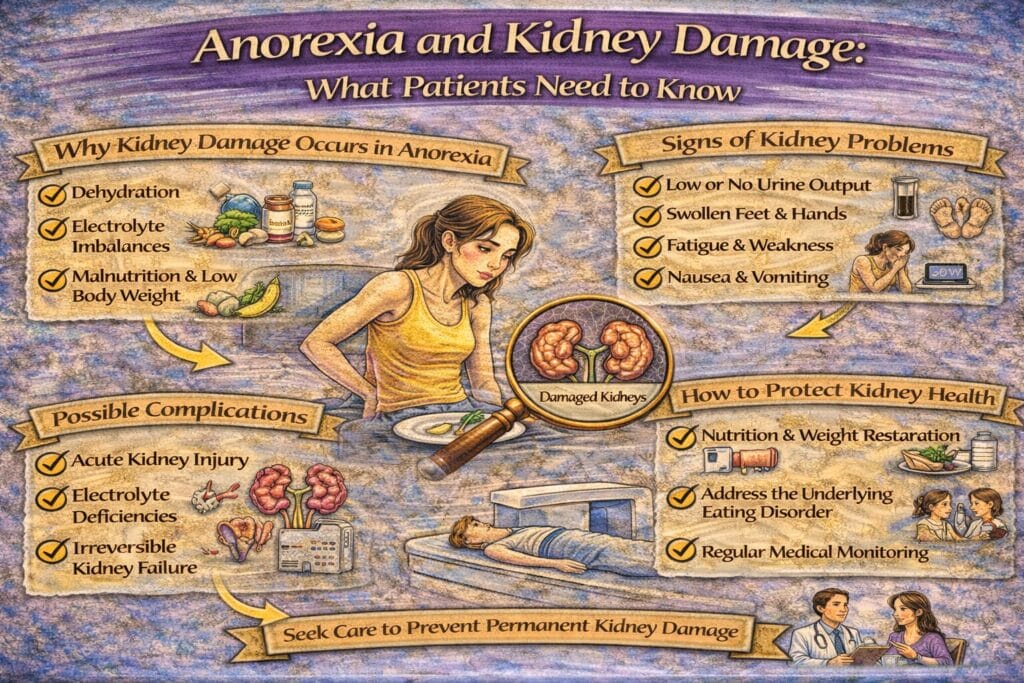
Kidney damage in anorexia nervosa occurs through multiple interconnected pathways, primarily involving dehydration and significant electrolyte abnormalities. Patients with anorexia nervosa often experience chronic volume depletion caused by restrictive eating, vomiting, and misuse of diuretics or laxatives. This volume depletion impairs renal perfusion and can cause acute kidney injury (AKI), which is consistent with ischemic kidney injury. Acute renal failure episodes may be reversible if treated early, but recurrent AKI contributes to chronic renal impairment and the development of chronic kidney disease (CKD). Electrolyte abnormalities such as chronic hypokalemia – a persistent low potassium state – disrupt renal tubular function, leading to hypokalemic nephropathy and increased risk of kidney stones and further renal dysfunction. Additionally, patients with anorexia and bulimia nervosa who engage in frequent vomiting or diuretic abuse have exacerbated electrolyte abnormalities and dehydration, increasing the incidence of impaired kidney function. Over time, these insults create severe damage to the kidneys, potentially progressing to end-stage kidney disease if left unmanaged. A clinical review of renal complications in anorexia nervosa describes how dehydration, chronic electrolyte disturbances such as low potassium, and reduced kidney perfusion can impair renal function over time (Stheneur et al., 2014).
Electrolyte Effects on Kidneys in Eating Disorders
Electrolyte abnormalities and kidney health are tightly interlinked in patients with eating disorders, particularly those with anorexia nervosa. Potassium is critical for renal tubular function, and chronic hypokalemia is a prominent abnormality seen in these patients. Prolonged hypokalemia causes hypokalemic nephropathy, a renal condition characterized by renal tubular cell injury, leading to chronic renal failure and progressive renal impairment. Electrolyte imbalances, including low serum sodium and chloride, further impact acid-base balance, worsening kidney dysfunction. The diagnosis of anorexia nervosa can be complicated by low muscle mass and reduced serum creatinine level, which obscure kidney function assessment because serum creatinine is a key biomarker for renal function. Nephrologists carefully use estimated glomerular filtration rate (eGFR) and other formula to estimate renal function to detect early renal dysfunction in patients with eating disorders. Early correction of electrolyte abnormalities and compliance with medical monitoring are vital in preventing severe and irreversible kidney disease.
Risk Factors for Renal Dysfunction in Patients with Eating Disorders
Numerous risk factors contribute to the incidence of impaired kidney function among patients hospitalized with anorexia nervosa and other eating disorders. Prolonged duration of malnutrition, especially in restrictive anorexia nervosa, reduces lean tissue and muscle mass, leading to decreased serum creatinine levels that mask underlying renal impairment. Chronic volume depletion from recurrent dehydration episodes, purging behaviors such as vomiting, misuse of diuretics, and laxative abuse place continual strain on renal function. Comorbid conditions frequently seen in patients with eating disorders, such as hypertension, further exacerbate renal disease. Patients with bulimia nervosa who frequently vomit or abuse laxatives bear a similarly significant risk for renal dysfunction. Repeated episodes of acute kidney injury due to volume depletion and electrolyte abnormalities may transition into chronic kidney disease (CKD) and end-stage renal disease (ESRD). Collectively, these risk factors contribute to a significantly higher prevalence of kidney dysfunction in this population, necessitating vigilant medical monitoring and multidisciplinary intervention.
Signs and Symptoms of Eating Disorder Kidney Damage
In patients with anorexia nervosa and other eating disorders, kidney damage may initially present without symptoms, making early detection challenging. As renal impairment progresses, patients may experience fatigue, peripheral edema (swelling), altered urine output including oliguria or polyuria, and muscle weakness due to electrolyte abnormalities such as hypokalemia. Cardiac arrhythmias related to electrolyte disturbances further complicate the clinical picture. Laboratory evaluation often reveals elevated serum creatinine levels, decreased estimated glomerular filtration rate (eGFR), and marked electrolyte abnormalities. Acid-base imbalance is also commonly observed. Kidney stones may develop due to chronic dehydration and metabolic derangements, causing flank pain and hematuria (blood in the urine). These signs signal the onset of acute renal failure or chronic kidney disease, highlighting the importance of routine laboratory monitoring and a thorough clinical assessment in patients with an eating disorder to prevent irreversible renal dysfunction.
The Role of Medical Monitoring at Eating Disorder Solutions (EDS)
Eating Disorder Solutions (EDS), an adult eating disorder treatment center in Texas, prioritizes the management of medical complications of eating disorders, including anorexia renal complications, alongside psychological treatment. Medical monitoring at EDS involves regular and comprehensive evaluation of kidney function through serum creatinine testing, calculations of estimated glomerular filtration rate (eGFR) and glomerular filtration rate (GFR), electrolyte panels focusing on potassium and sodium, and urine analysis. Prompt recognition of renal dysfunction in patients with anorexia nervosa enables the multidisciplinary care team, including nephrologists, medical doctors, nutritionists, and therapists, to develop individualized treatment plans. Core interventions include rehydration therapy to correct chronic volume depletion, electrolyte replacement to address abnormalities such as hypokalemia, and safe, medically supervised nutritional rehabilitation to restore nutritional status and muscle mass. This approach aims to prevent progression from acute kidney injury to chronic kidney disease and reduce the risk of end-stage kidney disease. Patient education on the importance of kidney health and adherence to treatment is a critical component of preventing long-term renal impairment.
Chronic Kidney Disease and Long-Term Complications in Anorexia
When renal dysfunction due to anorexia nervosa and associated eating disorders is left unaddressed, patients face an increased risk of progression from acute kidney injury to chronic kidney disease (CKD). CKD is characterized by a sustained reduction in glomerular filtration rate (GFR) and estimated GFR (eGFR) over months to years, signaling permanent renal impairment. This chronic renal failure often advances to end-stage kidney disease (ESKD) or end-stage renal disease (ESRD), conditions requiring kidney replacement therapy such as dialysis or kidney transplant for survival. Such severe and irreversible kidney disease significantly impacts quality of life and complicates the management of other medical conditions. The prevalence of kidney dysfunction in patients with anorexia nervosa underlines the importance of early intervention and regular nephrology care to mitigate severity of renal impairment and reduce the incidence of impaired kidney function in this vulnerable population.
Preventing and Managing Renal Complications in Eating Disorders
Preventing kidney damage in patients with eating disorders hinges on early diagnosis of anorexia nervosa consistent with criteria from the Diagnostic and Statistical Manual of Mental Disorders, comprehensive treatment, and proactive medical monitoring. Nutritional rehabilitation restores adequate hydration, corrects electrolyte abnormalities such as hypokalemia, and helps increase serum creatinine through improved muscle mass. Avoidance of purging behaviors including vomiting, laxative misuse, and diuretic abuse protects against additional renal impairment. Regular laboratory testing of serum creatinine, estimated glomerular filtration rate (eGFR), electrolytes, and urine analysis enables early identification of renal dysfunction. Multidisciplinary collaboration among nephrologists, mental health providers, and dietitians ensures a holistic approach to care. Patients who receive early and ongoing treatment have a greater chance of reversing renal impairment and reducing the risk of severe damage, chronic renal failure, or the need for renal replacement therapy.
Conclusion
A comprehensive understanding of anorexia nervosa and kidney damage is essential for adults recovering from eating disorders to protect renal health. Anorexia nervosa subjects the kidneys to significant medical stress through dehydration, electrolyte imbalances, especially chronic hypokalemia, and malnutrition, all contributing to renal dysfunction and potential kidney failure. Without timely medical intervention, patients risk acute renal failure, chronic kidney disease (CKD), and progression to end-stage renal disease requiring dialysis or kidney transplantation. However, with dedicated medical monitoring and specialized care, such as that provided at Eating Disorder Solutions in Texas, renal complications can be detected early and managed effectively. If you or a loved one suffers from an eating disorder, know that support is available. Medical professionals experienced in both psychiatric and physiological aspects of anorexia nervosa are ready to help protect your mental and physical health, including critical kidney function.
| Renal Condition | Cause in Eating Disorders | Potential Outcomes |
| Acute Kidney Injury (AKI) | Dehydration and low blood volume | Reversible if treated early; can progress to CKD if untreated |
| Chronic Kidney Disease (CKD) | Recurrent AKI, electrolyte imbalance, malnutrition | Permanent kidney damage, decreased GFR, risk of end-stage kidney disease |
| End-Stage Kidney Disease (ESKD) | Progression of CKD, untreated renal failure | Dialysis or kidney transplant required for survival |
Frequently Asked Questions
Why does anorexia cause kidney failure?
Anorexia causes kidney failure primarily through severe dehydration and electrolyte imbalances. When the body is starved of fluids and nutrients, the kidneys receive less blood flow, leading to acute kidney injury. Repeated episodes of dehydration and low potassium levels (hypokalemia) can cause lasting damage, resulting in chronic kidney disease or even end-stage kidney disease if not properly treated.
Will anorexia and kidney damage go away?
Kidney damage caused by anorexia may improve with early and comprehensive treatment including nutritional rehabilitation, rehydration, and correction of electrolyte imbalances. However, if kidney damage progresses to chronic kidney disease, it can be permanent. Early medical monitoring and intervention at specialized centers like EDS improve the chances of reversing renal impairment.
References
- Stheneur C, Bergeron S, Lapeyraque AL. Renal complications in anorexia nervosa. Eat Weight Disord. 2014;19(4):455-460. https://doi.org/10.1007/s40519-014-0138-z
- Stheneur C, Bergeron SJ, Frappier JY, et al. Renal injury in pediatric anorexia nervosa: a retrospective study. Eat Weight Disord. 2017;24(2):323-327. https://doi.org/10.1007/s40519-017-0401-1
- Puckett L. Renal and electrolyte complications in eating disorders: a comprehensive review. J Eat Disord. 2023;11(1):26. https://doi.org/10.1186/s40337-023-00751-w
Support and Crisis Resources
If you or someone you care about is struggling with an eating disorder, support is available:
If you or someone you love is struggling, support is available. The National Institute of Mental Health offers free, research-based information about eating disorders at nimh.nih.gov. If you are in crisis or need immediate help, call or text 988 to reach the 988 Suicide and Crisis Lifeline, a free, confidential service available 24/7.
Related Reading
- Anorexia and Osteoporosis: What You Need to Know
- Do You Need More Calories to Recover From Anorexia?
- What to Expect from Anorexia Treatment: A Practical Guide for Patients and Families
- Diabulimia – What You Need To Know