Key Takeaways
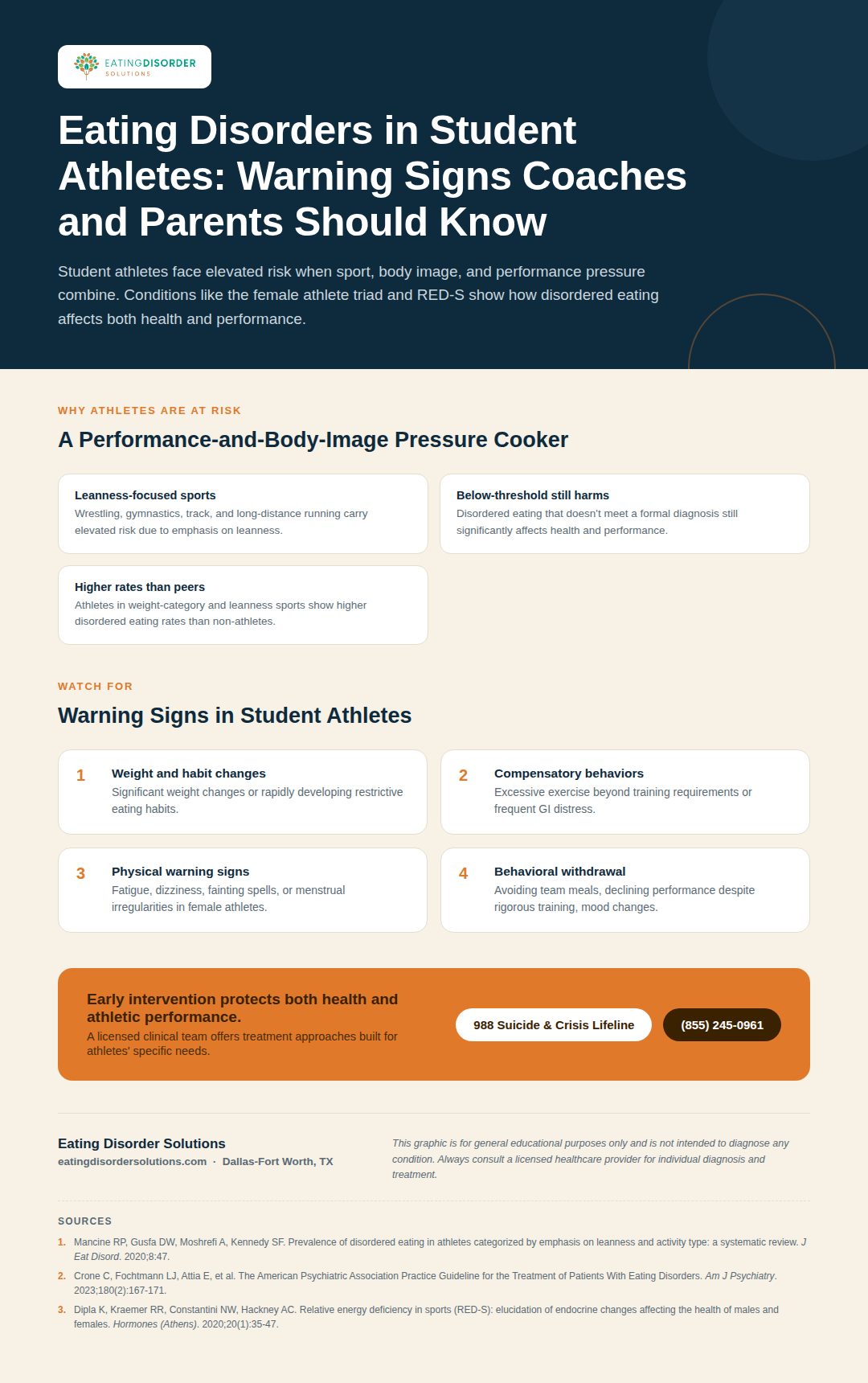
Student athletes face a higher risk for eating disorders because sport, body image, and performance pressure can combine in stressful ways. Conditions like the female athlete triad and Relative Energy Deficiency in Sport (RED-S) show how disordered eating affects health and performance in both women and men. Early support and specialized treatment help athletes recover.
- College and student athletes, especially in lean or weight-focused sports, are at elevated risk for disordered eating.
- Warning signs can be physical, emotional, and behavioral, and are sometimes hidden by training culture.
- The female athlete triad and RED-S link low energy availability to bone, hormonal, and performance problems across genders.
- Coaches, parents, and medical staff are key to early detection and support.
- Treatment combines medical care, nutrition, and mental health support tailored to athletes.
Introduction
Eating disorders student athletes face represent a serious yet often overlooked challenge within collegiate sports. Many athletes struggle with disordered eating and eating behaviors disrupted by the intense pressure to perform at elite levels, maintain academic standards, and balance social life. The prevalence of eating disorders among college athletes goes beyond just female athlete populations, as male athlete eating disorders are increasingly recognized among male collegiate athletes, although often underreported. This article from Eating Disorder Solutions (EDS), an adult eating disorder treatment center in Texas, aims to bring attention to the complex rates of eating disorders and disordered eating among student athletes, outlining critical warning signs and effective eating disorder treatment programs tailored to address the unique needs of athletes participating in various sports and facing diverse challenges related to mental health and eating behavior.
Understanding Eating Disorders Among Student Athletes
Eating disorders encompass a broad range of clinical eating disorders and disordered eating behaviors characterized by abnormal or unhealthy eating habits, including anorexia nervosa, bulimia nervosa, binge eating disorder, and other problematic eating patterns. Among college athletes and elite athletes alike, disordered eating often develops due to the pressure to meet sport-specific body standards, perform well in competition, or maintain an ideal competitive weight, demonstrating the prevalence of disordered eating and eating disorders in athletes who participate in lean sports as well as non-lean sports. Beyond traditional eating disorders, athletes are at risk for syndromes like Relative Energy Deficiency in Sport (RED-S), which arise from insufficient caloric intake relative to energy expenditure, resulting in severe physiological dysfunction. Among female athletes, particularly female collegiate athletes, the female athlete triad combines disordered eating, menstrual disturbances, and low bone mineral density, a triad well documented in psychosocial correlates of disordered eating and clinical eating disorders among collegiate female athletes. However, disordered eating among male athletes, often masked by different eating attitudes such as restrictive eating or disordered eating and pathogenic weight control motivated by muscle dysmorphia, is an increasingly concerning issue among male collegiate athletes. Athletes with eating disorders frequently conceal eating disorder symptoms due to stigma or fear of losing their position on the team, making early detection by coaches, parents, and medical staff essential in managing disordered eating in athletes.
| Eating Disorder Type | Common Among | Key Symptoms |
| Anorexia Nervosa | Female and Male Collegiate Athletes | Severe food restriction, weight loss, fear of gaining weight |
| Bulimia Nervosa | Female Athlete Triad Participants | Binge eating followed by purging or compensatory behaviors |
| Binge Eating Disorder | Male and Female Student Athletes | Episodes of uncontrollable overeating without purging |
| RED-S (Relative Energy Deficiency in Sport) | Elite and Collegiate Athletes | Low energy availability, impaired physiological function |
| Female Athlete Triad | Female Athletes in Sports Emphasizing Leanness | Disordered eating, menstrual irregularities, bone loss |
Prevalence of Eating Disorders Among College Athletes
Numerous studies highlight that rates of eating disorders among college athletes surpass those of athletes and nonathletes in the general population. A systematic review found that athletes, especially those in sports that emphasize leanness or weight categories, show higher rates of disordered eating than non-athletes (Mancine and colleagues, 2020). Further evidence notes that many athletes exhibit unhealthy eating behaviors and disordered eating, which do not always meet the threshold for formal eating disorder diagnosis but significantly affect health and sport performance. Sports and eating disorders research consistently finds that athletes participating in lean sports such as wrestling, gymnastics, track and field, and long-distance running are at elevated risk due to the emphasis on leanness, weight categories, and appearance. The culture among athletes in lean sports often promotes restrictive eating and disordered eating behaviors, exacerbating the prevalence of disordered eating among athletes and heightening vulnerability to clinical eating disorders and mood disorders.
Warning Signs of Eating Disorders in Student Athletes
Identifying eating disorder symptoms and disordered eating behaviors in student athletes is key to providing timely support and treatment. Warning signs to watch for include significant weight changes, rapidly developing unhealthy eating habits or restrictive eating, and a preoccupation with food, weight, or body image. Many athletes experience episodes of disordered eating and compensatory behaviors such as excessive exercise beyond training requirements or frequent gastrointestinal distress. Other signs include fatigue, dizziness, fainting spells, mood swings, irritability, or depression, all psychosocial correlates of disordered eating among athletes. Among female athletes, menstrual irregularities remain a significant indicator, especially regarding the female athlete triad. Additionally, avoidance of team meals or social situations involving food, decline in athletic performance despite rigorous training schedules, and negative eating attitudes are common. Since athletes and eating behaviors are often concealed due to fear of judgment or removal from the sport, it is critical for coaches, parents, and sports health professionals to foster open communication and prioritize mental health awareness among collegiate athletes.
Specific Considerations: Female Athlete Triad and Male Athlete Eating Disorders
The female athlete triad remains a key concern among female collegiate athletes, especially those in sports emphasizing leanness and low body weight. This complex interplay of disordered eating, amenorrhea (absence of menstruation), and osteoporosis (bone loss) reflects severe disordered eating and pathogenic weight control driven by sport performance pressures. Left untreated, the triad can cause long-term health complications including infertility, fractures, and chronic pain, outcomes strongly linked with the prevalence of disordered eating and eating disorders among young elite athletes and collegiate female athletes. Meanwhile, eating disorders among male athletes often present differently; rather than predominantly focusing on weight loss, male athletes may suffer from muscle dysmorphia and exhibit disordered eating and pathogenic weight control via binge eating, purging, or misuse of supplements and steroids. Disordered eating among male athletes is less frequently discussed, although research confirms that many male collegiate athletes suffer from these eating disorder behaviors. Recognizing these gender-specific differences in eating disorder development is vital for effective diagnosis and individualized eating disorder treatment, especially given the stigma and underreporting that can limit male athlete assessment and intervention.
Impact of Student Athlete Mental Health on Eating Behavior
Mental health plays a crucial role in the development and persistence of eating disorders and disordered eating among student athletes. The combined pressure to excel academically and athletically can exacerbate anxiety, depression, and stress, common mood disorders that often trigger or worsen unhealthy eating patterns and eating disorder behaviors. The culture in many collegiate athletic programs may unintentionally encourage problematic eating and exercise behaviors by glorifying extreme dieting or linking sport performance directly to body weight and appearance, increasing the risk for disordered eating and eating disorders and disordered eating cycles. Effective treatment requires addressing athlete mental health and eating behaviors holistically. At EDS, the eating disorder treatment approach integrates mental health therapy, nutritional rehabilitation focused on healthy eating habits, and sports psychology tailored to managing disordered eating assessment for college student-athletes. Understanding psychosocial correlates and offering support for athletes struggling to balance mental health and sport demands is essential in helping athletes recover and maintain wellness.
Effective Treatment Approaches at Eating Disorder Solutions (EDS)
EDS specializes in adult eating disorder treatment and offers specialized, evidence-based care plans designed for student athletes with clinical eating disorders and disordered eating behaviors. Our multidisciplinary team includes registered dietitians, therapists trained in cognitive-behavioral therapy (CBT), and medical professionals who understand the unique combination of physical, psychological, and sport-specific demands athletes face. Treatment at EDS emphasizes safe nutritional rehabilitation that restores healthy eating habits and eating patterns while respecting athletic goals and minimizing interference with sport performance. Concurrent therapy addresses student athlete mental health, helps reduce performance pressure, and equips athletes with coping mechanisms to manage disordered eating and prevent relapse. Family and support system involvement is essential, with education for coaches and parents to better understand eating disorders among collegiate athletes and create an environment conducive to recovery. EDS also conducts thorough screenings for conditions such as RED-S and the female athlete triad, ensuring a comprehensive medical evaluation that encompasses the spectrum of eating disorder risk and behaviors among athletes. By encouraging open dialogue and trust, EDS helps overcome the challenge that many athletes experience in hiding eating disorder symptoms.
Supporting Student Athletes: Roles of Coaches and Parents
Coaches and parents are vital components of any student athlete’s support system and play crucial roles in recognizing and responding to eating disorder risk and disordered eating among young athletes. Education on warning signs and understanding the prevalence of disordered eating behaviors, the female athlete triad, and general eating disorder symptoms among college athletes can empower these key influencers to act appropriately. Coaches should promote a team culture that values health and healthy eating attitudes over weight, body aesthetics, or performance results, encouraging athletes to seek help without fear of judgment or stigma. Parents foster openness by actively listening and connecting student athletes to professional eating disorder treatment resources when needed. Both groups should be aware of how mental health can influence eating behavior and aid in destigmatizing conversations about eating disorders and mental health within collegiate sports. Working with athletes in lean and non-lean sports to develop healthy eating behaviors and positive support networks helps prevent the development of eating disorder behaviors and supports ongoing recovery.
Conclusion
Eating disorders student athletes experience present complex challenges impacting physical health, mental well-being, and sport performance. Awareness and understanding of warning signs and eating disorder behaviors including disordered eating, binge eating, the female athlete triad, and RED-S syndrome are essential for early identification and effective intervention. Eating Disorder Solutions (EDS) offers comprehensive, adult-focused eating disorder treatment programs tailored specifically for student athletes, combining expert care with an understanding of the unique pressures athletes face in sports and academics. Based in Texas, EDS supports athletes on their recovery journey with a holistic approach addressing both mental health and physical restoration. If you or a loved one is struggling with eating disorders in college athletes, professional help is available and can make a meaningful difference.
Frequently Asked Questions
What are common eating disorders found in student athletes?
Common eating disorders among student athletes include anorexia nervosa, bulimia nervosa, binge eating disorder, and other disordered eating behaviors such as restrictive eating and pathogenic weight control.
What is the female athlete triad and why is it important?
The female athlete triad refers to the interrelated conditions of disordered eating, menstrual disturbances, and low bone mineral density, which can have serious long-term effects on female athletes’ health and performance.
Why are male athletes also at risk for eating disorders?
Male athletes may develop eating disorders due to pressures related to muscle dysmorphia, restrictive eating habits, and the desire to maintain an ideal competitive physique; however, these issues are often underreported.
How can coaches and medical staff help in early detection of eating disorders in student athletes?
Coaches and medical staff can recognize warning signs such as drastic weight changes, excessive exercise, mood changes, and avoidance of meals, while fostering an open environment that reduces stigma and encourages athletes to seek help.
What is Relative Energy Deficiency in Sport (RED-S)?
RED-S is a condition caused by insufficient caloric intake relative to energy expenditure, leading to physiological dysfunctions that affect metabolism, menstrual function, bone health, immunity, and cardiovascular health.
How does mental health factor into eating disorders in student athletes?
Mental health challenges, including stress from balancing academics, athletics, and social pressures, can contribute to the development and exacerbation of eating disorders among student athletes.
What treatment options are available for student athletes with eating disorders?
Effective treatment options may include specialized eating disorder programs tailored for athletes, incorporating medical, nutritional, and psychological support to address both physical and mental health needs.
References
- Mancine RP, Gusfa DW, Moshrefi A, Kennedy SF. Prevalence of disordered eating in athletes categorized by emphasis on leanness and activity type: a systematic review. J Eat Disord. 2020;8:47. https://doi.org/10.1186/s40337-020-00323-2
- Crone C, Fochtmann LJ, Attia E, et al. The American Psychiatric Association Practice Guideline for the Treatment of Patients With Eating Disorders. Am J Psychiatry. 2023;180(2):167-171. https://doi.org/10.1176/appi.ajp.23180001
- Dipla K, Kraemer RR, Constantini NW, Hackney AC. Relative energy deficiency in sports (RED-S): elucidation of endocrine changes affecting the health of males and females. Hormones (Athens). 2020;20(1):35-47. https://doi.org/10.1007/s42000-020-00214-w
Support and Crisis Resources
If you or someone you care about is struggling with an eating disorder, support is available:
If you or someone you love is struggling, support is available. The National Institute of Mental Health offers free, research-based information about eating disorders at nimh.nih.gov. If you are in crisis or need immediate help, call or text 988 to reach the 988 Suicide and Crisis Lifeline, a free, confidential service available 24/7.
Related Reading
- Eating Disorders in Women Over 40: Signs, Treatment & Support
- How to Recognize the Hidden Signs of Eating Disorders in Athletes
- How to Use FMLA for Eating Disorder Treatment at Eating Disorder Solutions (EDS)
- Eating Disorders and Sleep Disorders: The Bidirectional Relationship
- Eating Disorders in Gymnasts: Why the Sport Creates Risk