Key Takeaways
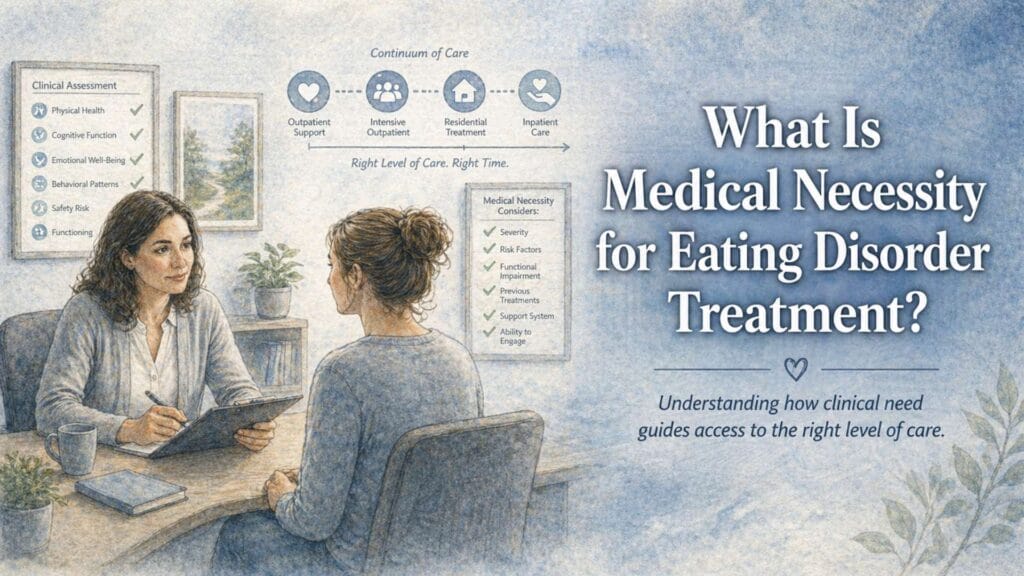
Medical necessity means a treatment is clinically appropriate and required to address your health, based on accepted standards of care rather than preference or convenience. For eating disorders, clinicians assess medical stability, psychiatric risk, and how much structure and support recovery requires to recommend the right level of care, which insurers then use to authorize coverage.
- Medical necessity is determined by clinical criteria and recognized guidelines, not by preference alone.
- Care teams weigh medical stability, nutritional status, psychiatric risk, and the level of support a person needs.
- Guidelines from organizations such as the APA and ASAM help structure these decisions.
- Higher levels of care, such as hospitalization, are reserved for situations involving medical or psychiatric risk.
- Clear documentation of medical necessity supports insurance authorization for treatment.
Introduction
Eating disorders are serious mental disorders that significantly impact both the physical and mental health of people with eating disorders, affecting their quality of life in profound ways. Adults with conditions such as anorexia nervosa, bulimia nervosa, binge eating disorder, and other disturbances in eating, including binge-eating disorder and night eating syndrome, require specialized eating disorder treatment programs designed to address complex biological, psychological, and behavioral components. Eating Disorder Solutions (EDS), a medical center located in Texas, offers comprehensive care for eating disorders with individualized treatment plans that target the full spectrum of symptoms, from impaired body image and low body weight to binge eating and purging behaviors. Essential to accessing these treatment options is meeting medical necessity criteria for eating disorder treatment, which insurance providers often require as documentation before approving coverage for outpatient, partial hospitalization program, residential treatment, or inpatient levels of care. This article explains the meaning of medical necessity in the context of eating disorder treatment, highlights important medical and psychiatric criteria outlined by the American Society of Addiction Medicine (ASAM) and American Psychiatric Association (APA), and provides insight on when hospitalization or a higher level of care for patients with eating disorders is warranted to support effective eating disorder recovery.
Understanding Medical Necessity in Eating Disorder Treatment
Medical necessity in eating disorder treatment is the clinical justification required for delivering certain specialized healthcare services, treatments, or inpatient care based on individual patient data and their specific physical and mental health needs. For adults living with eating disorders, medical necessity means that a treatment program or higher level of care is essential to safely and effectively address the medical complications and psychiatric disorders arising from disordered eating behaviors such as restricting, binge eating and purging, or avoidant restrictive food intake disorder. Insurers rely on documentation that patients meet defined medical necessity criteria eating disorder treatment to approve coverage for services including outpatient eating disorder treatment programs, partial hospitalization program, residential treatment, or inpatient hospitalization. These criteria integrate evidence-based standards from nationally recognized organizations such as ASAM and the APA, which emphasize careful evaluation of vital signs, electrolyte imbalances, body weight status, and co-occurring psychiatric disorders relevant to eating disorder psychopathology. Defining medical necessity in this context ensures patients with eating disorders receive treatment that matches the severity of their condition, helping to avoid both under-treatment and unnecessary hospitalization, while promoting active treatment and improved eating disorder recovery.
Medical Necessity Criteria for Eating Disorder Treatment
The medical necessity criteria eating disorder treatment evaluate multiple critical dimensions encompassing physical and psychological health indicators, behavioral risks, and functional impairment seen in people with eating disorders. Key criteria covered in these assessments include:
1. Physical Health Indicators: This involves monitoring vital signs such as dangerously low body weight, abnormal heart rates like bradycardia (heart rate below 50 bpm), hypotension (blood pressure under 90/60 mm Hg), electrolyte imbalances such as potassium deficiencies that increase risk for cardiac arrhythmias, and other lab abnormalities that indicate medical complications requiring medical stabilization. These parameters are essential for determining the need for inpatient treatment or residential treatment rather than outpatient care.
2. Eating Disorder Behaviors: Persistent patterns of restrictive eating, binge eating, purging, or night eating syndrome that contribute to or exacerbate medical or psychiatric instability can justify a higher level of care. Medical complications such as dehydration, organ impairment, or recurrent syncope are key red flags.
3. Psychiatric and Psychological Factors: Severe disturbances in body image, presence of co-occurring mental disorders like anxiety or depression, suicidality, and significant eating disorder psychopathology require integrated family therapy or family psychotherapy alongside psychiatric care.
4. Functioning and Daily Life Impact: Patients whose eating behaviors impair nutrition intake, social functioning, or safety may require structured partial hospitalization program or inpatient treatment to facilitate medical management and relapse prevention.
Eating Disorder Solutions carefully applies these medical necessity eating disorder treatment criteria alongside the diagnostic eating disorder examination and patient data to determine the appropriate type of treatment program, ranging from outpatient treatment to inpatient eating disorder care, and support long-term outcomes focused on recovery is possible.
When to Hospitalize for Eating Disorder Treatment
The decision to hospitalize patients with eating disorders follows established eating disorder hospitalization criteria centered on protecting individuals from life-threatening medical and psychiatric complications. Hospitalization is typically reserved for those with severe medical instability or acute psychiatric risk requiring 24/7 medical supervision and medical stabilization.
Key medical necessity indicators for inpatient hospitalization include:
– Vital signs outside safe ranges such as heart rate persistently below 40–50 bpm, blood pressure less than 90/60 mm Hg, or core body temperature under 96.8°F (36°C).
– Significant or rapid weight loss signaling need for intensive nutritional rehabilitation.
– Severe electrolyte imbalance including low sodium or potassium that impact cardiac function and require inpatient medical management.
– Inability to maintain adequate hydration or nutrition orally, leading to malnutrition or dehydration that cannot be adequately addressed in outpatient or partial hospitalization program settings.
– Acute psychiatric risks including suicidal ideation, severe depression, uncontrollable binge eating and purging, or co-occurring psychiatric disorders.
Inpatient eating disorder treatment programs provide intensive therapies, including nutrition counseling by dietitians, active relapse prevention planning, family therapy, psychiatric assessment, and constant medical monitoring. Partial hospitalization programs offer a higher level of care than outpatient treatment but with daytime-only structure, suitable for patients who remain medically stable yet require comprehensive eating disorder care for continued recovery. EDS specializes in evaluating these clinical parameters to ensure patients enter the appropriate treatment setting, enhancing the treatment process and supporting effective long-term eating disorder recovery.
ASAM and APA Guidelines for Eating Disorder Care
National clinical guidance, including the American Psychiatric Association practice guideline, frames level-of-care decisions around medical stability, psychiatric risk, and the support a person needs to recover safely (Crone et al., 2023).
The American Society of Addiction Medicine (ASAM) and the American Psychiatric Association (APA) provide nationally recognized frameworks that guide the assessment and management of eating disorders in adults, helping clinicians determine the appropriate level of care and treatment program for people with eating disorders.
– ASAM Criteria: These multidimensional guidelines evaluate six core dimensions: withdrawal potential, biomedical conditions or complications (including electrolyte imbalance and low body weight), emotional and behavioral conditions including eating disorder psychopathology, readiness to change, risk of relapse or continuation of disordered eating behaviors, and the recovery environment including family support. Through these factors, providers identify when outpatient, intensive outpatient, partial hospitalization, residential treatment, or inpatient care is necessary.
– APA Practice Guidelines: APA emphasizes a comprehensive evaluation of physical complications (e.g., electrolyte disturbances, low body weight), the severity of eating disorder psychopathology, psychiatric comorbidities, and the patient’s ability to participate in treatment. Optimal care involves multidisciplinary teams, including psychiatrists, primary care providers, dietitians, therapists, and family members, to develop individualized treatment plans targeting both medical stabilization and behavioral change.
Together, the ASAM and APA guidelines help ensure that treatment for eating disorders is tailored, evidence-based, and responsive to the unique needs of adults with anorexia nervosa, bulimia nervosa, binge eating disorder, and other eating disorders, improving outcomes and supporting sustained recovery.
EDS Admission Criteria and What Sets Us Apart
At Eating Disorder Solutions, our admission criteria for eating disorder treatment programs center on evidence-based markers of medical necessity to ensure every patient receives the right level of care for their unique clinical presentation. Our thorough eating disorder examination covers:
– Medical stability including vital signs and lab work to assess risks such as electrolyte imbalance and low body weight.
– Frequency and severity of eating disorder behaviors including binge eating, purging, restricting, and night eating syndrome that impact physical and mental health.
– Psychological evaluation of eating disorder psychopathology and co-occurring psychiatric disorders that require integrated therapeutic approaches such as family therapy and family psychotherapy.
– Impact of disordered eating on daily functioning and nutrition, influencing placement decisions among outpatient, partial hospitalization program, residential treatment, and inpatient treatment.
Our multidisciplinary team, including specialized dietitians, psychiatrists, therapists, and nutrition counselors, develops individualized treatment plans emphasizing medical stabilization, relapse prevention, and holistic recovery is possible approaches. EDS offers a continuum of care in Texas that allows smooth transitions between different treatment settings based on patient progress and changing clinical needs, providing comprehensive eating disorder treatment tailored to adults with anorexia nervosa, bulimia nervosa, binge eating disorder, and other types of eating disorders. Importantly, EDS supports insurance documentation requirements for medical necessity to facilitate timely access to evidence-based care for eating disorders.
| Level of Care | Medical Necessity Indicators | Typical Treatment Components |
| Outpatient Eating Disorder Treatment Program | Stable vital signs, mild to moderate eating disorder symptoms, good family support | Individual therapy, dietitian consultations, outpatient psychiatric care |
| Partial Hospitalization Program (PHP) | Moderate symptoms, inability to maintain weight, some medical or psychiatric risks | Structured daily therapies, nutritional rehabilitation, medical monitoring, family therapy |
| Residential Treatment | Persistent medical and psychological symptoms, moderate medical instability | 24/7 care, multidisciplinary therapies, nutritional and medical support |
| Inpatient Hospitalization | Severe medical instability (vital signs out of range), acute medical complications, high psychiatric risk | Intensive medical stabilization, constant monitoring, emergency interventions |
Navigating Insurance and Accessing Care for Eating Disorders
Understanding medical necessity eating disorder treatment is essential for patients and families when navigating the complex insurance processes often involved in accessing higher levels of care such as inpatient treatment or residential treatment. Insurance providers require clear documentation demonstrating that the patient’s condition meets strict medical necessity criteria eating disorder treatment, including evidence of medical complications, co-occurring psychiatric disorders, and failure of less intensive treatment options. EDS works closely with insurers to submit detailed treatment plans, diagnostic information from eating disorder examinations, and clinical data supporting the need for specific treatment programs, whether outpatient, partial hospitalization program, residential, or inpatient eating disorder care.
Being informed about eating disorder hospitalization criteria, the role of multidisciplinary teams, and local insurance policies empowers adults with eating disorders and their families to advocate effectively for the comprehensive eating disorder care they require. Resources such as national eating disorder advocacy organizations provide valuable education on insurance rights, treatment options, and support navigating these systems. Understanding this process facilitates smoother transitions between levels of care and supports ongoing eating disorder recovery and relapse prevention.
Conclusion
Medical necessity eating disorder treatment is a foundational concept that ensures people with eating disorders receive the right treatment at the appropriate level of care. By comprehending the ASAM and APA medical necessity criteria, key vital sign thresholds, electrolyte imbalance markers, and eating disorder hospitalization criteria, patients, families, and providers can better navigate the treatment process and insurance requirements. Eating Disorder Solutions in Texas offers tailored, multidisciplinary eating disorder treatment programs focusing on medical and psychiatric stabilization, nutrition counseling, family therapy, and individualized treatment plans geared toward sustainable recovery is possible outcomes. If you or a loved one are struggling with anorexia nervosa, bulimia nervosa, binge eating disorder, or other types of eating disorders, contact EDS to learn more about how to meet medical necessity criteria and begin your journey to recovery with professional, comprehensive care for eating disorders.
Frequently Asked Questions
Is medical necessity eating disorder treatment good for long-term recovery?
Yes. Treatment programs approved based on medical necessity criteria ensure patients receive appropriate, individualized care tailored to their condition’s severity. This comprehensive approach, including therapy, medical monitoring, and nutritional rehabilitation, supports sustainable long-term recovery.
How do medical necessity eating disorder treatment centers determine the right level of care?
Centers use standardized guidelines like ASAM and APA criteria alongside clinical evaluations of vital signs, eating disorder behaviors, psychological status, and medical complications. Through interdisciplinary assessment, they place patients into outpatient, partial hospitalization, residential, or inpatient programs based on their specific needs.
Who develops a medical necessity eating disorder treatment plan?
A multidisciplinary team usually develops the treatment plan, including psychiatrists, medical doctors, therapists, dietitians, and sometimes family members. This team evaluates the patient’s physical and mental health status and creates a plan meeting insurance documentation standards for medical necessity.
References
- Crone, C., Fochtmann, L. J., Attia, E., Boland, R., Escobar, J., Fornari, V., Golden, N., Guarda, A., … Yager, J. (2023). The American Psychiatric Association practice guideline for the treatment of patients with eating disorders. American Journal of Psychiatry, 180(2), 167-171. https://doi.org/10.1176/appi.ajp.23180001
- van Hoeken D, Hoek HW. Review of the burden of eating disorders: mortality, disability, costs, quality of life, and family burden. Curr Opin Psychiatry. 2020;33(6):521-527. doi:10.1097/YCO.0000000000000641
- Ralph AF, Brennan L, Byrne S, et al. Management of eating disorders for people with higher weight: clinical practice guideline. J Eat Disord. 2022;10(1):121. doi:10.1186/s40337-022-00622-w
Support and Crisis Resources
If you or someone you care about is struggling with an eating disorder, support is available:
If you or someone you love is struggling, support is available. The National Institute of Mental Health offers free, research-based information about eating disorders at nimh.nih.gov. If you are in crisis or need immediate help, call or text 988 to reach the 988 Suicide and Crisis Lifeline, a free, confidential service available 24/7.
Related Reading
- How to Use FMLA for Eating Disorder Treatment at Eating Disorder Solutions (EDS)
- Do Union Health Benefits Cover Eating Disorder Treatment in Texas?
- What Does a Dietitian Do in Eating Disorder Treatment?
- Cognitive Behavioral Therapy (CBT) for Eating Disorder Treatment in Texas
- PHP vs. IOP for Eating Disorder Treatment